Disclosure: Some links in this article are affiliate links. If you book through them, I may earn a small commission at no extra cost to you. I only recommend places and experiences I genuinely think are worth it.
After living in Lisbon for several years and spending most of my time exploring its neighborhoods, researching its history, and showing people around the city, I’ve come to see Lisbon as something more than just a destination—it’s a layered story that you only really understand once you spend time walking through it.
A lot of what I share here also comes from conversations I’ve had while doing tours, answering questions on the ground, and noticing which parts of the city people tend to be most curious about when they experience it in person.
This guide is my attempt to bring all of that together in one place.
Lisbon is a city of viewpoints, trams, tiled buildings, and stunning riverside scenery. But beneath the postcard-perfect surface lies a story stretching back more than 3,000 years. Few European capitals can rival Lisbon when it comes to historical depth, cultural richness, and global significance.
From Phoenician traders and Roman settlers to Moorish rulers, medieval kings, world-famous explorers, devastating earthquakes, and democratic revolutions, Lisbon has repeatedly reinvented itself while preserving traces of every era.
Whether you’re visiting Lisbon for the first time or simply want to better understand Portugal’s capital, this guide will take you through the most important chapters of the city’s fascinating past.
Table of Contents
- Lisbon History Timeline
- The Phoenicians: Lisbon’s Earliest Settlers
- Roman Lisbon: The Rise of Olisipo
- Visigoths, Vikings and the Early Middle Ages
- Moorish Lisbon: The Foundations of the Modern City
- The Birth of Portugal and the Siege of Lisbon
- Why Lisbon Became So Important
- The Age of Discoveries
- The Explorers Who Changed the World
- Empire, Trade and Global Connections
- The Dark Side of Empire
- The 1755 Earthquake
- The Marquis of Pombal and the Rebirth of Lisbon
- Religion, Faith and Popular Traditions
- Revolution, Dictatorship and Democracy
- The Cultural Lisbon We See Today
- 10 Historical Places You Must Visit
- Experience Lisbon’s History
- FAQ
Lisbon History Timeline
| Date | Event |
|---|---|
| c.1200 BC | Phoenician settlement established |
| 138 BC | Roman Olisipo flourishes |
| 5th Century | Visigothic rule begins |
| 714 | Moorish conquest |
| 1147 | Siege of Lisbon |
| 1255 | Lisbon becomes capital of Portugal |
| 15th Century | Age of Discoveries begins |
| 1498 | Vasco da Gama reaches India |
| 1755 | Great Lisbon Earthquake |
| 1820 | Liberal Revolution |
| 1910 | Portuguese Republic established |
| 1933 | Estado Novo dictatorship begins |
| 1974 | Carnation Revolution |
| Present | Lisbon becomes one of Europe’s most visited cities |
For a detailed chronology, see The Most Important Events in Lisbon’s History – Timeline.

Lisbon History & Culture Guide: 15 Chapters That Shaped the City
1. The Phoenicians: Lisbon’s Earliest Settlers
Long before Portugal existed, Phoenician traders recognized the strategic value of the Tagus estuary.
Arriving from the eastern Mediterranean, they established trading posts along important maritime routes and likely played a key role in the development of the earliest permanent settlement in what would eventually become Lisbon.
The city’s sheltered harbor, access to inland trade networks, and position on Atlantic shipping routes made it an ideal location.
Many historians believe the Phoenicians laid the foundations for Lisbon’s future role as a major trading center—a role it would maintain for centuries.
Read More
2. Roman Lisbon: The Rise of Olisipo
When the Romans arrived, Lisbon became known as Olisipo.
Under Roman rule, the city prospered and grew into one of the most important urban centers in western Iberia. Roads connected it to other Roman settlements, while merchants traded wine, olive oil, and the famous Roman fish sauce known as garum.
Public baths, temples, villas, and a theater transformed Lisbon into a thriving provincial city.
Even today, visitors can discover traces of Roman Lisbon hidden beneath the modern streets.
Read More
3. Visigoths, Vikings and the Early Middle Ages
After the fall of the Roman Empire, Lisbon entered a less documented but still fascinating period.
The Visigoths controlled much of the Iberian Peninsula and governed Lisbon for several centuries. During this time, Christianity became increasingly important throughout the region.
The city also experienced occasional Viking raids, reminding residents that Lisbon’s strategic location attracted not only merchants but also invaders.
Although fewer visible traces remain from this period, it formed an important bridge between Roman and medieval Lisbon.
Read More
4. Moorish Lisbon: The Foundations of the Modern City
Few eras have shaped Lisbon as profoundly as the centuries of Moorish rule.
Beginning in 714, Lisbon became part of the Islamic world and was known as al-Ushbuna. The city developed into an important commercial and cultural center connecting Europe, North Africa, and the Middle East.
Many features of modern Lisbon owe much to this period. The maze-like streets of Alfama, the use of courtyards, certain architectural styles, and aspects of local culture all reflect Moorish influence.
The Moors introduced agricultural innovations, improved infrastructure, and helped transform Lisbon into a prosperous city.
For many visitors, exploring Alfama is like stepping back into this chapter of Lisbon’s history.
When I walk through Alfama with visitors, this is usually the moment the city “clicks” for people—because the street layout still carries so much of that original Moorish structure.
Read More
- Explore Lisbon under Moorish rule and its transformation into al-Ushbuna
- Discover the lasting Moorish legacy still visible across Lisbon today
- Learn about Moorish architecture that shaped the modern city
👉 Walking tours are the best way to explore the area and learn all the history at the same time.
5. The Birth of Portugal and the Siege of Lisbon
The year 1147 marked a turning point in Portuguese history.
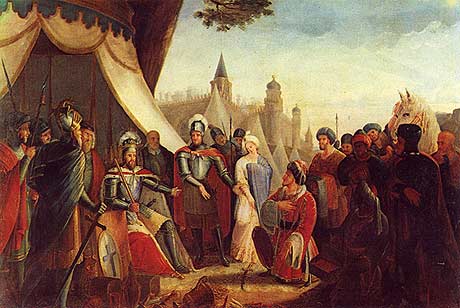
During the Second Crusade, Christian forces led by Afonso Henriques captured Lisbon from the Moors following a lengthy siege.
The victory helped secure Portugal’s position as an independent kingdom and paved the way for Lisbon’s eventual rise as the nation’s capital.
Without the Siege of Lisbon, Portugal’s history—and perhaps Lisbon’s future—might have looked very different.
Read More
6. Why Lisbon Became So Important
Geography explains much of Lisbon’s success.
Located near the mouth of the Tagus River, the city enjoyed direct access to the Atlantic Ocean while benefiting from the protection of a deep natural harbor.
These advantages made Lisbon ideal for trade, defense, exploration, and commerce.
Over time, this strategic position helped transform Lisbon into one of Europe’s most influential port cities.
Read More
7. The Age of Discoveries
The Age of Discoveries transformed Lisbon from an important European city into the center of a global empire.
During the 15th and 16th centuries, Portuguese sailors embarked on voyages that connected Europe with Africa, Asia, and the Americas.
Ships departed from Lisbon carrying explorers, merchants, missionaries, and adventurers.
The wealth generated by trade in spices, gold, sugar, and other goods turned Lisbon into one of the richest cities in Europe.
The monuments of Belém stand as lasting reminders of this extraordinary period. Belém is usually where I notice people start connecting Lisbon to global history rather than just local history. It’s one of those areas that tends to change how visitors see the city.
Read More
- Learn about Portugal’s most famous explorers and navigators
- Discover the legacy of Prince Henry the Navigator in Lisbon’s history
- Explore the Order of Christ and its role in Portuguese expansion
👉 Take a walking tour of Belem and learn all about Portugal’s maritime history.
👉 Take an “age of discoveries” tour with monument entries.
8. The Explorers Who Changed the World
Several legendary explorers maintain strong connections to Lisbon.
Among the most famous are Vasco da Gama, Bartolomeu Dias, Ferdinand Magellan, Pedro Álvares Cabral, and Christopher Columbus.
Their voyages reshaped global trade, expanded geographical knowledge, and connected distant parts of the world in unprecedented ways.
Few cities can claim such a direct connection to the history of exploration.
When people ask me about Lisbon’s connection to exploration, I usually suggest starting with the Tagus waterfront—it makes the historical scale of departures and arrivals much easier to visualize.
Read More
9. Empire, Trade and Global Connections
As Portugal expanded overseas, Lisbon became the capital of a vast maritime empire.
Goods from across the globe arrived at its docks, including spices from Asia, sugar from Brazil, and precious metals from overseas territories.
The city developed connections with Brazil, Macau, India, Africa, and countless other regions.
This global network helped shape Lisbon’s culture, cuisine, architecture, and economy.
Read More
10. The Dark Side of Empire
The Portuguese Empire brought wealth and influence, but it also involved slavery, exploitation, and colonial domination.
Lisbon played a significant role in the Atlantic slave trade and benefited economically from imperial expansion.
Understanding Lisbon’s history requires acknowledging these darker chapters alongside its achievements.
Read More
11. The 1755 Earthquake
No event changed Lisbon more dramatically than the earthquake of November 1, 1755.
The disaster was followed by fires and a tsunami that devastated much of the city. Tens of thousands of people died, and entire neighborhoods were destroyed.
The earthquake shocked Europe and sparked debates among philosophers, scientists, and religious thinkers.
Today, much of central Lisbon looks the way it does because of what happened that morning.
When I’m guiding people through Baixa, I often point out how unusually structured everything is compared to other old European cities—and that’s a direct result of the post-earthquake reconstruction.
Read More
12. The Marquis of Pombal and the Rebirth of Lisbon
Following the earthquake, the Marquis of Pombal led one of Europe’s most ambitious reconstruction efforts.
The elegant Baixa district was rebuilt using innovative planning techniques and some of the world’s earliest earthquake-resistant construction methods.
His reforms modernized both Lisbon and Portugal.
Read More
13. Religion, Faith and Popular Traditions
Religion has played a central role throughout Lisbon’s history.
The city has been home to Muslims, Jews, Catholics, Jesuits, monks, and religious orders.
One of Lisbon’s most beloved traditions is the Popular Saints Festival, celebrated every June with music, dancing, grilled sardines, and colorful street decorations.
If you’ve ever been in Lisbon during June, you’ll know this already—but the Popular Saints Festival isn’t something staged for visitors. It’s very much part of how locals experience the city.
Read More
14. Revolution, Dictatorship and Democracy
The modern era brought enormous political change.
Lisbon experienced the Napoleonic invasions, constitutional revolutions, the end of the monarchy, dictatorship, and eventually democracy.
The city also played a fascinating role during both World Wars, particularly World War II, when it became a hub for refugees, diplomats, and spies.
The defining event of modern Portuguese history came in 1974 with the peaceful Carnation Revolution.
Read More
15. The Cultural Lisbon We See Today
Modern Lisbon reflects centuries of cultural influences.
Its iconic azulejos, black-and-white calçada sidewalks, historic theaters, literary heritage, bridges, monuments, and distinctive architecture all tell part of the city’s story.
Writers such as Fernando Pessoa and Luís de Camões helped shape Portuguese culture, while landmarks like the 25th of April Bridge and Cristo Rei have become symbols of the city.
Every neighborhood reveals another layer of Lisbon’s fascinating identity.
Read More
- Understanding Lisbon’s architectural evolution
- The ultimate guide to calçada portuguesa sidewalks
- Lisbon’s azulejos explained: history and meaning
- Fernando Pessoa’s Lisbon and literary legacy
- Luís de Camões and Portuguese literary heritage
- Lisbon’s theaters and cultural venues
- 10 famous movies filmed in Lisbon
- 12 facts about the 25th of April Bridge
- 10 facts about the Vasco da Gama Bridge
- 10 facts about the Cristo Rei statue
- The story of Lisbon’s red roofs

10 Historical Places You Must Visit in Lisbon
- São Jorge Castle
- Jerónimos Monastery
- Belém Tower
- Carmo Convent
- Lisbon Cathedral
- Monument to the Discoveries
- National Pantheon
- National Tile Museum
- Praça do Comércio
- Museu de Lisboa
Experience Lisbon’s History for Yourself
❓Frequently Asked Questions
❓How old is Lisbon?
Lisbon is believed to be more than 3,000 years old, making it one of Europe’s oldest cities.
❓Is Lisbon older than Rome?
Yes. Evidence suggests settlement existed in Lisbon centuries before Rome was founded.
❓What is the oldest neighborhood in Lisbon?
Alfama is generally considered Lisbon’s oldest surviving neighborhood.
❓Why is the 1755 earthquake so famous?
Because it devastated Lisbon and influenced philosophy, science, and urban planning across Europe.
❓Did the Moors rule Lisbon?
Yes. Lisbon was under Moorish rule from 714 until 1147.
❓Why was Lisbon important during the Age of Discoveries?
Lisbon served as the departure point for many voyages that connected Europe with Africa, Asia, and the Americas.
❓What are Lisbon’s most important historical attractions?
São Jorge Castle, Jerónimos Monastery, Belém Tower, Lisbon Cathedral, Carmo Convent, and the Monument to the Discoveries are among the most significant.
Final Thoughts
Lisbon’s history is a story of resilience, reinvention, exploration, and cultural exchange. Few cities have experienced so many defining moments or exerted such influence on the wider world.
Whether you’re fascinated by Roman ruins, Moorish heritage, maritime exploration, revolutionary politics, or architectural beauty, Lisbon offers an endless number of stories waiting to be discovered.
Use this guide as your starting point and explore the articles above to dive deeper into the people, places, and events that shaped one of Europe’s most captivating capitals.
For me, Lisbon is at its most interesting when you stop looking at it as a list of monuments and start seeing it as a sequence of overlapping histories.
It’s one of the few cities where you can walk through Roman foundations, medieval streets, maritime empire landmarks, and modern cultural spaces all in the same afternoon—and still feel like you’ve only scratched the surface.
That’s also what keeps me exploring it, even after all this time living here and working with visitors on the ground.
About the author
I’m Duncan, a Lisbon-based guide and writer who’s lived here for 11 years and taken hundreds of visitors around the city. I created Lisbon Listicles to share everything you need to know about Lisbon in clear, practical lists — from iconic sights to hidden gems — so you can plan your trip easily and make the most of your time here.
All recommendations are based on personal experience and the questions I hear most often from visitors.
Leave a Reply