Disclosure: Some links in this article are affiliate links. If you book through them, I may earn a small commission at no extra cost to you. I only recommend places and experiences I genuinely think are worth it.
It’s impossible to live in Lisbon for long without hearing about the 1755 earthquake — but the deeper I looked into the city’s history, the more I realized that it wasn’t the only one to shape it. Standing in Baixa and knowing the entire district was rebuilt after devastation changes the way you see the streets. Over time, I’ve read historical accounts, visited museums, and paid closer attention to the architectural clues that reveal how Lisbon adapted to repeated seismic events.
In this guide, I’m exploring seven major earthquakes that impacted Lisbon and helped shape the city we know today. Understanding this seismic past adds an entirely new layer to Lisbon’s resilience — and to the way it was rebuilt with innovation and foresight.
Seismic Lisbon: A City Built on Beauty and Fault Lines
Lisbon is often remembered for its golden sunlight, terracotta rooftops, sea breeze rolling off the Tagus, and incredible food culture. But underneath the charm lies a dramatic and often overlooked truth: Lisbon has one of the most fascinating seismic histories in Europe.
From medieval tremors that reshaped neighborhoods to world-changing disasters that influenced philosophy, architecture, and urban planning, Lisbon’s earthquake past is as layered as its ancient streets. Understanding it not only deepens your appreciation for the city—it also reveals why Lisbon looks and feels the way it does today.
🫵 Traveling to Lisbon soon? I’ve added helpful suggestions throughout—tours, hotels, and experiences—so you can explore the city’s seismic landmarks like a pro.

7 Major Earthquakes in Lisbon’s History: The City’s Seismic Past
1. The 1531 Earthquake: A Precursor to Catastrophe
The 1531 earthquake struck on January 26, shaking Lisbon awake during the early morning hours. With an estimated 7.1 magnitude, it toppled medieval buildings, damaged churches, and sent waves crashing over the riverfront.
Key Highlights
Estimated Magnitude: 7.1
Death Toll: Around 30,000
Tagus River Surge: A mysterious tidal event flooded low-lying streets
This was one of the first major quakes recorded in detail. Chronicles describe animals fleeing, church bells ringing on their own, and terrified residents praying in the streets.
👉 Travel Tip: If you’re staying in Alfama, consider booking a heritage hotel where medieval Lisbon still lives in the walls—literally. The neighborhood’s winding alleys survived dozens of quakes thanks to their ancient foundations.
2. The 1597 Earthquake: Cracks in the Cradle of Empire
The 1597 earthquake was smaller but still unsettling. Occurring during the era of Portuguese global expansion, it shook a city already bustling with wealth from Africa, Asia, and Brazil.
Key Highlights
Estimated Magnitude: 5.5–6.0
Impact: Damage to older and poorly built structures
Legacy: Sparked early scientific inquiries
Though the consequences were modest, it planted the seeds of discussions about earthquake-resistant architecture, an idea Lisbon would desperately need just decades later.
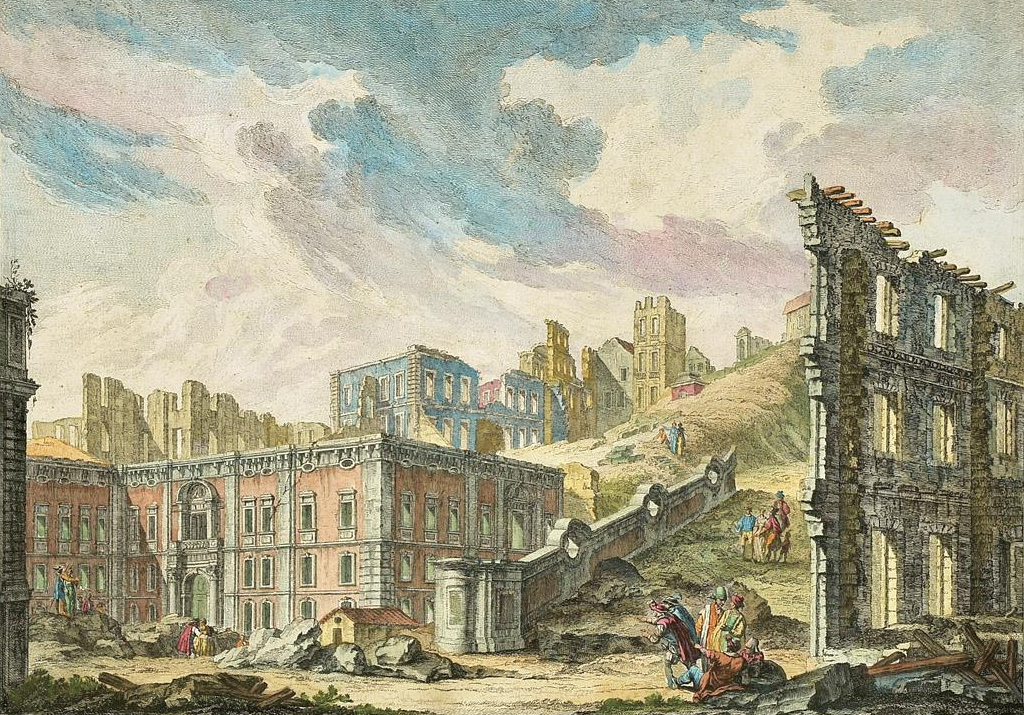
3. The 1755 Earthquake: Lisbon’s Day of Destruction
On November 1, 1755, Lisbon experienced one of the most infamous disasters in world history.
First came the quake. Then the tsunami. Then the fires.
Key Highlights
Estimated Magnitude: 8.5–9.1
Triple Disaster: Earthquake → tsunami → days of fire
Death Toll: 30,000–50,000+
Cultural Impact: fundamentally changed Enlightenment thought
Eyewitnesses described the ground opening beneath them, churches collapsing during mass, and the Tagus suddenly receding before returning as a deadly wall of water. The fires that followed burned for nearly a week.
In the aftermath, the Marquês de Pombal spearheaded a revolutionary rebuilding effort. His innovations—like the Pombaline “cage”, a wooden anti-seismic lattice—are considered some of the earliest earthquake-resistant designs in the world.
👉 Travel Tip: Staying in Baixa Pombalina lets you sleep in one of the world’s first purpose-built earthquake-resistant neighborhoods. Look for hotels with Pombaline architecture to immerse yourself in this unique chapter of urban history.
4. The 1761 Earthquake: Panic Returns
Just six years after the city’s destruction, another powerful quake struck on March 31, 1761, shaking nerves across Lisbon.
Key Highlights
Estimated Magnitude: ~8.0
Damage: Surprisingly limited
Public Reaction: Panic, spiritual anxiety, mass gatherings
The trauma from 1755 was still fresh. Survivors rushed into the streets, fearing divine punishment. Many fled to the countryside, convinced Lisbon was doomed.
5. The 1858 Earthquake: A Quiet but Important Reminder
The 1858 quake was moderate but symbolically important. For the first time, Lisbon saw its new Pombaline buildings outperform its older structures.
Key Highlights
Magnitude: 6.2
Damage: Mostly older neighborhoods
Legacy: Validated anti-seismic engineering
The quake helped solidify Lisbon’s reputation as a pioneer in seismic engineering.
6. The 1909 Benavente Earthquake: Lisbon Rattled from the Countryside
In 1909, a powerful earthquake struck Benavente, about 60 km from Lisbon. Although the epicenter was rural, the capital felt hours of aftershocks.
Key Highlights
Magnitude: 6.0–6.5
Damage: Severe in villages; mild in Lisbon
Legacy: Boosted scientific seismic research in Portugal
This quake helped shift seismic conversations from superstition to science.
7. The 1969 Earthquake: Lisbon’s Modern Wake-Up Call
On February 28, 1969, Lisbon experienced its strongest quake since 1755—this time originating offshore.
Key Highlights
Magnitude: 7.9
Epicenter: Atlantic Ocean
Impact: Moderate but alarming
Legacy: Modernized Portugal’s building codes
This event reinforced that Lisbon must always remain prepared for the next “big one.”

The Science Behind Lisbon’s Earthquakes
The Azores–Gibraltar Fault Zone
Lisbon sits near the Azores–Gibraltar transform fault, where the Eurasian and African tectonic plates grind against each other.
Why This Matters
Generates powerful offshore earthquakes
Can trigger tsunamis
Sends shockwaves inland toward Lisbon
Modern Monitoring
Portugal now has a network of seismic stations tracking activity in real time.
📝 Travel Tip: The Lisbon Earthquake Centre (interactive exhibits) is a fun, family-friendly stop—great for learning how Lisbon prepares for future seismic events.
Seismic Landmarks You Can Visit in Lisbon
Carmo Convent (Convento do Carmo)
The roofless church is Lisbon’s most haunting reminder of 1755.
👉 Book skip-the-line access or a guided tour.
Baixa Pombalina
Where anti-seismic urban planning was born.
👉 Stay in a Pombaline-era hotel to experience history up close.
The Lisboa Story Centre
A multimedia museum with a dramatic 1755 earthquake reenactment.
Alfama
One of the few neighborhoods that survived multiple quakes with minimal restructuring.
👉 Join a local Alfama history walk.
Museu de Lisboa – Teatro Romano
Learn how ancient Lisbon responded to early tremors.
Lisbon’s Seismic Risk Today: Are We Ready for the Next One?
Despite advances, Lisbon remains vulnerable. Experts agree another major quake will happen—timing unknown.
Key Considerations
Urban Density: More people, more risk
Aging Buildings: Many pre-1755 structures still stand
Emergency Plans: Improved but still evolving
Lisbon continues investing in seismic studies, stricter building codes, and public education.
Final Thoughts: A City That Always Rises Again
Lisbon’s seismic history is a story of destruction, rebirth, ingenuity, and resilience. These earthquakes reshaped not just the city’s architecture but its culture, politics, and worldview.
Today, when you walk through Baixa, explore Alfama, or visit the Carmo Convent, you’re experiencing living history—a city that has reinvented itself again and again.
Learning about Lisbon’s earthquakes has given me a deeper respect for the city’s strength and adaptability. What could have erased it instead reshaped it — architecturally, politically, and culturally.
I hope this guide helps you see beyond the beautiful façades and recognize the resilience beneath them. For me, knowing this history makes every walk through Lisbon feel more powerful — a reminder that the city has endured, rebuilt, and evolved time and time again.
🫵 Ready to explore Lisbon’s dramatic past?
Enhance your trip by:
👉 Visiting seismic landmarks like Carmo Convent, Lisboa Story Centre, or the Geological Museum
Lisbon’s resilience is inspiring—and seeing it firsthand makes your trip even more meaningful.
About the author
I’m Duncan, a Lisbon-based guide and writer who’s lived here for 11 years and taken hundreds of visitors around the city. I created Lisbon Listicles to share everything you need to know about Lisbon in clear, practical lists — from iconic sights to hidden gems — so you can plan your trip easily and make the most of your time here.
All recommendations are based on personal experience and the questions I hear most often from visitors.
Leave a Reply