Disclosure: Some links in this article are affiliate links. If you book through them, I may earn a small commission at no extra cost to you. I only recommend places and experiences I genuinely think are worth it.
Before I moved to Lisbon, I honestly never gave much thought to why it was Portugal’s capital. Like most people, I simply assumed it had always been that way.
After living in the city for years and spending countless hours exploring its historic neighbourhoods and showing visitors around, I realised the answer is far more interesting than I ever expected. Lisbon’s rise wasn’t inevitable. It was shaped by medieval kings, military conquests, overseas exploration, devastating earthquakes, and centuries of political change. Once you understand that story, you start seeing the city very differently.
I think learning a little about Lisbon’s history makes every visit more rewarding. Suddenly, places like Alfama, São Jorge Castle, Praça do Comércio, and Belém aren’t just beautiful landmarks—they become chapters in the story of how a small riverside city grew into the heart of Portugal.
In this guide, I’ll take you through that journey, from Portugal’s earliest capitals to the events that made Lisbon the country’s political, cultural, and economic centre. Whether you’re a history lover or simply curious about the city you’re visiting, I hope it helps you appreciate Lisbon in a whole new way.
👉 Want to learn more about Lisbon’s hostory? Read my full guide.
Why Is Lisbon the Capital of Portugal?
Standing on one of Lisbon’s famous viewpoints, looking across the red rooftops towards the Tagus River, it is easy to understand why this city became the heart of Portugal.
Today, Lisbon is known as a city of colourful tiled buildings, historic neighbourhoods, yellow trams, incredible viewpoints, and a unique atmosphere where centuries of history blend with modern Portuguese life. It is the country’s largest city, its political centre, its cultural capital, and the gateway through which millions of visitors arrive every year.
But Lisbon’s position as Portugal’s capital was not always guaranteed.
In fact, Lisbon was not originally the capital of Portugal, and there were important moments in history when other cities played that role. Before Lisbon rose to prominence, cities like Guimarães, Coimbra, and even Rio de Janeiro were central to Portugal’s story.
So, how did Lisbon become the capital of Portugal?
The answer involves medieval kings, military victories, maritime exploration, earthquakes, colonial wealth, and the city’s unbeatable location beside one of Europe’s greatest natural harbours.
Having lived in Lisbon and spent years exploring the city’s streets, neighbourhoods, and history, I think understanding why Lisbon became Lisbon makes visiting the city even more rewarding. The streets you walk today are not just beautiful — they are the result of nearly a thousand years of political, economic, and cultural change.
Let’s explore the fascinating story behind Portugal’s capital.

How Lisbon Became Portugal’s Capital: A Brief History
1. Portugal’s First Capitals Were Not Lisbon
Many visitors assume Lisbon has always been the centre of Portugal, but that is far from true.
Before Lisbon became the capital, Portugal’s political heart moved between several important cities as the country itself was being formed.
During the early stages of Portuguese history, the most important city was actually Guimarães, often called the “Birthplace of Portugal”.
It was here that Afonso Henriques established his power during the 12th century. After declaring independence from the Kingdom of León, he became Portugal’s first king in 1139.
Guimarães was strategically important because it was located in the north, close to the areas where Portuguese independence movements began.
However, as Portugal expanded southwards during the Christian Reconquista, the centre of power gradually shifted.
The growing kingdom needed a new capital that was:
- More central geographically
- Closer to newly conquered territories
- Better positioned for trade
- Easier to defend
- Connected to the sea
This is where Coimbra entered the story.
2. Coimbra Became Portugal’s First True Medieval Capital
Before Lisbon became the capital, Coimbra was arguably the most important city in Portugal.
After gaining independence, King Afonso Henriques moved his court south from Guimarães to Coimbra around 1131.
This was a hugely important decision.
Coimbra offered several advantages:
- It was located in a more central position
- It was closer to the frontier between Christian and Muslim territories
- It had a strong defensive position overlooking the Mondego River
- It allowed Portuguese rulers to control expansion further south
For much of the 12th century, Coimbra was effectively the political centre of the emerging Portuguese kingdom.
The famous University of Coimbra, founded in 1290, would later become one of Europe’s oldest universities and helped maintain the city’s importance as a centre of learning.
However, Coimbra had one major disadvantage.
It was inland.
As Portugal became increasingly connected to international trade and maritime exploration, the kingdom needed access to the Atlantic Ocean.
That advantage belonged to Lisbon.
3. The Conquest of Lisbon Changed Portugal’s Future
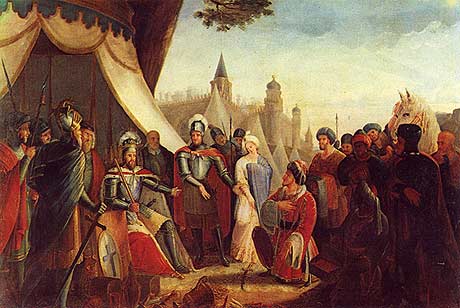
The moment Lisbon truly entered Portugal’s history was the city’s conquest in 1147.
At the time, Lisbon was under Muslim rule and was one of the most important cities in the region.
The city was known as Al-Ushbuna and had a thriving population, strong defensive walls, and an excellent location beside the Tagus River.
In 1147, King Afonso Henriques, supported by European crusaders travelling to the Holy Land, launched a siege against Lisbon.
After several months, the city fell to Christian forces.
This victory was enormously significant.
Capturing Lisbon gave Portugal:
- A major Atlantic port
- Control of the Tagus River
- A wealthy commercial centre
- A strategic base for further expansion south
The conquest transformed Lisbon from a regional city into one of the most important places in the Portuguese kingdom.
Today, you can still see traces of this medieval past in areas such as Alfama, where narrow streets follow the shape of the old Islamic city.
👉 Want to explore Lisbon’s medieval history for yourself? A guided walking tour is one of the best ways to understand how the city developed over centuries.
Discover Lisbon’s best historical walking tours here 👇
👉 Viator: Explore Lisbon’s history, castles, neighbourhoods and hidden streets with local guides.
👉 GetYourGuide: Find highly-rated Lisbon walking tours covering Alfama, Belém, the Age of Discoveries and more.
4. Lisbon Officially Became Portugal’s Capital in the 13th Century
Although Lisbon became increasingly important after 1147, it did not immediately replace Coimbra.
The Portuguese royal court continued moving between different cities depending on political needs.
However, by the mid-13th century, Lisbon had become too important to ignore.
Around 1255, during the reign of Afonso III of Portugal, Lisbon became the official capital of Portugal.
This decision made practical sense.
Lisbon had:
A Natural Harbour
The Tagus River provided one of Europe’s best natural harbours.
Ships could safely enter the river, making Lisbon ideal for:
- Trade
- Naval development
- Military expansion
A Growing Population
Lisbon was already one of Portugal’s largest cities.
Merchants, craftsmen, sailors, and foreign traders were increasingly attracted to the city.
A Strategic Location
Lisbon sat at the crossroads between northern Europe, the Mediterranean, and the Atlantic world.
The city was perfectly positioned for Portugal’s future.
5. Lisbon’s Location Made It Perfect for the Age of Discoveries
If there is one period that truly transformed Lisbon into a global city, it was the Age of Discoveries.
During the 15th and 16th centuries, Portugal became one of the world’s greatest maritime powers.
Portuguese explorers sailed from Lisbon to:
- Africa
- India
- Brazil
- Southeast Asia
Figures such as Vasco da Gama and Ferdinand Magellan became famous around the world.
Lisbon became the departure point for ships carrying explorers, merchants, soldiers, and missionaries across the globe.
The wealth flowing back into the city transformed Lisbon dramatically.
During this period:
- The waterfront expanded
- Magnificent buildings were constructed
- The Manueline architectural style developed
- The city became one of Europe’s richest capitals
The area of Belém became especially important.
Today, visitors can still see reminders of this era at:
- Jerónimos Monastery
- Belém Tower
- The Monument to the Discoveries
These landmarks are not just beautiful attractions — they represent the moment Lisbon became a truly global capital.
👉 Planning your Lisbon trip? Staying near the historic centre makes exploring these areas much easier.
Find your perfect Lisbon accommodation here 👇
👉 Booking.com: Compare hotels, apartments and guesthouses across Lisbon’s best neighbourhoods.
6. The 1755 Earthquake Almost Destroyed Lisbon
One of the most important events in Lisbon’s history happened on 1 November 1755.
A massive earthquake struck the city, followed by fires and a devastating tsunami.
The destruction was enormous.
Thousands of people died, and much of central Lisbon was reduced to rubble.
The earthquake destroyed many medieval buildings, including large parts of the old city.
However, this disaster also created the Lisbon we know today.
Under the leadership of Sebastião José de Carvalho e Melo, the city was rebuilt with a revolutionary urban design.
The new Baixa district featured:
- Wide streets
- Symmetrical buildings
- Open squares
- Improved earthquake-resistant construction
This area became one of Europe’s earliest examples of modern urban planning.
Walking through Baixa today, visitors are experiencing the result of one of history’s most ambitious city rebuilding projects.
7. When Rio de Janeiro Became the Capital of Portugal
One of the most extraordinary chapters in Portuguese history began in 1807 during the Napoleonic Wars.
As French forces invaded Portugal, the Portuguese royal family made an unprecedented decision: instead of surrendering, they fled across the Atlantic to Brazil.
The royal court established itself in Rio de Janeiro, which became the capital of the Portuguese Empire between 1808 and 1821.
For the only time in history, the capital of a European kingdom was located outside Europe.
This means that, technically, Lisbon was no longer the centre of Portuguese power during this period.
However, after the royal family returned to Portugal in 1821, Lisbon regained its role as capital.
The episode remains one of the most fascinating examples of a European empire being governed from another continent.
8. Lisbon’s Political Importance Continued After Portugal Became a Republic
Portugal became a republic in 1910, replacing the monarchy.
Lisbon remained the political centre because it already had:
- Government institutions
- Ministries
- Diplomatic communities
- Economic importance
- National influence
The city continued developing throughout the 20th century.
Important moments in Lisbon’s modern history include:
- The dictatorship of António de Oliveira Salazar
- The peaceful Carnation Revolution of 1974
- Portugal joining the European Union in 1986
Many of these events happened in Lisbon’s streets and squares.
For example, the Carnation Revolution began with military movements around the city, eventually leading to the end of Portugal’s authoritarian Estado Novo regime.
9. Why Lisbon Is Still the Perfect Capital of Portugal Today
So why is Lisbon still Portugal’s capital after almost 800 years?
The answer comes down to a combination of geography, history, and economics.
Lisbon remains:
Portugal’s Political Centre
The Portuguese parliament, government ministries, presidential institutions, and foreign embassies are all located here.
The Country’s Cultural Heart
Lisbon is home to:
- Major museums
- Historic monuments
- Music venues
- Universities
- Festivals
Portugal’s International Gateway
Lisbon Airport connects Portugal with the world and welcomes millions of visitors every year.
The Economic Hub
Many of Portugal’s largest companies and industries are based in Lisbon.
While cities like Porto, Coimbra, Braga, and Évora have huge cultural importance, Lisbon remains the place where Portugal’s past and present meet.

Was Lisbon Always the Capital of Portugal? Quick Timeline
| Year | Event |
|---|---|
| 12th century | Guimarães is the centre of early Portugal |
| Around 1131 | Coimbra becomes the royal centre |
| 1147 | Lisbon is conquered by King Afonso Henriques |
| 1255 | Lisbon becomes Portugal’s capital |
| 15th–16th centuries | Lisbon becomes a global maritime capital |
| 1755 | Earthquake destroys much of Lisbon |
| 1808–1821 | Rio de Janeiro becomes the centre of the Portuguese Empire |
| 1821 | Lisbon regains its role as capital |
| 1910 | Portugal becomes a republic, Lisbon remains capital |
Want to See Lisbon’s History for Yourself?
Learning how Lisbon became Portugal’s capital is fascinating, but the best way to understand the city is to walk through the places where this history actually happened.
From medieval castles and ancient neighbourhoods to grand squares, royal monuments, and the waterfront where Portuguese explorers once departed for the unknown, Lisbon’s past is still visible around almost every corner.
Some of the best places to experience this history include:
- São Jorge Castle, where you can discover Lisbon’s medieval roots and the story of the city’s conquest in 1147
- Alfama, Lisbon’s oldest neighbourhood, where narrow streets still follow the layout of the medieval city
- Lisbon Cathedral (Sé), built shortly after the Christian reconquest
- Praça do Comércio, the grand riverside square that represents Lisbon’s rebirth after the 1755 earthquake
- Belém Tower and Jerónimos Monastery, symbols of the Age of Discoveries and Portugal’s rise as a global maritime power
- Carmo Convent, where the devastating impact of the 1755 earthquake can still be seen today
After living in Lisbon for years and showing visitors around the city, I always find that the places themselves tell the story better than any history book. Once you know what happened here, the streets, buildings, and viewpoints take on a completely different meaning.
Whether you explore Lisbon independently or join a local guided tour, these historic places will help you understand how a small medieval city beside the Tagus River became the capital of Portugal and one of Europe’s most fascinating destinations.
❓Frequently Asked Questions About Lisbon Becoming Portugal’s Capital
❓Was Lisbon always the capital of Portugal?
No. Lisbon was not always Portugal’s capital.
Early Portuguese power centres included Guimarães and Coimbra. Lisbon officially became the capital in 1255 because of its strategic location, harbour, and growing importance as a trading city.
❓Was Coimbra ever the capital of Portugal?
Yes. Coimbra was effectively the capital of Portugal during the early years of the kingdom, particularly after King Afonso Henriques moved his court there in the 12th century.
❓Was Rio de Janeiro ever the capital of Portugal?
Technically, yes.
Between 1808 and 1821, when the Portuguese royal court moved to Brazil due to Napoleon’s invasion, Rio de Janeiro became the centre of the Portuguese Empire.
❓Why did Portugal choose Lisbon as its capital?
Lisbon was chosen because of its excellent harbour, Atlantic location, economic importance, and strategic position for trade and exploration.
❓Why is Lisbon more important than Porto?
Porto is historically and economically extremely important, especially for trade, wine production, and northern Portuguese culture.
However, Lisbon became the capital because of its political history, royal connections, and Atlantic position.
❓Is Lisbon the oldest capital city in Europe?
Lisbon is one of Europe’s oldest continuously inhabited cities, but it is not officially the oldest capital. Cities such as Athens and Rome have older histories.
Final Thoughts: Lisbon’s Story Is Portugal’s Story
Lisbon becoming Portugal’s capital was not a single decision made overnight.
It was the result of centuries of change.
From a medieval fortress conquered in 1147 to the centre of one of the world’s greatest maritime empires, Lisbon’s rise mirrors Portugal’s own journey.
The city’s location beside the Tagus River shaped its destiny. Its harbour brought explorers, merchants, wealth, and ideas from around the world. Its streets witnessed royal celebrations, devastating disasters, revolutions, and incredible transformations.
Today, when you walk through Alfama, stand beside the Belém Tower, or look over Lisbon from one of its viewpoints, you are experiencing the layers of a city that became a capital because history repeatedly chose it.
And that is what makes Lisbon so special — it is not just Portugal’s capital.
It is the place where Portugal’s story comes alive.
About the author
I’m Duncan, a Lisbon-based guide and writer who’s lived here for 11 years and taken hundreds of visitors around the city. I created Lisbon Listicles to share everything you need to know about Lisbon in clear, practical lists — from iconic sights to hidden gems — so you can plan your trip easily and make the most of your time here.
All recommendations are based on personal experience and the questions I hear most often from visitors.
Leave a Reply