Disclosure: Some links in this article are affiliate links. If you book through them, I may earn a small commission at no extra cost to you. I only recommend places and experiences I genuinely think are worth it.
Lisbon’s history isn’t something you only find in books—it shows up everywhere, from the layout of the streets to the mix of buildings and neighborhoods. After learning about the city’s past over time and seeing how different moments shaped the Lisbon we know today, I put together this timeline of the most important events in Lisbon’s history. It’s meant to give context, not overwhelm, and to help make sense of the city as you explore it.
The History of Lisbon
Lisbon is one of the oldest capitals in Europe, older than London, Paris, and even Rome. With a history spanning over 3,000 years, Lisbon has been a crossroads of civilizations, shaped by Phoenicians, Romans, Moors, Crusaders, explorers, kings, revolutionaries, and innovators. Each left an indelible mark on the city’s culture, architecture, and way of life.
To truly appreciate Lisbon today, you need to understand the events that built it. Here’s a comprehensive timeline of the most important events in Lisbon’s history, and how they shaped this unforgettable city. I’ve focused on the moments that most clearly shaped the city.
👉 For the bigger picture, check out my complete Lisbon History & Culture Guide.

The Most Important Events In Lisbon’s History – Timeline
1. Foundation of Lisbon (1200 BC)
Around 1200 BC, the Phoenicians founded a settlement on the banks of the Tagus River, calling it Alis Ubbo, meaning “safe harbor.” Its natural harbor made it a perfect hub for trade and exploration.
When the Romans conquered it in 205 BC, Lisbon—then named Olissipo—flourished as part of the empire. It became known for wine, olive oil, and garum (fish sauce), exported across Europe.
👉 Explore Lisbon’s hidden Roman past with a walking tour of archaeological sites on Viator.
2. Roman Prosperity (1st–4th Century AD)
During Roman rule, Lisbon grew into a bustling provincial capital. Amphitheaters, baths, and aqueducts dotted the city. Today, you can still visit the Roman Theatre Museum, where ancient stones tell the story of this era.
3. The Visigothic Period (5th–8th Century)
After the fall of Rome, the Visigoths controlled Lisbon. This was when Christianity spread widely, and early churches were built. Though little remains, their influence set the stage for Lisbon’s religious importance.
4. Moorish Rule (711–1147)
In 711 AD, the Moors conquered Lisbon, renaming it Al-Ushbuna. They brought advanced knowledge in astronomy, medicine, and irrigation, and transformed the city into a cultural and commercial hub.
The Alfama district, with its maze-like alleys, still reflects Moorish urban design. São Jorge Castle, reinforced by the Moors, remains one of Lisbon’s most iconic landmarks.
5. The Siege of Lisbon (1147)
Lisbon’s reconquest came in 1147, when Afonso Henriques, Portugal’s first king, and a group of northern European crusaders captured the city. This victory was pivotal in establishing Lisbon as Portugal’s capital.
Soon after, the Lisbon Cathedral (Sé de Lisboa) was built, standing as a powerful symbol of Christianity’s triumph.
6. Lisbon Becomes Capital (1255)
By 1255, Lisbon officially became the capital of Portugal, thanks to its strategic river access and growing economic power. This marked the beginning of Lisbon’s rise as a major European city.
7. The Age of Discoveries (15th–16th Century)
This was Lisbon’s Golden Age. As ships departed from the city’s harbor, explorers like Vasco da Gama and Ferdinand Magellan opened sea routes to India, Africa, and Brazil. This moment reshaped Lisbon’s role in the wider world.
Lisbon became one of the richest cities in the world, filled with spices, gold, and exotic treasures. The city invested in monumental architecture such as the Belém Tower and Jerónimos Monastery, both UNESCO sites.
8. The Earthquake of 1531
Before the more famous 1755 disaster, Lisbon endured another devastating earthquake in 1531, which destroyed thousands of buildings. Recovery was slow, but the city pressed on, buoyed by the wealth of exploration.
9. The Great Earthquake of 1755
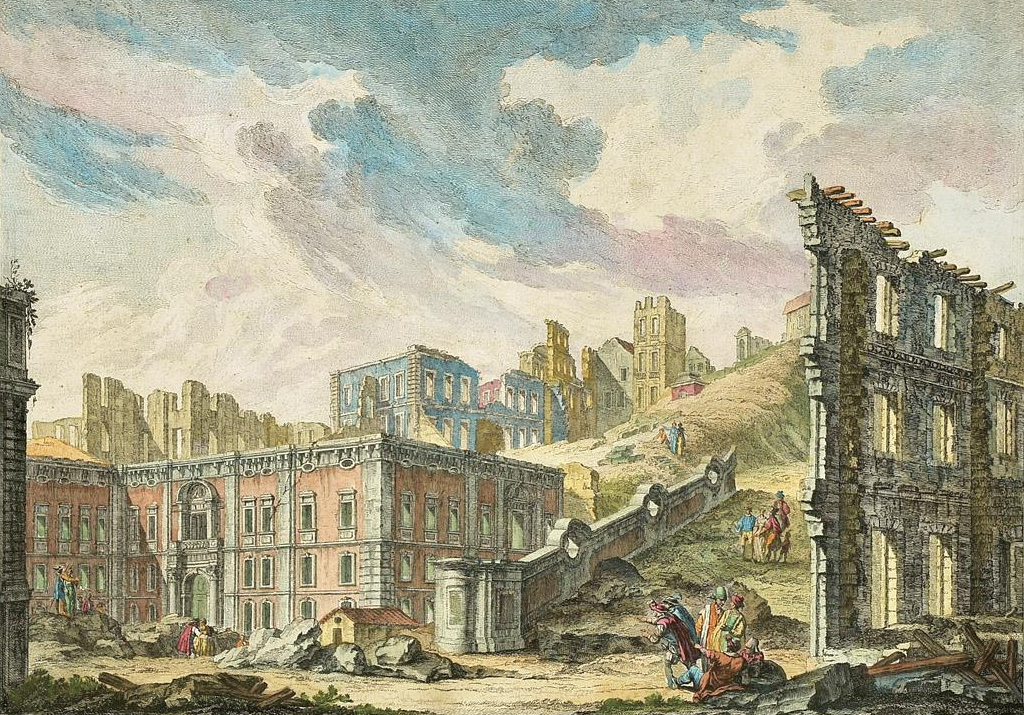
On All Saints’ Day (November 1, 1755), Lisbon was struck by one of the deadliest earthquakes in recorded history. The quake, followed by fires and a tsunami, left the city in ruins. You can still see the effects of this when walking through the Baixa.
The Marquis of Pombal led reconstruction, redesigning Lisbon with wide boulevards, earthquake-resistant buildings, and the elegant Baixa district.
10. Napoleonic Invasions (1807–1811)
During the Napoleonic Wars, French troops invaded Lisbon. The Portuguese royal family fled to Brazil, making Rio de Janeiro the capital of the Portuguese Empire for over a decade. This extraordinary episode highlights Lisbon’s global reach.
11. The Liberal Revolution (1820)
Lisbon was central to Portugal’s Liberal Revolution, which ended absolute monarchy and ushered in constitutional rule. This movement reshaped politics and society across the country. Many later events trace back to this moment.
12. The First Republic (1910)
In 1910, Portugal abolished its monarchy, proclaiming the First Republic. Lisbon became the political stage for strikes, protests, and reforms that shaped modern Portugal. This event set the stage for what came next.
13. The Carnation Revolution (1974)
On April 25, 1974, Lisbon witnessed the peaceful Carnation Revolution, which ended decades of dictatorship under the Estado Novo regime. Soldiers placed red carnations in their rifles, symbolizing peace and freedom.
Today, you can still feel the spirit of this revolution in the city’s murals, monuments, and annual celebrations.
14. European Capital of Culture (1994)
Being named European Capital of Culture transformed Lisbon into a vibrant cultural hub. New museums, music festivals, and art galleries flourished, drawing international attention.
15. Expo ’98 (1998)
The World Exposition of 1998, themed “The Oceans, a Heritage for the Future”, rejuvenated Lisbon’s eastern waterfront. The futuristic Parque das Nações was built, featuring the Vasco da Gama Bridge and the Lisbon Oceanarium.
16. UEFA Euro 2004
Football fever swept through Lisbon as the city hosted the UEFA Euro 2004 championship. The games brought international attention and boosted Lisbon’s reputation as a tourism destination.
17. Web Summit (2016–Present)
Since 2016, Lisbon has hosted the Web Summit, one of the world’s largest tech conferences. This event draws entrepreneurs, investors, and innovators, cementing Lisbon’s place in the global tech scene.

Discover Lisbon’s Legacy
From its Phoenician origins to its role as a modern European capital, Lisbon is a city where history and modern life coexist beautifully. Whether exploring ancient ruins, wandering through Alfama’s medieval lanes, or admiring the bold architecture of Parque das Nações, Lisbon’s story unfolds at every turn.
👉 Ready to plan your trip? Book your Lisbon hotel on Booking.com for easy access to historic districts like Alfama, Belém, or Baixa.
Visit Lisbon and step into history!
Practical Travel Tips for Visiting Lisbon
To make the most of your historical journey, here are some essential Lisbon travel tips:
🏨 Where to Stay
Alfama – Best for history lovers (Moorish alleys, Fado music).
Baixa/Chiado – Central, elegant, and perfect for sightseeing.
Belém – Quiet, near the monuments of the Age of Discoveries.
👉 Compare the best hotels in each district on Booking.com for great deals.
🚇 Getting Around Lisbon
Lisbon’s hills can be steep, but that’s part of the charm! Use the historic trams, the Metro, or simply walk to discover hidden corners.
👉 For unlimited rides, consider a Lisbon public transport pass.
🎟️ Must-See Attractions
São Jorge Castle – Moorish fortress with stunning views.
Belém Tower & Jerónimos Monastery – Symbols of Portugal’s Golden Age.
Lisbon Oceanarium – A family favorite in Parque das Nações.
👉 Save money and time with a Lisbon Card, which includes transport and entry to many attractions.
🍷 Food & Drink
-
Pastéis de Nata (custard tarts).
-
Fresh seafood and grilled sardines.
-
A glass of ginjinha, Lisbon’s famous cherry liqueur.
📅 When to Visit
-
Spring (March–May) – Pleasant weather, fewer crowds.
-
Autumn (September–October) – Ideal temperatures and festivals.
-
Summer is lively but busy, while winter is quiet and affordable.
These events form the backbone of Lisbon’s story and help explain why the city looks and functions the way it does today. Having this context makes exploring Lisbon feel more meaningful, especially when you start noticing how the past and present overlap.
About the author
I’m Duncan, a Lisbon-based guide and writer who’s lived here for 11 years and taken hundreds of visitors around the city. I created Lisbon Listicles to share everything you need to know about Lisbon in clear, practical lists — from iconic sights to hidden gems — so you can plan your trip easily and make the most of your time here.
All recommendations are based on personal experience and the questions I hear most often from visitors.
Leave a Reply