Disclosure: Some links in this article are affiliate links. If you book through them, I may earn a small commission at no extra cost to you. I only recommend places and experiences I genuinely think are worth it.
Whenever I walk up toward the walls of São Jorge or look out over the Tagus at sunset, I can’t help but think about how contested this city once was. Lisbon’s role in the Reconquista isn’t just a paragraph in a history book — it’s written into its hills, its fortifications, and even its street layout. Over the years, I’ve spent time reading medieval chronicles, visiting the surviving Moorish walls, and tracing the route of the 1147 siege to better understand how this moment reshaped the city.
This guide pulls together what I’ve learned from reputable historical sources, site visits, and conversations with local historians — not to dramatize the past, but to explain it clearly. Lisbon didn’t simply “change hands.” The Reconquista fundamentally altered its religious, political, and cultural identity, and the effects are still visible if you know where to look.
Lisbon’s Role in the Reconquista
Lisbon is beautiful. That part is obvious.
But what most visitors don’t realize is that beneath the miradouros, pastel buildings, and tiled façades lies a city forged by siege, faith, and survival. Long before trams rattled through Alfama, Lisbon stood at the very heart of the Reconquista, one of the most defining conflicts in European history.
This wasn’t a side story.
This wasn’t a footnote.
Lisbon was the prize.
In this in-depth guide, we’ll uncover how Lisbon’s role in the Reconquista transformed it from a Moorish stronghold into the beating heart of Portugal — and how you can still trace this medieval past through castles, cathedrals, neighborhoods, and even the city’s soul.
Whether you’re planning a trip or simply love history-rich travel, this is the story that will completely change how you see Lisbon.

Lisbon’s Role in the Reconquista: 7 Fascinating Facts
1. Why Lisbon Mattered So Much in the Reconquista
To understand Lisbon’s role in the Reconquista, you first need to understand why Lisbon mattered so deeply.
In the 12th century, Lisbon was:
One of the largest cities in Iberia
A fortified Moorish port
A key gateway between the Atlantic and inland Iberia
Economically powerful and heavily defended
Control Lisbon, and you controlled trade, supply lines, and momentum.
For the young Kingdom of Portugal, still fighting for legitimacy, Lisbon wasn’t just desirable — it was essential for survival.
2. The Siege of Lisbon (1147): Four Months That Changed History
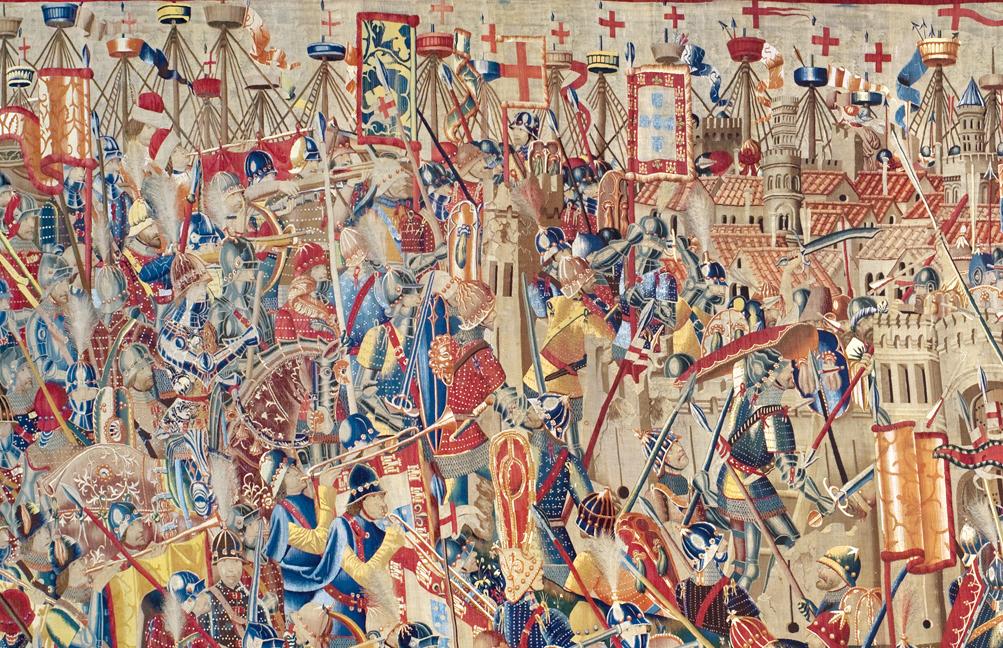
The Siege of Lisbon in 1147 stands as one of the most dramatic episodes of the Portuguese Reconquista.
King Afonso Henriques, Portugal’s first king, knew that taking Lisbon was a gamble. The city was larger, wealthier, and better defended than anything Portugal had conquered before.
Then fate intervened.
A massive fleet of Crusaders — English, Flemish, Norman, German — arrived on Portugal’s coast, sailing toward the Holy Land. Afonso convinced them to join the siege, promising spoils and divine favor.
What followed was brutal:
Starvation inside the city
Relentless bombardment from siege engines
Tunnels dug beneath walls
Fire, disease, and desperation
After four grueling months, Lisbon surrendered on October 21, 1147.
👉 Why this moment matters: Without this victory, Portugal may never have survived as an independent kingdom.
📍 Stand where it happened: São Jorge Castle rises above the city on the original fortified hill.
👉Book an Alfama and Castle guided tour on Viator with tickets.
👉 Staying nearby makes early-morning or sunset visits magical — Booking.com often features historic boutique hotels in Alfama with castle views.
3. Crusaders, Settlers, and a City Reborn
The Reconquista of Lisbon didn’t end with conquest — it began a transformation.
Many Crusaders never continued east. Instead, they stayed.
They became:
Builders
Merchants
Priests
Lisbon citizens
Their legacy survives in Romanesque churches, early Gothic structures, and Latin inscriptions embedded in stone.
📜 One of the most important medieval accounts of the siege, De Expugnatione Lyxbonensi, was written by a Crusader who fought there — giving Lisbon one of the most vivid eyewitness records in medieval Europe.
4. Lisbon Becomes the Engine of the Reconquista
Once Lisbon fell, the balance of power shifted permanently.
The city became:
A military headquarters
A religious center
A launchpad for southern expansion
From Lisbon, Christian forces pushed steadily into Alentejo and eventually the Algarve, shaping Portugal’s modern borders.
⛪ Essential Stop: The Sé de Lisboa (Lisbon Cathedral) — built immediately after the conquest — reflects this militant faith, with thick walls and fortress-like design.
5. Knights, Orders, and Sacred Power
After the reconquest, Lisbon became a magnet for powerful military-religious orders:
Order of Santiago
Hospitallers
Order of Avis
These weren’t just warriors — they were administrators, landowners, and architects of medieval Portugal.
📍 Carmo Convent stands as one of their most haunting legacies: once a symbol of Gothic power, now an open-air ruin frozen in time after the 1755 earthquake.
👉 Hotels around Chiado and Carmo are ideal bases — Booking.com regularly lists character-filled stays steps from these ruins.
6. Lisbon’s Port: The Beating Heart of the Reconquista
Lisbon’s strategic power wasn’t only on land.
The Tagus River turned Lisbon into a medieval superhighway.
Through its port flowed:
Troops and weapons
Supplies and food
Pilgrims, monks, and envoys
Crusaders from across Europe
This made Lisbon one of the most internationally connected cities of the Middle Ages.
📍 Walk the riverfront: Cais das Colunas remains one of the most evocative spots to imagine medieval Lisbon’s maritime life.
👉 A Tagus River cruise booked via Viator offers a surprisingly powerful historical perspective.
7. A City of Cultures: Christians, Muslims, and Jews
Despite conquest, Lisbon never became culturally uniform.
Muslims were allowed to remain in Mouraria, while Jewish communities flourished in distinct quarters. Islamic influence survived in:
Street layouts
Architecture
Place names
Food traditions
Alfama, in particular, remains one of Europe’s best-preserved medieval districts.
🎭 Over time, this mix of cultures helped give birth to Fado, Lisbon’s music of longing and resilience.
8. Lisbon and the Birth of Portuguese Identity
The Reconquista of Lisbon became mythologized almost immediately.
Kings framed it as divine destiny. Chroniclers turned it into sacred history. Artists and poets immortalized it.
Lisbon became:
The symbolic heart of Portugal
The seat of royal power
The spiritual anchor of a young nation
📚 Go deeper: The National Museum of Ancient Art preserves artworks and relics that reflect how Lisbon’s medieval victory shaped national identity.
👉 Skip-the-line museum tickets are often available through GetYourGuide.

Where to Stay to Explore Medieval Lisbon
If you’re visiting Lisbon with history in mind, these neighborhoods are ideal:
Castle views, medieval lanes, timeless atmosphere
Walkable access to the cathedral and riverfront
Multicultural roots and authentic local life
Hilltop views and proximity to major Reconquista landmarks
Best Reconquista-Themed Tours & Day Trips
To take this experience further, consider:
👉 Most of these experiences are easily booked through Viator or GetYourGuide.
🎒 Self-Guided Reconquista Walking Route
Carmo Convent
Praça do Comércio
Cais das Colunas
👉 Prefer a guide? Viator and GetYourGuide offer excellent expert-led versions.
👉 Ready to See the Lisbon Most Visitors Miss?
Lisbon isn’t just scenic.
It’s layered.
It’s battle-scarred.
It’s resilient.
👉 Book a history-rich Lisbon tour with Viator or GetYourGuide
👉 Find a character-filled hotel near the castle with Booking.com
👉 Walk Lisbon with context, not just curiosity
If you want more than photos —
If you want stories, meaning, and memory —
Then Lisbon’s Reconquista past is waiting for you.
Final Thoughts
For me, understanding Lisbon’s role in the Reconquista makes the city feel more layered and complex. It moves beyond pretty viewpoints and pastel façades and reveals a place shaped by conflict, negotiation, and transformation.
I hope this guide helps you see Lisbon with a deeper perspective. History here isn’t distant — it’s embedded in the stones under your feet. And once you recognize that, the city tells a much richer story.
About the author
I’m Duncan, a Lisbon-based guide and writer who’s lived here for 11 years and taken hundreds of visitors around the city. I created Lisbon Listicles to share everything you need to know about Lisbon in clear, practical lists — from iconic sights to hidden gems — so you can plan your trip easily and make the most of your time here.
All recommendations are based on personal experience and the questions I hear most often from visitors.
Leave a Reply