Disclosure: Some links in this article are affiliate links. If you book through them, I may earn a small commission at no extra cost to you. I only recommend places and experiences I genuinely think are worth it.
Lisbon is one of Europe’s oldest capitals, a city shaped by ancient civilisations, medieval conquests, maritime exploration, religious power, devastating natural disasters, dictatorship, revolution, and centuries of immigration and cultural exchange.
You can see traces of this history almost everywhere. Roman ruins lie beneath modern streets, medieval lanes wind through Alfama, grand monuments celebrate Portugal’s maritime past, and the orderly streets of Baixa reveal the extraordinary rebuilding that followed the earthquake of 1755. Elsewhere, former prisons preserve the memory of political repression, while museums tell the stories of the people who helped shape the city.
But if you really want to understand Lisbon, visiting its museums is one of the best places to start.
The challenge is knowing which museums tell the most interesting stories. Some focus on ancient Lisbon, others on the Portuguese Empire, the destruction and reconstruction of the city, or the struggle for democracy in the 20th century. A few bring together several thousand years of history under one roof.
In this guide, we’ll explore the best museums for learning Lisbon’s history, what makes each one worth visiting, and how to combine them with historical walking tours and other attractions.
Whether you’re visiting Lisbon for the first time or have lived here for years, these museums can help you see the Portuguese capital in a completely different light.
At a Glance: The Best Museums for Learning Lisbon’s History
If you want a quick overview before deciding where to go, these are the museums I’d prioritise.
Museum of Lisbon – Pimenta Palace: Best overall introduction to the history of Lisbon.
Lisbon Story Centre: Best for understanding the city’s major historical events.
Carmo Archaeological Museum: Best for medieval Lisbon and the earthquake of 1755.
Roman Theatre Museum: Best for discovering Lisbon’s Roman past.
National Archaeology Museum: Best for understanding the ancient world around Lisbon.
Maritime Museum: Best for Portugal’s Age of Discoveries and maritime expansion.
Aljube Museum – Resistance and Freedom: Best for dictatorship, resistance, and the Carnation Revolution.
National Pantheon: Best for understanding Portugal’s historical figures and national identity.
Money Museum: Best for the economic history of Lisbon and Portugal.
National Tile Museum: Best for understanding Lisbon’s architectural and artistic heritage.
Lisbon Quake – Earthquake Centre: Best for exploring the 1755 earthquake through an immersive experience.
Museum of Lisbon – Casa dos Bicos: Best for archaeology and the history of Lisbon’s waterfront.
FYI: The National Tile Museum has been listed as closed for renovations, so check its current status before planning a visit. The opening arrangements of museums can also change during restoration work or exhibition changes.

The 12 Best Museums for Learning Lisbon’s History
1. Museum of Lisbon – Pimenta Palace (Museu de Lisboa – Palácio Pimenta)
Best for: Anyone wanting to understand Lisbon’s history from its earliest settlements to the modern city.
Suggested visit: 1.5–2 hours.
Location: Campo Grande, outside the traditional historic centre.
If you only have time for one museum specifically dedicated to Lisbon’s history, I’d start with the Museum of Lisbon at Pimenta Palace.
Unlike museums that focus on a single historical period, this institution explores the development of the city across many centuries. Its collections cover everything from early human occupation and Roman Lisbon to the medieval city, the earthquake of 1755, and the urban transformations that produced the capital we know today.
The museum is housed in an 18th-century palace, a reminder that Lisbon’s history isn’t only about kings, battles, and major disasters. It’s also about architecture, social life, changing neighbourhoods, and the everyday experiences of people who lived here.
What can you learn at the Museum of Lisbon?
The collection brings together archaeological finds, paintings, ceramics, maps, engravings, tiles, and models that illustrate how Lisbon evolved.
One particularly useful feature is the large model of Lisbon before the earthquake of 1755. It helps visitors visualise the medieval and early modern city before much of its historic centre was destroyed.
This is important because modern Baixa looks so different from the maze of streets that once occupied the same area. The earthquake and the reconstruction that followed fundamentally changed the city’s layout, architecture, and relationship with the river.
The museum also explores Lisbon’s growth as a commercial centre, its changing population, and the ways political and economic developments influenced the city’s appearance.
Recent exhibitions have also addressed difficult aspects of Lisbon’s past, including slavery and the Inquisition. These subjects are essential to understanding the city’s connections with the wider world and the human consequences of its historical institutions.
Why is this museum so useful for history lovers?
The biggest advantage is perspective.
It’s easy to visit Lisbon’s monuments individually without understanding how they fit into the city’s broader story. Pimenta Palace helps connect the different periods, making subsequent visits to Alfama, Baixa, Belém, and other neighbourhoods more meaningful.
The museum is particularly valuable if you want to understand Lisbon itself rather than simply Portugal’s national history.
Is the Museum of Lisbon worth visiting?
Absolutely. It’s my first recommendation for travellers who want a broad introduction to the city’s past.
The main drawback is its location in Campo Grande, north of the historic centre. You’ll need to plan the journey, especially if you’re staying in Baixa or Alfama.
I’d recommend visiting early in your stay if possible. You’ll gain useful historical context for the rest of your sightseeing.
2. Lisbon Story Centre
Best for: First-time visitors, families, and anyone wanting a straightforward introduction to Lisbon’s history.
Suggested visit: 1–1.5 hours.
Location: Praça do Comércio, central Lisbon.
If the Museum of Lisbon provides a broad historical overview, the Lisbon Story Centre offers a more focused, narrative-led introduction to the Portuguese capital.
Located beside Praça do Comércio, one of Lisbon’s most recognisable squares, this attraction uses multimedia presentations, audio, and staged scenes to tell the story of the city.
It’s especially useful if you’re unfamiliar with Lisbon’s history and want to understand the events that shaped the streets you’re about to explore.
What does the Lisbon Story Centre cover?
The experience follows Lisbon’s development through several major historical periods.
It introduces the city’s early history, its growth as an important settlement and port, the expansion of Portuguese maritime power, and the devastating earthquake of 1755.
The earthquake receives particular attention because it changed Lisbon so dramatically. The disaster destroyed large parts of the city, while the fires and tsunami that followed compounded the devastation. Reconstruction subsequently transformed central Lisbon into the more orderly urban landscape we see today.
The centre also explains the significance of Praça do Comércio, which was developed as part of the rebuilding process.
Understanding this history makes the square more than an attractive place to take photographs. It becomes a symbol of Lisbon’s recovery and the political and architectural ambitions that followed the disaster.
What makes it different from other history museums?
The emphasis is on storytelling rather than an extensive collection of original artefacts.
That makes the experience accessible to people who aren’t particularly interested in traditional museums. Instead of having to interpret objects independently, visitors are guided through a sequence of historical events.
It’s also relatively easy to fit into a busy sightseeing day because of its central location.
Is the Lisbon Story Centre worth visiting?
For first-time visitors, yes, particularly if you want some context before exploring Baixa and the waterfront.
However, history enthusiasts who want more detailed archaeological evidence or a deeper examination of individual periods may prefer the Museum of Lisbon, the Carmo Archaeological Museum, or the Aljube Museum.
My recommendation is to treat the Lisbon Story Centre as an introduction rather than a comprehensive account of Lisbon’s history.
👉 Book a guided walking tour of Lisbon’s historic centre on Viator
3. Carmo Archaeological Museum (Museu Arqueológico do Carmo)
Best for: Medieval Lisbon, Gothic architecture, archaeology, and the earthquake of 1755.
Suggested visit: 45–90 minutes.
Location: Largo do Carmo, near Chiado.
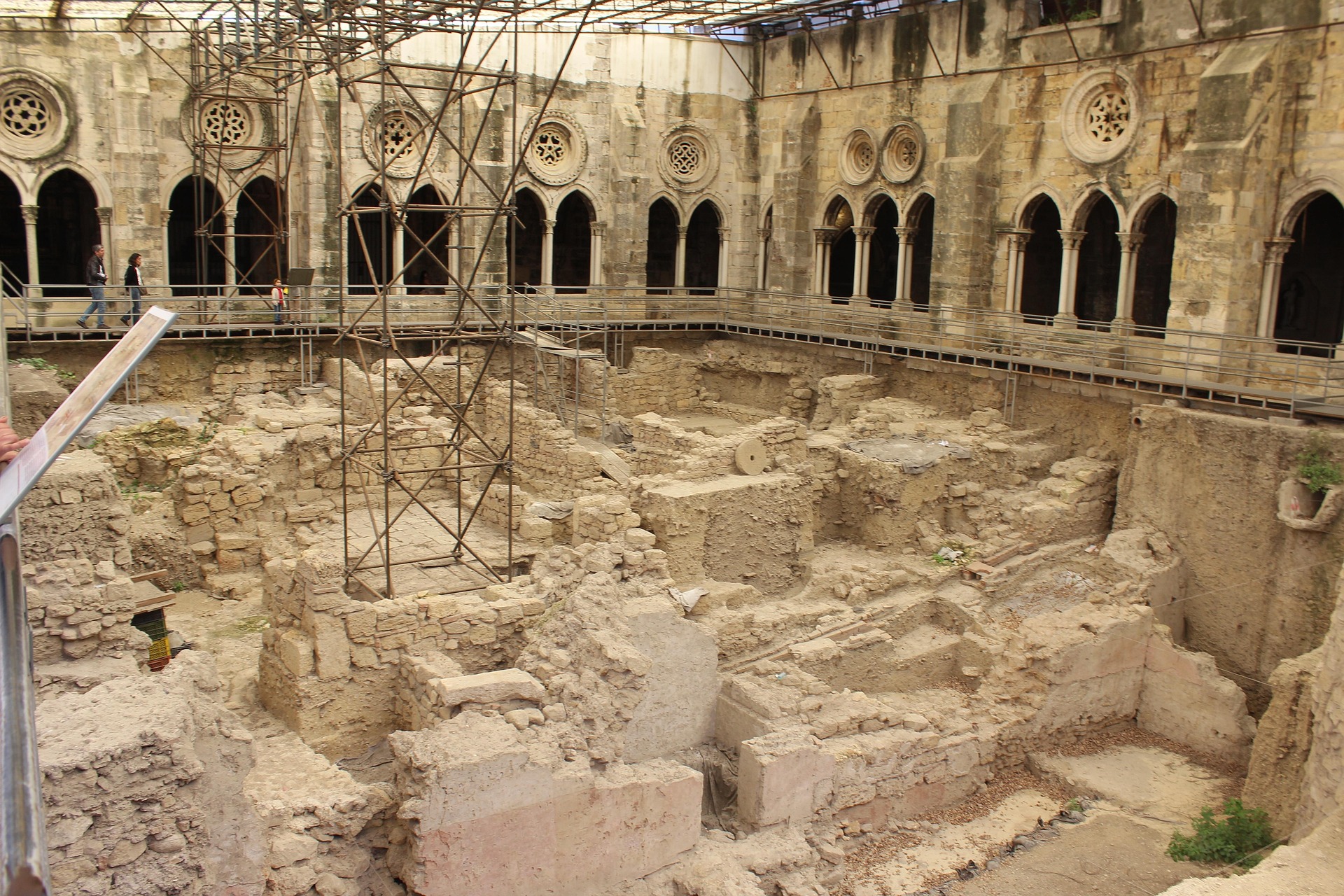
The Carmo Archaeological Museum is one of the most atmospheric historical sites in Lisbon.
Its setting is extraordinary: the roofless Gothic nave of the former Carmo Convent rises above the surrounding streets, with enormous stone arches open to the sky.
The building was severely damaged by the earthquake of 1755 and was never fully reconstructed as a conventional church. Its ruins have become one of the city’s most evocative reminders of the disaster.
But there’s more to the museum than its architecture.
The story of the Carmo Convent
The convent was founded in the late 14th century by Nuno Álvares Pereira, a Portuguese military commander who played a major role in securing Portugal’s independence during the crisis of 1383–1385.
Its construction reflected the importance of religious institutions in medieval Lisbon. The building was intended to be an impressive Gothic church, and its scale still communicates something of its original ambition.
The earthquake of 1755 changed everything.
The disaster struck on the morning of 1 November, All Saints’ Day, when many people were attending religious services. Churches and other buildings collapsed, fires spread, and the tsunami that followed devastated parts of the waterfront.
The Carmo Convent was among the buildings badly damaged. Although there were later attempts to restore parts of the structure, the church was never returned to its original form.
Today, the ruins preserve a direct physical connection to that defining moment in Lisbon’s history.
What can you see inside the museum?
The collection includes archaeological objects, sculpture, architectural fragments, inscriptions, and artefacts from different historical periods.
You’ll encounter material from prehistoric and ancient societies, as well as objects associated with medieval and later Portuguese history.
The collection is eclectic, which makes it particularly interesting for visitors who enjoy discovering unexpected objects rather than following a single chronological narrative.
The building itself remains the main attraction, however. Standing beneath the arches gives you a sense of the scale of the original church and the fragility of even the most imposing structures.
Is the Carmo Archaeological Museum worth visiting?
Very much so.
It’s one of the easiest historical museums to combine with a walking tour of central Lisbon. You can explore Chiado, visit the ruins, walk down towards Baixa, and continue to Praça do Comércio without needing to travel across the city.
The visit is also short enough to fit into a packed itinerary.
If you’re particularly interested in the earthquake of 1755, I’d combine Carmo with the Lisbon Story Centre or the Lisbon Quake experience. Each approaches the disaster from a different angle.
4. Roman Theatre Museum (Museu de Lisboa – Teatro Romano)
Best for: Roman Lisbon, archaeology, and the ancient foundations of the city.
Suggested visit: 45–75 minutes.
Location: Alfama, near Lisbon Cathedral.
Long before Lisbon became the capital of Portugal, it was an important settlement in the Roman world.
Known as Felicitas Julia Olisipo, Roman Lisbon occupied a strategic position near the Tagus estuary. Its location made it valuable for trade, maritime connections, and communication with other parts of the Roman Empire.
The Roman Theatre Museum offers an opportunity to explore this period through the remains of an ancient theatre and the archaeological discoveries associated with it.
What was Roman Lisbon like?
Olisipo was part of the Roman province of Lusitania, and its development reflected the wider process of Roman urbanisation across the Iberian Peninsula.
Public buildings, roads, commercial activity, and Roman cultural practices helped shape the settlement. The theatre was an important civic structure, providing a venue for performances and public life.
The surviving remains reveal something about the scale and organisation of the ancient city, although much of Roman Lisbon now lies beneath later buildings and streets.
This is one reason archaeology is so important here: modern Lisbon developed over many centuries on top of earlier settlements, meaning that traces of the past are often concealed beneath the present-day city.
What will you see at the Roman Theatre Museum?
The museum combines archaeological remains with displays explaining the site’s history and significance.
Visitors can learn about the theatre’s structure, its role in Roman urban life, and the archaeological investigations that revealed parts of the ancient building.
Because the site is relatively compact, it offers a manageable introduction to Roman Lisbon without requiring a full day at a large archaeological museum.
Its location is another advantage. You’re close to Lisbon Cathedral, Alfama, and other historic sites, so it fits naturally into a walking route through the oldest part of the city.
Is the Roman Theatre Museum worth visiting?
If you’re interested in ancient history, definitely.
It’s particularly rewarding when combined with a walk through Alfama, where the street layout, buildings, and archaeological sites reveal different layers of Lisbon’s development.
Don’t expect a complete Roman city to be visible above ground. Instead, approach the museum as a window into a much larger archaeological landscape.
Check current access and opening arrangements before visiting, as archaeological sites can occasionally be affected by conservation work.
5. National Archaeology Museum (Museu Nacional de Arqueologia)
Best for: Ancient Portugal, prehistoric societies, and the archaeology of the Iberian Peninsula.
Suggested visit: Allow 1.5–2 hours if the relevant galleries are open.
Location: Belém.
To understand Lisbon’s history properly, it helps to look beyond the city itself.
The National Archaeology Museum holds important archaeological collections relating to the peoples and civilisations that inhabited Portugal before the emergence of the modern Portuguese state.
Its collections cover long periods of human history, from prehistoric communities to the Roman world and later societies.
Why does archaeology matter to Lisbon’s history?
Written accounts are valuable, but they don’t tell us everything about how people lived.
Archaeological evidence can reveal settlement patterns, burial practices, religious beliefs, trade, technology, and everyday activities that may not appear in surviving documents.
This is particularly important in a region that has experienced many different periods of settlement and cultural influence.
The history of Lisbon and its surrounding territory includes prehistoric communities, Roman occupation, Visigothic rule, Islamic rule, and the development of the medieval Portuguese kingdom.
Each period left traces that help archaeologists reconstruct the past.
What can you discover at the museum?
The museum’s collections include archaeological objects from prehistoric and historical periods, alongside material that illustrates the development of societies across what is now Portugal.
The objects offer a broader perspective on the region’s history, helping visitors understand the background to Lisbon’s emergence as a major settlement.
However, there is an important practical consideration: the museum has been affected by changes to its facilities and exhibition arrangements. Don’t assume that all collections are currently accessible.
Check the official museum website before planning your visit, particularly if you are travelling specifically to see a particular collection.
Is the National Archaeology Museum worth visiting?
For archaeology enthusiasts, it is an important institution.
It also complements the Roman Theatre Museum. The latter focuses on a specific archaeological site in Lisbon, while the National Archaeology Museum provides a wider perspective on the region’s ancient past.
If both are accessible during your visit, they can help place Roman Lisbon within the much longer history of human settlement in Portugal.
6. Maritime Museum (Museu de Marinha)
Best for: The Age of Discoveries, Portuguese exploration, ships, and maritime history.
Suggested visit: 1.5–2 hours.
Location: Belém.
Few subjects are as closely associated with Portugal’s national history as maritime exploration.
During the 15th and 16th centuries, Portuguese navigators established sea routes connecting Europe with Africa, Asia, and the Indian Ocean. These voyages expanded geographical knowledge, transformed international trade, and helped create a far-reaching Portuguese maritime empire.
They also formed part of a history of colonial conquest, enslavement, and exploitation that deserves to be understood alongside the achievements of navigation and shipbuilding.
The Maritime Museum explores the ships, instruments, voyages, and personalities associated with this complex period.
Why was Lisbon so important to maritime exploration?
Lisbon’s position on the Tagus estuary gave it access to the Atlantic Ocean while providing a sheltered harbour for ships and commercial activity.
The city became an important centre for maritime administration, trade, and the organisation of overseas expeditions.
Its waterfront was connected to the movement of people, goods, information, and wealth across increasingly extensive trading networks.
The consequences were profound. Maritime expansion influenced Portugal’s economy, architecture, politics, and cultural identity, while also transforming societies across several continents.
Understanding this period helps explain the significance of Belém’s monuments and the presence of maritime imagery throughout Lisbon.
What can you see at the Maritime Museum?
The collection includes ship models, navigational instruments, historical vessels, maps, and objects associated with Portuguese seafaring.
The models are particularly useful for understanding how ships evolved and how different designs served different purposes.
Royal vessels provide another perspective, showing how boats were used for ceremonial occasions as well as exploration and trade.
The museum also explores important voyages and the development of Portuguese navigation, helping visitors understand the technical challenges faced by sailors crossing unfamiliar waters.
Is the Maritime Museum worth visiting?
If you’re interested in Portuguese history, it’s one of the strongest choices in Lisbon.
It’s especially useful if you plan to visit Belém’s monuments, since the museum adds historical context to the architecture and national symbolism of the district.
Allow around two hours, and consider combining the visit with the Jerónimos Monastery or other nearby attractions.
For a deeper understanding of the maritime period, a guided tour of Belém can also be worthwhile.
7. Aljube Museum – Resistance and Freedom (Museu do Aljube – Resistência e Liberdade)
Best for: Portugal’s dictatorship, political repression, anti-colonial resistance, and the Carnation Revolution.
Suggested visit: 1.5–2 hours.
Location: Near Lisbon Cathedral, in the historic centre.
If the Maritime Museum explains Portugal’s imperial past, the Aljube Museum helps visitors understand a very different chapter of the country’s history.
Portugal spent decades under authoritarian rule during the 20th century. The Estado Novo regime, associated with António de Oliveira Salazar and later Marcelo Caetano, maintained political control through censorship, surveillance, imprisonment, and the suppression of opposition.
The Aljube Museum is dedicated to remembering those who resisted the dictatorship and fought for freedom and democracy.
It is housed in a former prison that was used to detain political opponents, making the building itself an important part of the story.
What was the Estado Novo?
The Estado Novo was an authoritarian regime established in the 1930s and brought to an end by the Carnation Revolution on 25 April 1974.
During this period, political opposition was restricted, censorship was widespread, and security institutions pursued people regarded as threats to the regime.
The dictatorship also maintained Portugal’s colonial empire long after many other European powers had begun dismantling theirs. The wars in Angola, Guinea-Bissau, and Mozambique contributed to growing opposition within Portugal and the military.
These conflicts were among the important factors behind the revolution that eventually overthrew the regime.
What does the Aljube Museum show?
The exhibitions examine the dictatorship’s institutions, methods of repression, and the experiences of those who opposed it.
They also explore resistance movements, the anti-colonial struggle, and the events leading to the Carnation Revolution.
This makes the museum particularly valuable for visitors who want to understand modern Portugal rather than concentrating exclusively on the country’s medieval and imperial past.
The exhibition also helps explain why 25 April remains such an important date in Portugal. The revolution marked a decisive break with authoritarian rule and opened the way for democracy.
Why is this museum important?
History is not only about monuments and famous personalities. It is also about the experiences of ordinary people who lived through political upheaval, censorship, imprisonment, and war.
The Aljube Museum gives these experiences a central place in the story of Lisbon.
Its location is also convenient. You can combine a visit with Lisbon Cathedral, Alfama, and other historic sites in the old city.
Is the Aljube Museum worth visiting?
Absolutely, particularly if you’re interested in political history, human rights, or contemporary Portuguese society.
The subject matter is serious, but the museum provides essential context for understanding the country as it exists today.
I’d recommend allowing enough time to read the displays rather than rushing through them.
8. National Pantheon (Panteão Nacional)
Best for: Portuguese national identity, important historical figures, architecture, and monuments.
Suggested visit: 45–90 minutes.
Location: Santa Clara, near Alfama.
The National Pantheon is not a conventional museum, but it’s an excellent place to explore how Portugal remembers its past.
Housed in the monumental Church of Santa Engrácia, the building contains the tombs of prominent Portuguese figures and provides a setting for understanding the people and achievements that have been incorporated into the country’s national story.
The building itself is also historically significant. Construction began in the 17th century, although the structure took centuries to complete. Its monumental dome has become a recognisable feature of Lisbon’s skyline.
Who is commemorated here?
The pantheon contains the tombs of prominent Portuguese figures from different fields, including literature, politics, and public life.
Among those commemorated are writers, political leaders, and individuals associated with Portugal’s maritime history.
The presence of these figures reflects the way nations construct collective memories. Deciding who deserves a place in a national pantheon is itself a statement about which lives and achievements a society considers worthy of remembrance.
What can you learn from visiting?
The building offers an opportunity to explore the relationship between history, national identity, and commemoration.
Its architecture reflects changing artistic and political ambitions, while its tombs reveal how Portugal has chosen to honour some of its most celebrated citizens.
The visit also offers a different perspective from a museum displaying historical objects. Here, the monument and the people commemorated within it are the main focus.
Is the National Pantheon worth visiting?
Yes, particularly if you’re interested in Portuguese history and architecture.
It also works well alongside a visit to Alfama or the Feira da Ladra flea market, which is traditionally held nearby on Tuesdays and Saturdays.
Allow time to appreciate the building itself, not just the tombs.
9. Money Museum (Museu do Dinheiro)
Best for: Economic history, trade, currency, and the financial development of Lisbon.
Suggested visit: 1–1.5 hours.
Location: Central Lisbon, near Praça do Comércio.
Money may not be the first subject that comes to mind when you think about Lisbon’s history, but it’s impossible to understand the city without considering trade, commerce, and the movement of wealth.
For centuries, Lisbon’s position on the Tagus made it an important centre for maritime commerce. Its fortunes were influenced by trade with other European cities, overseas expansion, colonial networks, and changing economic systems.
The Money Museum offers a different perspective on these developments.
What does the Money Museum cover?
Located in the former Church of São Julião, the museum explores the history of money in Portugal and internationally.
Its collections include coins, banknotes, and objects associated with the development of currency and banking. Interactive displays explain how money has evolved, how it is produced, and how it influences everyday life.
The museum also examines the changing relationship between money and society, connecting historical developments with broader questions about trade and economic activity.
How does money connect to Lisbon’s history?
Lisbon’s growth was closely linked to its role as a port and commercial centre.
Trade brought goods, people, and wealth into the city, while maritime expansion connected Lisbon to economic networks spanning several continents.
Those connections had enormous consequences, including the growth of commercial institutions and the accumulation of wealth through colonial exploitation and the slave trade.
Looking at money and commerce provides another way to understand the forces that shaped Lisbon’s development.
Is the Money Museum worth visiting?
It’s a worthwhile choice if you’re interested in economic history or want something different from a conventional historical collection.
Its central location makes it easy to combine with Praça do Comércio, Baixa, and the Lisbon Story Centre.
It is also an accessible option for visitors who enjoy interactive exhibitions.
10. National Tile Museum (Museu Nacional do Azulejo)
Best for: Portuguese architectural history, decorative arts, and the changing appearance of Lisbon.
Suggested visit: 1.5–2 hours when open.
Location: Madre de Deus, east of the historic centre.
Lisbon’s distinctive appearance owes a great deal to its azulejos, the decorative ceramic tiles found on buildings throughout the city.
These tiles are more than attractive decoration. They tell stories about trade, religion, artistic exchange, social status, and the changing tastes of Portuguese society.
The National Tile Museum explores this tradition through a collection spanning several centuries.
Why are tiles so important to Lisbon’s history?
Tile decoration became an important feature of Portuguese architecture, appearing in churches, palaces, public buildings, railway stations, and ordinary residential properties.
Different periods brought different colours, patterns, and techniques. Artistic influences travelled between Portugal and other regions, while local workshops developed distinctive approaches.
Tiles also served practical purposes, protecting walls and helping create decorative interiors.
In Lisbon, the tradition became so widespread that tiles are now one of the most recognisable features of the city’s architectural identity.
What makes the museum historically interesting?
The collection traces the evolution of tile-making and decoration from early examples through later Portuguese styles.
One of its best-known features is a panoramic representation of Lisbon before the earthquake of 1755. It provides a visual record of the city before the disaster transformed its historic centre.
The former Madre de Deus Convent adds another historical layer to the experience. The building’s religious architecture and decorative interiors help demonstrate how tiles were incorporated into elaborate spaces.
Is the National Tile Museum worth visiting?
For understanding Lisbon’s architectural heritage, it is an excellent choice.
However, there is a major practical issue: the museum has been listed as closed for renovation. Confirm whether it has reopened before including it in your plans.
If it remains closed, you can still appreciate Lisbon’s tile tradition while walking around the city. Look at historic façades, churches, and public buildings, and consider taking an architectural walking tour.
11. Lisbon Quake – Earthquake Centre
Best for: The earthquake of 1755, immersive historical experiences, and visitors who prefer interactive attractions.
Suggested visit: Around 1.5 hours, depending on the experience and ticket selected.
Location: Belém waterfront area.
The earthquake of 1755 was one of the most consequential events in Lisbon’s history.
It destroyed large parts of the city, caused widespread loss of life, and prompted an ambitious reconstruction programme that reshaped the urban centre.
The Lisbon Quake experience approaches this event through immersive storytelling and interactive technology, allowing visitors to explore the disaster and its consequences in a more experiential way.
What happened in 1755?
On 1 November 1755, a major earthquake struck Lisbon. Buildings collapsed, fires broke out, and a tsunami inundated parts of the waterfront.
The destruction was extensive, particularly in the densely built central areas. The disaster also attracted attention across Europe, prompting debate about religion, philosophy, science, and the nature of natural catastrophes.
The reconstruction was led by the government of King José I, with Sebastião José de Carvalho e Melo, later known as the Marquis of Pombal, playing a central role.
The new downtown was laid out with wider streets, a more regular street grid, and construction methods intended to improve resilience.
What can visitors expect?
The experience combines multimedia presentations, interactive elements, and simulated environments to communicate the scale and consequences of the earthquake.
Rather than examining a traditional collection of objects, visitors follow a structured narrative designed to help them understand what happened and why the disaster mattered.
The attraction also explores the scientific and intellectual questions raised by the earthquake and its influence on European thought.
Is Lisbon Quake worth visiting?
It’s a good option if you’re fascinated by the earthquake or want a more immersive alternative to a conventional museum.
It is also useful for families and visitors who prefer interactive storytelling.
For the fullest understanding of the disaster, I’d combine the experience with the Carmo Archaeological Museum and a walk through Pombaline Baixa. Together, they provide three different perspectives: the experience of the disaster, the surviving ruins, and the rebuilt city.
👉 Compare Lisbon Quake tickets and historical experiences on Viator
👉 Check Lisbon Quake and other historical experiences on GetYourGuide
12. Museum of Lisbon – Casa dos Bicos
Best for: Archaeology, Lisbon’s waterfront, and the city’s development during the early modern period.
Suggested visit: 30–60 minutes for the building and any accessible displays.
Location: Near the Tagus waterfront, east of Praça do Comércio.
Casa dos Bicos is one of Lisbon’s most distinctive historic buildings.
Its unusual façade, covered in diamond-shaped stone projections, makes it stand out from the surrounding architecture. Built in the early 16th century, the building reflects the architectural ambitions and international connections of Lisbon during the period of Portuguese maritime expansion.
Today, it forms part of the Museum of Lisbon’s network of sites dedicated to the city’s history.
Why is Casa dos Bicos historically important?
The building was constructed during a period when Lisbon was becoming an increasingly important centre of overseas trade and political power.
Its architectural design reflects the international influences that reached Portugal through travel, commerce, and cultural exchange.
Archaeological discoveries in the surrounding area have also revealed evidence of earlier occupation, helping demonstrate how Lisbon’s waterfront developed over time.
The site therefore connects several layers of history: the ancient settlement, the early modern city, and the modern capital.
What should you look for?
Start by examining the distinctive façade and considering how different the building looks from the more uniform architecture of Pombaline Baixa.
Depending on the exhibitions and areas open to visitors, you may also encounter displays relating to Lisbon’s history and archaeological discoveries.
Casa dos Bicos is particularly useful as part of a wider exploration of the waterfront, where the city’s maritime past, commercial development, and modern urban life meet.
Is Casa dos Bicos worth visiting?
It’s worth including if you’re already exploring the historic centre and want to understand the development of Lisbon’s waterfront.
Because the building also houses the José Saramago Foundation, check which areas are accessible and what exhibitions are available during your visit.
You can easily combine the exterior with a walk along the river and a visit to nearby historic sites.

The Best Historical Walking Tours to Combine with Lisbon’s Museums
Museums provide valuable historical context, but Lisbon’s streets are where many of the stories become tangible.
A good walking tour can connect the buildings, monuments, and archaeological remains with the people and events that shaped them. It’s particularly useful in a city where different historical periods often exist side by side.
Here are the types of tours I’d consider booking.
1. Alfama and medieval Lisbon walking tours
Alfama is one of the best places to explore Lisbon’s older urban fabric. Its narrow streets, steep stairways, and historic buildings offer a sense of how the city developed before the reconstruction of Baixa.
A knowledgeable guide can explain the neighbourhood’s changing population, its relationship with the river, and the different cultural influences that shaped it.
Combine this with the Roman Theatre Museum or Aljube Museum for a deeper understanding of Lisbon’s historical layers.
👉 Compare Alfama walking tours on Viator
👉 Book an Alfama walking tour on GetYourGuide
2. Pombaline Lisbon and the 1755 earthquake
If you’re particularly interested in the earthquake, choose a tour that explores Baixa and the reconstruction of the city.
Look for guides who explain the original street plan, the architecture of the rebuilt centre, and the role of the Marquis of Pombal.
This tour pairs naturally with the Carmo Archaeological Museum, Lisbon Story Centre, and Lisbon Quake.
3. Belém and the Age of Discoveries
Belém is one of the most important districts for understanding Portugal’s maritime expansion.
A guided visit can help explain the symbolism of the monuments, the role of the Tagus waterfront, and the connections between exploration, commerce, empire, and colonialism.
Combine the tour with the Maritime Museum, and check the opening arrangements of the nearby museums and monuments before you go.
👉 Book a Belém historical tour on Viator
👉 Compare Belém tours on GetYourGuide
4. Modern Portuguese history tours
If you’re interested in the dictatorship and the Carnation Revolution, look for specialist guides who focus on 20th-century Portuguese history.
A walking tour can help place the Aljube Museum’s exhibits within the wider political and social context of the period.
These tours are particularly valuable if you want to understand how Portugal moved from authoritarian rule to democracy.
Museum Passes in Lisbon: Can You Save Money?
If you’re planning to visit several museums, it’s worth checking whether a sightseeing pass could reduce your overall costs.
However, the right choice depends on the attractions you want to see. Not every museum is included in every pass, and a pass isn’t automatically cheaper than buying individual tickets.
The Lisboa Card combines public transport benefits with admission or discounts at participating attractions, subject to its current conditions.
It can be useful if you’re planning to visit several included museums and monuments while also using public transport.
Before buying, check whether your preferred attractions are included and whether any restrictions apply. Don’t assume that the card covers every museum in this guide.
👉 Check the Lisboa Card and its current benefits
Individual museum tickets
If you’re only planning to visit two or three museums, individual tickets may be the better option.
This is especially true if you’re focusing on museums that aren’t included in your chosen pass or if you want to spread your visits across several days.
Guided tours and attraction packages
Some operators offer combination tickets or guided experiences that can make planning easier.
These are particularly useful when a guide adds historical context or when a tour combines several attractions in the same district.
Where to Stay in Lisbon for Exploring the City’s History
If you’re visiting Lisbon primarily for its historical attractions, choosing the right base can save time and make your trip much more enjoyable.
The city’s museums are spread across several districts, so you won’t be walking distance from every attraction regardless of where you stay. However, some neighbourhoods make particularly good bases for historical sightseeing.
Baixa: Best for central historical sightseeing
Baixa is an excellent choice for visitors who want easy access to Praça do Comércio, the Lisbon Story Centre, and the streets of central Lisbon.
It’s also a convenient base for walking tours and public transport connections.
You’ll find a wide range of hotels, although prices can rise during busy periods.
Chiado: Best for history, restaurants, and atmosphere
Chiado is a strong option if you want to combine historical sightseeing with cafés, restaurants, shopping, and cultural attractions.
The Carmo Archaeological Museum is nearby, and you can easily explore Baixa, Bairro Alto, and parts of the old city on foot.
The area is particularly appealing if you want a central location without staying directly on one of Lisbon’s busiest tourist squares.
Alfama: Best for the oldest parts of Lisbon
Alfama is a good choice if you’re particularly interested in medieval streets, Lisbon Cathedral, and the city’s older neighbourhoods.
Staying here puts you close to the Roman Theatre Museum and Aljube Museum, although the steep streets and uneven pavements can make getting around more demanding.
Accommodation ranges from small guesthouses to apartments and boutique hotels.
Avenida da Liberdade: Best for comfortable hotels and transport
Avenida da Liberdade is a practical option if you want a comfortable hotel with good connections to the rest of the city.
It isn’t directly beside every historical attraction, but public transport makes it relatively easy to reach the central districts and museums farther afield.
How to choose?
If you’re visiting Lisbon for the first time and want to explore the historic centre on foot, I’d look at Baixa or Chiado first.
If you’re especially interested in Alfama and the city’s oldest streets, consider staying in or near that neighbourhood.
Wherever you choose, compare location, transport connections, and current prices rather than booking solely on the basis of the hotel’s advertised proximity to one attraction.
👉 Compare hotels in Lisbon on Booking.com
How to Plan a Historical Museum Day in Lisbon
You don’t need to spend every day of your holiday inside museums to understand Lisbon’s past. In fact, combining a museum visit with a walk through the surrounding neighbourhood often provides a much better experience.
Here are three ways to organise your time.
Option 1: Ancient and medieval Lisbon
Start around Lisbon Cathedral and visit the Roman Theatre Museum, subject to its opening arrangements.
Continue through Alfama, exploring the neighbourhood’s historic streets and viewpoints, before visiting the Aljube Museum.
If time allows, finish with a walk towards Praça do Comércio.
This route introduces several different periods of Lisbon’s history, from the Roman settlement to medieval urban development and the modern struggle for democracy.
Option 2: The earthquake and the rebuilt city
Begin at the Lisbon Story Centre in Praça do Comércio.
Walk through Baixa and look at the regular street grid and architecture associated with the post-earthquake reconstruction.
Continue towards Chiado and the Carmo Archaeological Museum, where the ruined church provides a powerful reminder of the destruction.
If you want a more immersive experience, consider adding Lisbon Quake on a separate part of your trip, allowing enough time for travel.
Option 3: Portugal’s maritime past
Spend the day in Belém, exploring the Maritime Museum and the surrounding monuments.
If the National Archaeology Museum is open and accessible, you can consider adding it to the day.
Take time to walk along the riverfront and reflect on the historical significance of the district.
This route is particularly useful if you’re interested in the relationship between Lisbon, overseas trade, and Portugal’s maritime empire.
My advice: Choose one main historical theme per day rather than trying to visit every museum. Lisbon’s steep streets, transport connections, and the time required to appreciate exhibitions can make an overly ambitious schedule tiring.
❓Frequently Asked Questions About Lisbon’s Historical Museums
❓1. What is the best museum in Lisbon for learning about the city’s history?
The Museum of Lisbon at Pimenta Palace is my first choice for a broad overview. It explores the city’s development across many centuries, from early settlement to the modern capital.
The Lisbon Story Centre is another strong option if you prefer a more accessible, multimedia introduction.
❓2. Which Lisbon museum is best for the earthquake of 1755?
The Carmo Archaeological Museum is one of the most compelling places to explore the earthquake because its roofless Gothic church remains a visible reminder of the disaster.
The Lisbon Story Centre provides historical context, while Lisbon Quake offers a more immersive experience.
❓3. Where can I learn about Roman Lisbon?
The Roman Theatre Museum in Alfama is one of the most direct ways to explore the ancient city of Olisipo.
The National Archaeology Museum also provides a wider perspective on ancient societies in Portugal, although you should check which galleries are currently accessible.
❓4. Which museum is best for understanding Portugal’s Age of Discoveries?
The Maritime Museum in Belém is the strongest choice for learning about Portuguese navigation, shipbuilding, and maritime exploration.
You can combine it with a visit to the area’s historic monuments to understand how the maritime period shaped Portugal’s national identity.
❓5. Where can I learn about Portugal’s dictatorship and the Carnation Revolution?
The Aljube Museum – Resistance and Freedom is dedicated to the history of dictatorship, political repression, resistance, anti-colonial struggles, and the revolution of 25 April 1974.
It’s one of the most important museums to visit if you want to understand modern Portugal.
❓6. Is the National Tile Museum worth visiting?
Yes, it’s an important museum for understanding Portuguese artistic and architectural traditions.
However, it has been listed as closed for renovation, so check the current situation before visiting. You can still explore Lisbon’s tile heritage through its historic streets and buildings.
❓7. Can I visit Lisbon’s historical museums in one day?
You can visit two or three museums in a day if they’re reasonably close together, but trying to cover all the major museums in one day isn’t realistic.
A route through Alfama and central Lisbon is one practical option. Alternatively, devote a day to Belém and Portugal’s maritime history.
❓8. Are Lisbon’s historical museums suitable for children?
Many are, although the experience depends on the child’s interests and age.
The Lisbon Story Centre and Money Museum offer accessible, interactive approaches to history. Lisbon Quake may also appeal to families who enjoy immersive experiences, although its earthquake simulations and subject matter may not suit every child.
❓9. Do I need a museum pass in Lisbon?
Not necessarily. A pass can be worthwhile if you plan to visit several participating attractions and make use of the included transport benefits.
If you’re visiting only a couple of museums, buying individual tickets may be cheaper. Always check the current terms and attractions included before purchasing.
❓10. Can I book guided historical tours in Lisbon?
Yes. Guided walking tours are available for areas such as Alfama, Baixa, Chiado, and Belém, as well as for specific subjects such as the earthquake of 1755 and Portuguese maritime history.
❓11. What is the best area to stay in Lisbon for historical sightseeing?
Baixa and Chiado are particularly convenient for first-time visitors because they provide access to the historic centre, restaurants, public transport, and several major attractions.
Alfama is another good option if you want to focus on the city’s oldest neighbourhoods, although its steep streets may be challenging for some travellers.
👉 Compare Lisbon hotels on Booking.com
❓12. Are Lisbon’s museums open every day?
No. Opening days vary by museum, and some close on Mondays or Sundays. Museums may also close temporarily for renovations or changes to their exhibitions.
Check the official website of each museum before travelling, particularly if you’re planning your day around a specific collection.
Final Thoughts: Discover Lisbon’s History Beyond the Monuments
Lisbon’s history is far more complicated and interesting than a simple story of explorers, kings, and beautiful old buildings.
The city grew from an ancient settlement into a major Roman centre, developed through centuries of political and cultural change, and became a focal point of Portuguese maritime expansion. The earthquake of 1755 transformed its urban landscape, while dictatorship and revolution shaped the country that emerged in the 20th century.
The museums in this guide help bring those different periods together.
If you’re short on time, I’d start with the Museum of Lisbon at Pimenta Palace for the broad picture, the Carmo Archaeological Museum for the earthquake and medieval city, and the Aljube Museum for the modern struggle for democracy. Add the Maritime Museum if you want to explore the Age of Discoveries in greater depth.
Most importantly, don’t treat the museums as isolated attractions. Use what you learn inside them to understand the streets outside.
When you walk through Baixa, remember that the orderly layout reflects the reconstruction after 1755. When you explore Alfama, look for traces of the city’s earlier history. In Belém, consider the global consequences of Portuguese maritime expansion, including both cultural exchange and colonial exploitation.
That is when Lisbon’s museums become especially rewarding: when the history you encounter inside helps you see the city itself differently.
Take your time, choose the subjects that genuinely interest you, and combine museum visits with guided walks through the neighbourhoods where that history unfolded.
Lisbon has centuries of stories to tell, and its museums offer one of the best ways to discover them.
About the author
I’m Duncan, a Lisbon-based guide and writer who’s lived here for 11 years and taken hundreds of visitors around the city. I created Lisbon Listicles to share everything you need to know about Lisbon in clear, practical lists — from iconic sights to hidden gems — so you can plan your trip easily and make the most of your time here.
All recommendations are based on personal experience and the questions I hear most often from visitors.
Leave a Reply