Disclosure: Some links in this article are affiliate links. If you book through them, I may earn a small commission at no extra cost to you. I only recommend places and experiences I genuinely think are worth it.
Alfama is probably the Lisbon neighbourhood I get asked about most often by visitors.
And I understand why.
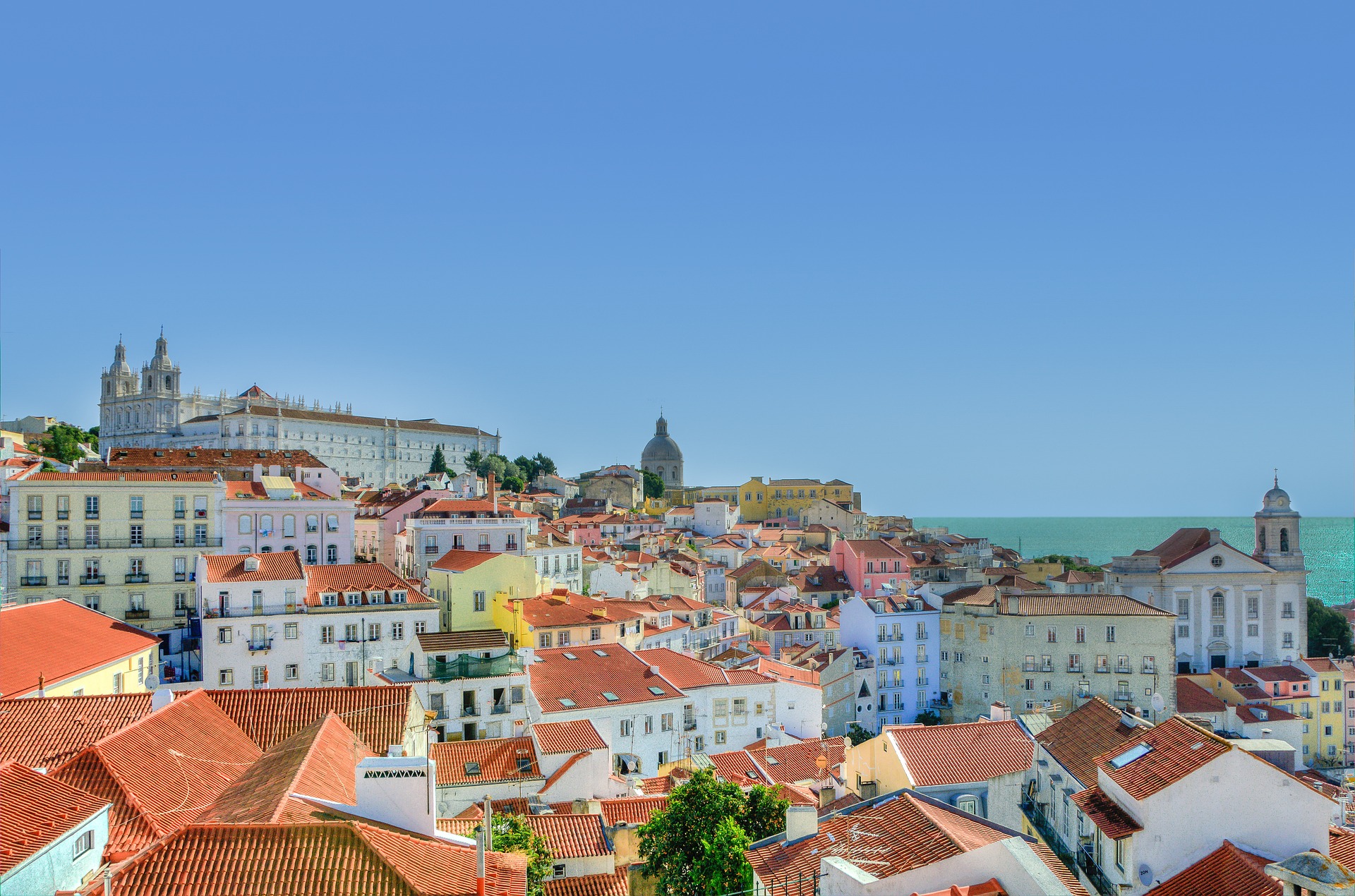
This is the Lisbon of narrow lanes, tiled façades, washing hanging from balconies, tiny squares, steep staircases and viewpoints opening suddenly over the Tagus. It is also where you can still get a sense of how Lisbon worked long before the grand avenues of the Baixa and Chiado were built.
Having spent years in Lisbon and worked as a tour guide, I’ve walked through Alfama more times than I could possibly count. And one thing I’ve learned is that there isn’t one universally “best” Alfama tour.
The right tour depends on what you actually want from the neighbourhood.
If you love history and want to understand what you’re looking at, I’d choose a good walking tour. If you’re travelling with someone who struggles with hills, a private tuk-tuk tour can make far more sense. If food is your priority, I’d skip the standard sightseeing tour altogether and eat your way through the neighbourhood.
And if you have only one day in Lisbon, there are tours that combine Alfama with other parts of the city, which can be a much better use of your time.
There is another reason I recommend taking a tour here.
Alfama is not a museum.
It is a living residential neighbourhood. The best guides don’t simply point at an old building and recite a date. They explain why the streets look the way they do, how the neighbourhood survived the 1755 earthquake, why Fado became associated with these streets, where the medieval city actually stood, and how modern Lisbon fits around all of it.
That context changes the experience.
So, rather than giving you a random list of tours and telling you they’re all wonderful, here’s my guide to the best types of Alfama tours, who they’re suited to, what to expect, and which one I’d choose in different circumstances.
👉Looking for more things to do in Lisbon? Take a look at my full post.
A Brief History of Alfama: From Moorish Lisbon to Modern-Day Fado
Before choosing an Alfama tour, it helps to understand what makes this particular part of Lisbon so special.
Alfama isn’t simply an old neighbourhood that happens to have survived. It is one of the places where you can still see layers of Lisbon’s history in the streets themselves.
The exact origins of the neighbourhood stretch further back than the medieval period, with evidence of Roman occupation in the wider area. But it was during the centuries of Muslim rule that the character and name of Alfama really began to take shape.
Alfama under Muslim rule
Lisbon was conquered by Muslim forces in 711 and became part of the Islamic world for several centuries. The settlement grew around the hill now dominated by São Jorge Castle, with the area that became Alfama developing below it towards the river.
The name Alfama is generally believed to come from the Arabic al-hamma, referring to hot springs or baths.
You can still see traces of this history in the neighbourhood’s layout.
Unlike the more geometric streets of the Baixa, which were rebuilt according to an organised plan after the 1755 earthquake, Alfama is a maze of narrow lanes, staircases and irregular passages. It grew organically around the contours of the hillside rather than according to a modern street grid.
That is one of the reasons walking through Alfama feels so different from walking through central Lisbon.
The streets weren’t designed for cars.
They weren’t designed for tourism.
They evolved around the people who lived here.
The Christian conquest of Lisbon
In 1147, Lisbon was captured by the forces of Afonso Henriques, the first king of Portugal, with the assistance of a large contingent of Northern European crusaders.
The event is one of the defining moments in Lisbon’s medieval history.
After the Christian conquest, the city was gradually transformed, and the cathedral that we now know as the Sé de Lisboa was established on the site of a former mosque.
Alfama continued to develop as a densely populated neighbourhood beneath the castle.
Over the following centuries, the area became home to different communities and trades, and its proximity to the river meant that fishing, maritime work and other activities connected with the port became important parts of local life.
That connection with working-class Lisbon would remain significant for centuries.
Why did Alfama survive the 1755 earthquake?
This is one of the most interesting parts of Alfama’s history.
On 1 November 1755, Lisbon was devastated by a catastrophic earthquake, followed by a tsunami and widespread fires.
Much of the lower city was destroyed.
The Baixa, in particular, suffered enormous damage and was subsequently rebuilt almost from scratch according to the highly organised plan associated with the Marquis of Pombal.
Alfama was different.
Although the neighbourhood certainly suffered damage and loss of life, much of its dense hillside structure survived.
One reason is geological: the higher ground around the castle and Alfama generally experienced different conditions from the softer, lower ground beneath the Baixa.
Another is simply the nature of the buildings and streets.
The result is that when you walk through Alfama today, you’re experiencing a street pattern that is far older than the orderly grid of the reconstructed city centre.
This is one reason I always tell visitors not to rush through the neighbourhood.
You’re not simply looking at old-looking buildings.
You’re walking through one of the parts of Lisbon where the shape of the medieval city is still visible.
From working neighbourhood to home of Fado
For centuries, Alfama was a densely populated working-class neighbourhood with strong connections to the river and the city’s poorer communities.
That social history is important because it helps explain Alfama’s association with Fado.
Fado developed in Lisbon during the 19th century, although its precise origins are complicated and still debated. Rather than having a single moment when somebody “invented” it, the music emerged from a mixture of Lisbon’s urban culture and different musical traditions.
Alfama eventually became one of the neighbourhoods most strongly associated with the genre.
The image of Fado, Alfama and old Lisbon became inseparable.
Even today, you’ll find Fado houses tucked into the neighbourhood’s narrow streets, although the relationship between Fado and Alfama is considerably more complicated than the tourist image sometimes suggests.
Alfama in the 20th century
During the 20th century, Alfama remained a densely populated residential neighbourhood.
It was not always considered one of Lisbon’s most fashionable areas.
In fact, for long periods, Alfama was associated much more with working-class life than with tourism.
That is worth remembering when visiting today.
The neighbourhood’s current popularity can make it easy to forget that people weren’t living here for the benefit of visitors. The tiny shops, laundries, cafés and residential buildings are part of a community that existed long before Instagram discovered Lisbon.
Alfama today
Today, Alfama is one of Lisbon’s most visited neighbourhoods.
The medieval streets, viewpoints, cathedral, castle, Fado houses and proximity to the river attract visitors throughout the year.
But beneath the tourism, much of the neighbourhood remains residential.
You’ll still see locals hanging washing from balconies, chatting outside cafés, carrying groceries up steep streets and going about their everyday lives.
And that’s precisely why I think Alfama is best explored slowly.
A tour can explain the major historical events, but don’t spend the entire visit looking for monuments.
Look at the buildings.
Notice the street names.
Pay attention to the way the neighbourhood climbs towards the castle.
Look at how the streets narrow and widen.
Then look back towards the Tagus and imagine how different this hillside must have looked centuries ago.
Why Alfama’s history makes taking a tour worthwhile
You can absolutely explore Alfama without a guide.
I’ve done it myself countless times, and wandering without a plan is one of the pleasures of the neighbourhood.
But this is also somewhere where a knowledgeable guide can transform what you’re seeing.
Without the historical context, a narrow lane is simply a picturesque narrow lane.
Once you understand that you’re following a street pattern that developed over centuries, that same lane becomes a fragment of Lisbon’s past.
A good guide can connect the dots between Islamic Lisbon, the Christian conquest, the medieval city, the 1755 earthquake, the working-class neighbourhood that followed and the Fado culture that later became internationally famous.
That’s why, if this is your first visit, I think a good walking tour is one of the best introductions you can give yourself to Alfama.
Then, once you’ve learned the story, put the map away and explore it yourself.
That’s when Alfama really starts to come alive.

The Best Tours of Alfama
1. Walking Tours of Alfama
Best for: first-time visitors, history lovers and anyone who wants to understand Alfama rather than simply see it.
If you’re reasonably mobile, a walking tour is my first choice for Alfama.
There is simply no substitute for walking here.
Alfama’s biggest attractions aren’t really individual monuments. They’re the spaces between them: the twisting lanes, staircases, little courtyards, viewpoints and unexpected corners that you would probably miss from a vehicle.
A good guide can also help you make sense of what initially feels like a maze.
You’ll typically encounter places such as Lisbon Cathedral, the medieval streets around the Sé, Portas do Sol, Santa Luzia and the area around São Vicente. Depending on the tour, you may also explore the upper neighbourhood towards the National Pantheon and Feira da Ladra.
The important thing is not just ticking these places off.
A good walking tour should explain how Alfama developed.
This is one of Lisbon’s oldest surviving neighbourhoods, with a complicated history involving Roman, Visigothic, Islamic and Christian periods. The name itself is generally connected with the Arabic al-hamma, referring to springs or baths, a reminder of the neighbourhood’s Islamic heritage.
You don’t need an academic lecture while you’re on holiday, of course. But when a guide connects the architecture and street plan to that history, Alfama becomes considerably more interesting.
What a good Alfama walking tour should include
Look for a tour that spends plenty of time actually inside Alfama rather than treating it as one stop on a rapid Lisbon highlights tour.
Ideally, you’ll get:
- Lisbon’s medieval and Islamic history
- The 1147 Christian conquest of Lisbon
- The role of the Sé Cathedral
- The impact of the 1755 earthquake
- Alfama’s connection with Fado
- Local architecture and azulejos
- Traditional viewpoints
- Everyday life in the neighbourhood
- Stories about the streets and buildings
- Recommendations for food and Fado afterwards
The last point is more important than it sounds.
One of the benefits of taking a tour early in your stay is that you can ask the guide where they would actually eat or listen to Fado rather than relying entirely on whatever happens to rank highly online.
The catch: Alfama is steep
This is the biggest thing people underestimate.
Alfama isn’t simply “hilly” in the abstract. Some streets are genuinely steep, and you’ll be dealing with uneven paving, steps and long periods on your feet.
Wear proper shoes.
I wouldn’t choose this neighbourhood for your first walking tour in Lisbon while wearing brand-new dress shoes or anything with a slippery sole.
And don’t assume that because a tour description says “easy pace” that Alfama itself is flat. It isn’t.
If mobility is an issue, a private or vehicle-based option may be considerably more enjoyable.
👉 Explore the walking tours on GetYourGuide and find the best way to discover Alfama on foot.
2. Private Walking Tours of Alfama
Best for: couples, families, photographers, history enthusiasts and travellers who want a more personal experience.
A private walking tour is worth considering if you don’t want to move at the pace of a group.
The difference can be surprisingly significant.
On a large group tour, the guide has to keep everyone together. Someone wants to stop for photographs, another person wants to hear more about the earthquake, someone else is already thinking about lunch.
With a private guide, you can follow your own interests.
If you’re fascinated by Lisbon’s Moorish history, spend longer on it.
If you’re interested in Fado, ask questions.
If you’re a photographer, stop when the light is good.
If you’re travelling with children, the guide can adapt the storytelling rather than delivering the same historical explanation they would give to a group of adults.
This is particularly useful in Alfama because there are so many stories hidden in relatively small spaces.
Why I’d consider private tours particularly good for Alfama
Alfama rewards curiosity.
You might walk past an apparently insignificant doorway and discover that the building has a fascinating history. You might see an old architectural detail that raises a question. Or you might notice how dramatically the neighbourhood changes after just a few minutes of walking.
A private guide has the flexibility to follow those threads.
That’s difficult to do with a group of 30 people.
The other advantage is route flexibility.
If you’ve already visited Lisbon Cathedral, there’s little point spending another 20 minutes listening to a standard explanation outside it. A private guide can adjust the route around what you’ve already seen.
Who should pay extra for a private tour?
I wouldn’t automatically tell everyone to book one.
For a solo traveller on a budget, a good group walking tour can be excellent value.
But I’d seriously consider private tours if you’re:
- Travelling as a couple
- Travelling with older relatives
- Travelling with children
- Particularly interested in history
- Interested in photography
- Celebrating a special occasion
- Looking for a quieter experience
- Someone who dislikes large organised groups
For a small group, the price difference can also be less dramatic than people expect once the cost is divided between several people.
👉 For a more personal experience, browse Viator for private walking tours of Alfama.
3. Alfama Tuk-Tuk Tours
Best for: visitors with limited mobility, families, people short on time and anyone who wants to combine Alfama with several Lisbon viewpoints.
Tuk-tuks have become part of Lisbon’s modern tourism landscape, and while I wouldn’t normally recommend a vehicle for exploring every corner of Alfama, they make a lot of sense for certain travellers.
The main advantage is obvious:
You don’t have to climb all those hills yourself.
Lisbon’s tuk-tuk tours can also take you between areas that would otherwise require considerable walking.
A typical experience might combine Alfama with other parts of historic Lisbon, potentially taking in viewpoints, Graça, Mouraria, the city centre or other attractions depending on the route.
That makes a tuk-tuk particularly useful if you only have a short amount of time.
The big advantage: seeing more of Lisbon
Suppose you’re in Lisbon for two days.
Spending several hours exclusively exploring Alfama on foot may not be the most efficient use of your sightseeing time if you also want to see Belém, Baixa, Chiado and other parts of the city.
A tuk-tuk tour can give you an overview.
You can see Alfama’s viewpoints and streets without exhausting yourself, then continue elsewhere.
For first-time visitors, I often think of this as a “get your bearings” tour.
You see the city from several angles, hear the basic history and identify places you’d like to return to later.
But there is a compromise
A tuk-tuk cannot give you the same experience as walking through Alfama.
Some of the most atmospheric lanes are too narrow, too steep or simply inappropriate for a vehicle.
So don’t book a tuk-tuk expecting to explore every hidden alley.
Instead, think of it as a way of seeing the structure of the neighbourhood without doing all the climbing.
And please don’t assume that every tuk-tuk tour is equally good.
Ask:
- How long is actually spent in Alfama?
- Is the tour private or shared?
- How many people fit in the tuk-tuk?
- Does the price include entrance fees?
- Is the route fixed?
- Can you stop for photographs?
- Does the guide speak your preferred language?
- Does the tour cover other neighbourhoods?
A very cheap tour that spends most of its time driving between attractions may not offer much value.
A slightly more expensive small-group or private experience can be considerably better.
4. Segway Tours of Alfama
Best for: adventurous visitors who want something different from a traditional walking tour.
A Segway tour can be a fun alternative if you’ve already done the conventional Lisbon sightseeing circuit.
I’m going to put one caveat on this recommendation, though.
Alfama isn’t the easiest neighbourhood for every Segway tour.
Its cobbled streets, steep sections and narrow lanes mean that the precise route matters enormously. You should therefore check that the tour operator is genuinely experienced with the area rather than assuming that “Segway tour of Lisbon” automatically means you’ll spend significant time exploring Alfama.
The attraction is obvious.
You cover considerably more ground than walking while still being outdoors and close to the streets.
For some visitors, it also makes the hills considerably less intimidating.
Is a Segway better than walking?
For Alfama itself, I’d still choose walking.
But if you’ve got a longer Lisbon tour that uses the Segway to connect Alfama with neighbouring districts, the calculation changes.
You can cover viewpoints and wider parts of the historic centre much more quickly.
It’s also simply more fun for some people.
If you’re travelling with teenagers or adults who aren’t particularly enthusiastic about conventional historical tours, a Segway can turn sightseeing into an activity rather than a lecture.
Just make sure everyone in your group is comfortable using one before committing to a long tour.
👉 Discover the Segway options on Viator and explore Alfama from a completely different perspective.
5. Bike Tours Around Alfama and Historic Lisbon
Best for: active travellers who want to cover more ground.
Bike tours are another category where I’d distinguish between exploring Alfama itself and using Alfama as part of a wider Lisbon cycling route.
The latter is generally the better idea.
Alfama’s steep, narrow and cobbled streets aren’t exactly what most people imagine when they think about an easy bike ride.
That doesn’t mean cycling isn’t useful here.
An experienced guide can incorporate the neighbourhood into a wider route, using bikes to move between Alfama, Baixa, the waterfront and other parts of Lisbon.
The advantage is that you can see significantly more of the city during the same amount of time.
What I like about bike tours
The best bike tours give you a sense of how Lisbon fits together.
Rather than seeing isolated tourist attractions, you move through different neighbourhoods and notice the transitions.
You can also get much further along the waterfront than you would on foot.
For visitors staying several days, this can be an excellent complement to a dedicated Alfama walking tour.
What to watch out for
Lisbon isn’t Amsterdam.
Traffic, hills, cobblestones and tram tracks require attention.
If you’re an inexperienced cyclist, don’t book a demanding cycling tour simply because it sounds like an efficient way to see Lisbon.
Ask about:
- Electric versus conventional bikes
- Fitness requirements
- Route difficulty
- Traffic conditions
- Group size
- How much of the route is actually in Alfama
An e-bike tour can be an especially good compromise because it removes much of the physical challenge without turning the experience into a vehicle tour.
6. Private Car Tours That Include Alfama
Best for: families, older travellers, visitors with limited mobility and anyone who wants a comprehensive Lisbon overview.
A private car tour is probably not what I’d choose if your sole objective is to experience Alfama.
But if your objective is seeing as much of Lisbon as possible comfortably, it’s another matter.
Private car tours can connect Alfama with areas that are considerably farther away, allowing you to combine the historic centre with places such as Belém, depending on the itinerary.
This is particularly useful for families or multigenerational groups.
You can also avoid spending much of the day climbing hills.
The important distinction
Don’t book a “Lisbon highlights” car tour without checking how much time is actually allocated to Alfama.
Some itineraries technically include Alfama but essentially mean a drive past the cathedral and a viewpoint.
That’s not the same thing as exploring the neighbourhood.
If Alfama is your priority, tell the operator.
A good private guide should be able to build the day around your interests.
And if you’re travelling with children or older relatives, don’t underestimate how valuable it can be to have somewhere comfortable to return to between stops.
7. Alfama Food Tours
Best for: food lovers, repeat visitors and anyone who wants to experience the neighbourhood through local cuisine.
If you’ve already seen the main sights of Lisbon, a food tour of Alfama can be one of my favourite ways to experience the neighbourhood.
In fact, even if you haven’t seen it before, food gives you a completely different way into Alfama.
The best food tours aren’t simply a succession of restaurant visits.
They should explain the relationship between food, neighbourhood life and Portuguese culture.
You might encounter traditional petiscos, Portuguese cheeses, cured meats, pastries, seafood, local wines or other regional specialities depending on the itinerary.
And this is where a guide can be particularly useful.
A restaurant recommendation from a guide who knows the neighbourhood is much more valuable than simply being told to eat “Portuguese food”.
Don’t confuse an Alfama food tour with a restaurant crawl
A good food tour should teach you something.
Why is this dish important?
Where did it come from?
How is it normally eaten?
What should you order?
What’s actually traditional?
And perhaps most importantly: what would the guide eat here if they weren’t working?
Those are the questions I’d ask.
Food tours and Fado
There can also be an interesting overlap between Alfama food and Fado.
You may find tours that combine food and wine with an introduction to Fado or an evening performance.
These can work very well, but read the description carefully.
There is a big difference between:
a food tour followed by an authentic Fado experience
and
a tourist dinner with a Fado performance happening in the background.
Neither is necessarily wrong, but they are very different nights.
8. Fado Tours and Experiences in Alfama
Best for: music lovers, couples, first-time visitors and anyone who wants to experience one of Lisbon’s most distinctive traditions.
If you’ve come to Lisbon wanting to experience Fado, Alfama is one of the most obvious places to do it.
But there’s an important distinction to make.
A Fado experience isn’t necessarily a tour in the traditional sense. You’re usually combining an introduction to the neighbourhood or its musical history with an evening performance, sometimes alongside dinner, drinks or a walking tour.
And if you’re visiting Alfama for the first time, I think this can be a fantastic way to experience the neighbourhood after dark.
Why is Fado associated with Alfama?
Fado is deeply connected with Lisbon’s working-class neighbourhoods, particularly Alfama, Mouraria and other historic parts of the city.
The music emerged in Lisbon during the 19th century, although its precise origins are complicated and historians and musicologists have debated them for generations.
That’s actually part of what makes Fado interesting.
It isn’t simply an ancient musical tradition that has remained unchanged.
It developed alongside the city and its communities, reflecting themes of longing, loss, love, separation and everyday life.
The Portuguese word saudade is often associated with Fado, although reducing the music to “sad songs about saudade” doesn’t really do it justice.
A good Fado performance can be intimate, dramatic, melancholy, joyful and incredibly powerful.
And hearing it in the neighbourhoods where the tradition became established adds another layer to the experience.
What does a Fado tour usually involve?
There are several different formats.
Some experiences begin with a walking tour through Alfama, explaining the neighbourhood’s history and its relationship with Fado before taking you to a performance.
Others combine dinner with a Fado show.
Some are specifically designed as small-group cultural experiences, while others are essentially an evening at a Fado house with transportation or a guided introduction included.
Read the description carefully.
There’s a big difference between these experiences.
If you’re particularly interested in Fado itself, I’d lean towards a smaller, more intimate experience where the music is the focus rather than a large restaurant where Fado is essentially entertainment accompanying dinner.
That doesn’t mean a dinner-and-Fado evening can’t be enjoyable.
It absolutely can.
It simply isn’t the same experience.
Should you book a Fado dinner?
This depends on what you’re looking for.
If you’re a first-time visitor who wants an easy, traditional Lisbon evening, a dinner-and-Fado experience can be a great choice.
You don’t have to worry about finding a venue, understanding the neighbourhood or wondering whether you’ve accidentally walked into a tourist trap.
Everything is organised for you.
But if you’re particularly passionate about music, I’d consider separating the two.
Have dinner somewhere you genuinely want to eat and then go to a dedicated Fado performance.
That gives you more control over both experiences.
What should you expect at a Fado performance?
Traditional Fado generally centres around the singer and Portuguese guitar, accompanied by guitarists.
The atmosphere is usually intimate.
And unlike a conventional concert, the audience isn’t necessarily there to clap constantly or talk through the performance.
When the singer begins, people generally listen.
That’s part of the experience.
If you’ve never been to Fado before, don’t worry about knowing the etiquette in advance. Simply follow the room.
But don’t treat it like background music.
Put the phone away.
Don’t hold a loud conversation during a song.
And avoid getting up repeatedly while someone is performing.
The intimacy is one of the things that makes Fado special.
Is Alfama really the best place for Fado?
It’s certainly one of the most famous places for it.
But I wouldn’t tell you that every Fado house in Alfama is automatically better than one elsewhere in Lisbon.
That’s an important distinction.
Fado is strongly associated with Alfama, but the music belongs to Lisbon more broadly.
Mouraria, in particular, has an important historical relationship with Fado.
So if your main objective is the best possible Fado experience, don’t limit your search purely to the words “Fado in Alfama.”
Look at the performers, venue, reviews and format.
If your objective is experiencing Fado in the atmospheric setting of Alfama, however, then an Alfama-based experience makes perfect sense.
My advice for first-time Fado visitors
I’d avoid choosing solely on the basis of the cheapest ticket.
You can find very inexpensive Fado experiences, but price isn’t necessarily the most useful comparison.
Instead, look at:
- The size of the venue
- How long the performance lasts
- Whether dinner is included
- Whether drinks are included
- Whether the experience includes a walking tour
- The number of performers
- Recent reviews
- Whether the performance is the main focus of the evening
- Where the venue is located
And pay particular attention to reviews mentioning the quality of the musicians and singers, rather than reviews that simply say the evening was “fun.”
Who should choose a Fado tour?
I’d recommend this experience particularly to:
- Couples looking for an atmospheric evening
- First-time Lisbon visitors
- Music lovers
- Travellers interested in Portuguese culture
- Anyone who has already explored Alfama during the day
- Visitors looking for something more memorable than another sightseeing tour
It also works brilliantly as the second half of an Alfama day.
Take a walking tour during the afternoon.
Have a relaxed dinner.
Then experience Fado in the evening.
Suddenly, the streets you’ve walked through earlier in the day have a completely different atmosphere.
One thing I wouldn’t do
I wouldn’t book a Fado experience simply because a tour operator tells you that “this is the authentic Alfama experience.”
That’s marketing language.
Instead, look at what you’re actually buying.
If you’re genuinely interested in Fado, choose the experience because of the music and performers, not just because the venue happens to have a famous Alfama address.
That said, for a first visit, there’s something undeniably special about walking through Alfama at night and hearing Fado coming from behind an old doorway.
It’s one of those Lisbon experiences that can be difficult to describe until you’ve actually experienced it.
My verdict
Fado isn’t the best replacement for an Alfama walking tour — it’s the perfect complement to one.
If you have enough time, I’d do both.
Learn the history of Alfama during the day, explore the streets yourself afterwards, and then come back in the evening for Fado.
That’s a much more complete experience than simply ticking “Fado show” off your Lisbon itinerary.

Alfama Tour Comparison: Which Type Is Best?
At this point, you might be wondering which option actually makes the most sense.
Here’s how I’d break it down:
| Tour type | Best for | Walking required | Time efficiency | Local feel | My verdict |
|---|---|---|---|---|---|
| Walking tour | History & first-timers | High | Medium | ⭐⭐⭐⭐⭐ | Best overall |
| Private walking tour | Personal experience | High | Medium | ⭐⭐⭐⭐⭐ | Best premium option |
| Tuk-tuk tour | Hills & limited time | Low | High | ⭐⭐⭐⭐ | Best for convenience |
| Segway tour | Fun & novelty | Low/Medium | High | ⭐⭐⭐ | Best alternative |
| Bike/e-bike tour | Active travellers | Medium | Very high | ⭐⭐⭐⭐ | Best for wider Lisbon |
| Private car tour | Families & mobility | Very low | Very high | ⭐⭐⭐ | Best for comfort |
| Food tour | Food lovers | Medium | Medium | ⭐⭐⭐⭐⭐ | Best culinary experience |
| Fado experience | Music & culture | Low/Medium | Medium | ⭐⭐⭐⭐⭐ | Best evening experience |
If you forced me to choose just one for a first visit, I’d still take a small-group walking tour of Alfama.
If you have mobility concerns, I’d switch that recommendation to a private tuk-tuk tour.
If you’ve already explored Lisbon’s major sights, I’d seriously consider a food-focused tour instead.
And if you’re travelling with a family or group and want to see much more than Alfama, a private tour combining Alfama with other historic districts can be the smartest option.
Which Alfama Tour Should You Choose?
The simplest way to decide is to start with what you want to get out of the experience rather than the tour company’s marketing.
Choose a walking tour if…
You want to understand Alfama.
This is the option I’d recommend to most first-time visitors.
Choose a private walking tour if…
You want flexibility and personal attention.
It’s especially good if you’re genuinely interested in history rather than simply wanting photographs.
Choose a tuk-tuk tour if…
You don’t want to deal with Lisbon’s hills or you’re short on time.
It’s also excellent for combining Alfama with other neighbourhoods.
Choose a Segway tour if…
You want something active and unusual and you’re comfortable balancing on one.
Choose a bike or e-bike tour if…
You want to see more of Lisbon in a single outing.
I’d lean towards an e-bike rather than a conventional bike for most visitors.
Choose a private car tour if…
Comfort and convenience matter more than exploring every alleyway.
This can be particularly useful for families and multigenerational groups.
Choose a food tour if…
You’d rather understand Lisbon through what people eat.
Honestly, this is one of the options I’d consider even if you’ve already taken a walking tour.
Things to Consider Before Booking an Alfama Tour
There are a few things I’d check before pressing the booking button.
1. Check the amount of walking
“Alfama tour” does not automatically mean an easy walk.
Look for the total duration and fitness requirements.
Three hours of gentle sightseeing is very different from three hours involving steep streets and hundreds of steps.
2. Check the group size
A tour advertised as a walking tour can mean anything from six people to a very large group.
If personal interaction matters to you, look for small-group options.
3. Check exactly what is included
Don’t assume entrance tickets, food, drinks or Fado performances are included because they’re shown in the photographs.
Read the itinerary.
4. Check where the tour starts
This sounds trivial until you’re standing at the wrong end of Lisbon trying to find the meeting point.
Some tours begin in Baixa and climb into Alfama. Others start directly in the neighbourhood.
Neither is necessarily better, but it changes the experience.
5. Check the finish point
This is particularly useful if you’re planning dinner afterwards.
If the tour ends near Alfama’s viewpoints, you may want to continue exploring.
If it ends in Baixa, you might prefer to head towards Chiado or the river.
6. Think about the weather
Lisbon’s summer heat can make a long walking tour considerably harder.
A morning tour is usually more pleasant in the hotter months.
In winter, meanwhile, don’t assume Lisbon will necessarily be warm just because you’re in Portugal. The wind and damp can make the narrow streets surprisingly chilly.
Nearby Attractions to Combine With an Alfama Tour
One of the best things about Alfama is that you can easily build a larger day around it.
Lisbon Cathedral
The Sé is one of Lisbon’s essential historic landmarks and one of the easiest places to combine with an Alfama walking tour.
It sits right on the edge of the neighbourhood, making it a natural starting point.
Miradouro de Santa Luzia
This is one of the classic Alfama viewpoints.
It’s especially beautiful in good weather, when the Tagus stretches out behind the rooftops.
Expect other visitors.
This is not a secret viewpoint, and that’s fine.
Miradouro das Portas do Sol
Another classic stop, and one of the best places to get your bearings.
From here you can appreciate just how dramatically Alfama falls towards the river.
Castelo de São Jorge
The castle sits above Alfama and is one of Lisbon’s major attractions.
If you’re taking a walking tour, ask your guide whether the castle is included or whether it’s better to visit separately.
Personally, I often prefer keeping the castle as a separate visit because there’s enough there to justify giving it proper time.
National Pantheon
The domed building of the Igreja de Santa Engrácia is hard to miss from the upper part of Alfama.
It’s particularly easy to combine with Alfama if you’re interested in architecture and Portuguese history.
Feira da Ladra
If your visit coincides with its opening days, Lisbon’s famous flea market is another natural addition.
Don’t expect a pristine tourist market.
That’s precisely the point.
Best Restaurants Near Alfama
One mistake I see visitors make is assuming that the most atmospheric-looking restaurant must be the best place to eat.
Not necessarily.
Alfama has plenty of good food, but because it is one of Lisbon’s most visited neighbourhoods, you’ll also encounter restaurants whose location does a lot of the selling for them.
If your tour guide recommends somewhere, ask why they recommend it.
Is it genuinely good?
Is it traditional?
Is it somewhere they personally eat?
Or is it simply convenient for tourists?
Those questions can save you from an overpriced meal.
For a more authentic meal, I’d generally be willing to walk a few minutes away from the busiest viewpoint areas.
The same principle applies to Fado restaurants.
The most obvious restaurant with a singer performing directly beside the tables isn’t automatically the most authentic Fado experience.
Sometimes the smaller, less polished venue is far more memorable.
Things to Do in Alfama After Your Tour
Don’t make the mistake of treating your tour as the moment you “finish” Alfama.
A good tour should actually make you want to come back.
Afterwards, you could:
- Visit São Jorge Castle
- Explore Lisbon Cathedral
- Photograph the tiled façades
- Visit the National Pantheon
- Browse Feira da Ladra
- Stop at Santa Luzia
- Explore the streets around Portas do Sol
- Have lunch or dinner in the neighbourhood
- Attend a Fado performance
- Walk downhill towards the river
- Continue into Baixa
One of my favourite approaches is to take a tour in the morning, have lunch afterwards and then wander back through Alfama without a strict route.
Once you know roughly where you are, the neighbourhood becomes much less intimidating.
And that’s when you start noticing the little things.
Tourist Mistakes to Avoid on an Alfama Tour
Alfama is one of those places where a little preparation makes a surprisingly big difference. Most mistakes aren’t disastrous, but they can turn what should be one of the highlights of your Lisbon trip into an unnecessarily tiring or touristy experience.
1. Wearing the wrong shoes
This is probably the most common mistake.
Alfama is beautiful precisely because it hasn’t been flattened and rebuilt for modern tourism. That also means cobbles, slopes, steps and uneven surfaces.
Leave the flimsy sandals for the hotel.
You don’t need hiking boots, but you do need comfortable shoes with a decent grip.
And don’t forget that Lisbon’s famous calçada portuguesa can become slippery when wet.
2. Assuming Alfama is flat because it’s near the river
This one catches people out.
Alfama stretches from the Tagus up towards the castle and São Vicente, and the difference in elevation is significant.
If you’re walking uphill from the river, you’ll feel it.
That’s one reason I generally prefer walking tours that start higher and work downhill, although the best route depends on what else you’re visiting that day.
If you have mobility concerns, consider a tuk-tuk or private vehicle tour instead.
3. Trying to see everything in one afternoon
You don’t need to photograph every doorway.
Alfama rewards slowing down.
Give yourself time to stop at a viewpoint, wander down an interesting street or sit somewhere for a coffee.
A three-hour tour followed by an hour of aimless wandering can actually be much more rewarding than trying to cram six attractions into a schedule.
4. Treating Alfama like an open-air museum
This is an important one.
People live here.
You’ll see residents going about their daily lives, children playing, people carrying shopping, washing hanging from balconies and locals sitting outside cafés.
That’s part of what makes Alfama special.
It doesn’t mean you need to walk around silently, but be conscious that you’re exploring somebody else’s neighbourhood.
5. Blocking narrow streets for photographs
It’s surprisingly easy to do.
You find a beautiful tiled doorway, stop directly in front of it and suddenly eight other people can’t get past.
Take the photograph.
Just step to the side afterwards.
6. Assuming every Fado restaurant is authentic
Fado and Alfama are closely associated, but that doesn’t mean every restaurant offering dinner and Fado is an intimate traditional experience.
Some are excellent.
Others are primarily designed around the tourist market.
If Fado is important to you, consider booking a dedicated Fado experience rather than simply choosing the first restaurant advertising live music.
7. Booking a tour without checking the meeting point
Alfama’s streets aren’t particularly forgiving when you’re already late.
Check the meeting point carefully before leaving your accommodation.
Allow extra time.
And remember that the nearest metro station isn’t necessarily actually near the meeting point in terms of walking effort.
Local Etiquette in Alfama
You don’t need to follow a complicated rulebook to visit Alfama respectfully.
A few simple habits go a long way.
Keep noise down in residential streets
Especially in the evening.
Alfama is famous for nightlife and Fado, but it is also someone’s home.
Don’t photograph people without permission
The same applies anywhere in Lisbon, but the intimate nature of Alfama’s streets can make the temptation stronger.
If somebody is clearly the subject of your photograph, ask first.
Don’t enter private courtyards or doorways
They may look fascinating.
That doesn’t mean they’re public.
Be patient with residents
If someone needs to get through a narrow street, let them pass.
You are on holiday.
They might be trying to get home from work.
Don’t touch old façades
Tiles are beautiful, but they’re also fragile.
Don’t lean against them or handle decorative elements.
Learn a couple of Portuguese words
Even a simple “bom dia” or “obrigado” goes a long way.
You don’t need fluent Portuguese to be polite, and locals generally appreciate the effort.
When Is the Best Time to Take an Alfama Tour?
There isn’t one perfect time for everyone.
But there are definitely better choices depending on the season.
Spring
Spring is one of my favourite times to explore Lisbon.
Temperatures are usually comfortable, daylight is good and the city hasn’t yet reached the intensity of the summer high season.
For a walking tour, late morning or mid-afternoon can work very well.
Summer
If you’re visiting during July or August, go early.
Lisbon can become seriously hot, particularly when you’re walking uphill over stone streets with little shade.
I’d favour a morning walking tour.
Alternatively, consider an evening experience, especially if you’re interested in food or Fado.
Don’t underestimate the difference between 9:30am and 2:30pm in midsummer.
Autumn
September and October can be excellent.
The temperatures are often more comfortable than in peak summer and the city can feel noticeably less frantic.
This is another excellent period for walking tours.
Winter
Winter is often overlooked.
Lisbon’s winters are relatively mild compared with much of northern Europe, although rain is always possible.
On a dry winter morning, Alfama can be fantastic.
There are fewer visitors, the light can be beautiful and you don’t have the same summer heat.
Just bring a jacket and check the forecast.
Morning or Afternoon: Which Is Better?
For a standard walking tour, I’d usually choose morning.
There are three reasons.
First, you’re fresh.
Second, the streets tend to be calmer.
Third, if your guide gives you restaurant recommendations or points out places you want to return to, you’ve still got the rest of the day.
An afternoon tour can work particularly well if you’re combining it with dinner or Fado.
And there’s something genuinely lovely about being in Alfama as the light begins to change towards evening.
Just remember that summer evenings and winter evenings are very different experiences.
How Long Do You Need for an Alfama Tour?
I’d allow at least 2–3 hours for a proper Alfama walking tour.
Anything significantly shorter risks becoming a highlights sprint.
That doesn’t mean you need to spend three hours walking continuously.
A good tour should have stops for explanations, photographs and viewpoints.
If you’re doing a private tour, you may want longer.
If you’re taking a broader Lisbon sightseeing tour by tuk-tuk or car, Alfama may only occupy part of the itinerary.
That’s perfectly fine if your goal is seeing Lisbon as a whole.
My rough guide
1 hour: Too short for a proper introduction, unless you’re doing a very focused experience.
2 hours: Good introduction.
3 hours: Ideal for most visitors.
4+ hours: Better for private, food or specialist tours.
Full day: Worth considering if Alfama is part of a broader private Lisbon experience.
Should You Book an Alfama Tour in Advance?
For July, August, Easter and other busy periods, yes.
I wouldn’t necessarily book six months ahead for a standard walking tour, but I wouldn’t wait until the morning of your preferred day either.
This is particularly true if you want:
- A private guide
- A small group
- A particular language
- A food tour
- A Fado experience
- A specific departure time
For ordinary walking tours, there are generally plenty of options.
The important thing is to compare what you’re actually getting.
A tour with 4.9 stars isn’t automatically better than one with 4.8.
Look at the recent reviews and, more importantly, read what people actually say about the guide.
“Great tour!” tells you very little.
“Maria knew the history brilliantly, kept the group to eight people and took us down streets we would never have found ourselves” tells you much more.
Booking an Alfama Tour: Viator vs GetYourGuide
Both Viator and GetYourGuide are useful places to compare Lisbon tours.
I wouldn’t say that one is universally better.
Instead, search both and compare:
- Duration
- Group size
- Starting location
- Cancellation policy
- Reviews
- Exact itinerary
- Inclusions
- Tour language
- Whether entrance tickets are included
Sometimes essentially the same experience appears on both platforms, while other tours are exclusive to one.
👉 See what’s available for your dates on Viator and compare the itinerary rather than simply choosing the cheapest option.
Similarly, browse Alfama experiences on GetYourGuide can be useful if you’re looking for small-group, private or themed experiences.
If you already know the type of tour you want, search specifically for it.
“Alfama walking tour” will give you a very different selection from “private Alfama food tour” or “Lisbon tuk-tuk Alfama.”
Where Should You Stay If You’re Planning an Alfama Tour?
You don’t necessarily need to stay in Alfama to explore it.
In fact, I wouldn’t choose accommodation solely because you want to take an Alfama tour.
Baixa, Chiado, Mouraria, Graça and other central areas can all work well.
What matters is how you want your Lisbon trip to feel.
If you want to wake up surrounded by old Lisbon architecture, Alfama itself can be magical.
If you want easier transport, restaurants and nightlife on your doorstep, another central neighbourhood may suit you better.
And if you’re still deciding where to stay, I have a separate guide to where to stay in Lisbon that goes into the neighbourhood differences in much more detail.
For accommodation, I generally recommend comparing several properties rather than booking the first attractive option you find.
👉 Check Booking.com for Alfama and nearby Lisbon accommodation, particularly if you want flexible cancellation or want to compare properties by location.
How to Combine an Alfama Tour With the Rest of Your Lisbon Trip
One of the biggest advantages of Alfama is its location.
You can combine it with several other experiences without spending your day crossing the city.
Option 1: Alfama + Baixa
This is probably the simplest combination.
Start in Alfama, explore downhill, then continue towards Baixa.
You get two completely different sides of historic Lisbon.
Option 2: Alfama + São Jorge Castle
Ideal for history lovers.
Allow enough time for the castle rather than trying to squeeze it into a 20-minute stop.
Option 3: Alfama + Fado
One of my favourite combinations.
Take your walking tour during the afternoon and return in the evening for Fado.
That way you see the neighbourhood in daylight and experience its musical side later.
Option 4: Alfama + food tour
If you’re particularly interested in Portuguese cuisine, this is a great combination.
You could take a history-focused walking tour first and then explore the culinary side separately.
Option 5: Alfama + Graça
This is an excellent choice for people who enjoy viewpoints and neighbourhood atmosphere.
You can walk between the two areas, although remember that you’ll be dealing with more hills.
A Simple Alfama Day I’d Recommend
If I were planning an Alfama day for a first-time visitor, I’d keep it relatively simple.
Start with a morning walking tour.
Let the guide introduce the history and geography of the neighbourhood.
Afterwards, have lunch nearby rather than immediately jumping into another attraction.
Then explore independently.
Visit one or two viewpoints.
Go to the castle if it’s important to you.
Walk towards the National Pantheon.
Stop for coffee.
Eventually make your way down towards the river.
Then, if you’re interested in Fado, return in the evening.
The important part is leaving some unplanned time.
Lisbon is a city where wandering can be more rewarding than following a perfectly optimised itinerary.
❓Frequently Asked Questions About Alfama Tours
❓1. What is the best type of tour of Alfama?
For most first-time visitors, I’d choose a small-group walking tour.
Alfama is best experienced on foot because many of its most interesting streets and details aren’t accessible to vehicles.
However, visitors with limited mobility or very little time may be better served by a tuk-tuk or private vehicle tour.
Food lovers should consider a dedicated food tour.
❓2. Are Alfama walking tours difficult?
They can be.
The difficulty isn’t necessarily the distance but the hills, steps and cobbled surfaces.
Most reasonably fit travellers won’t have a problem if they wear appropriate footwear and take a sensible pace.
If you have mobility concerns, check the tour’s accessibility information before booking.
❓3. How long is an Alfama walking tour?
Most proper walking tours take around 2–3 hours.
Private tours can be longer, particularly if they’re tailored around your interests.
I’d be wary of trying to see all of Alfama in an hour.
You’ll either rush through it or miss most of what makes the neighbourhood interesting.
❓4. Is Alfama worth visiting with a guide?
Absolutely.
You can wander through Alfama independently, and I encourage you to do that.
But a guide adds context.
Without one, you see beautiful streets.
With a good one, you understand why those streets exist, how the neighbourhood developed and what you’re actually looking at.
That’s a significant difference.
❓5. Is a private Alfama tour worth the extra money?
For the right traveller, yes.
I’d particularly recommend private tours to couples, families, photographers, history enthusiasts and anyone who dislikes large groups.
For budget-conscious travellers, however, a good small-group walking tour can provide most of the educational value for considerably less.
❓6. Is a tuk-tuk tour better than walking?
Not really — they’re different experiences.
Walking is better for discovering Alfama’s narrow streets and atmosphere.
A tuk-tuk is better for comfort, hills and seeing more of Lisbon in less time.
If you’re physically comfortable walking, I’d choose walking for Alfama itself.
If you’re not, don’t feel that you’re missing out by choosing a tuk-tuk.
❓7. Are Segway tours suitable for Alfama?
They can be, but check the route carefully.
Some of Alfama’s narrow and steep streets aren’t ideal for Segways.
I’d choose an operator with specific experience navigating Lisbon’s historic neighbourhoods rather than booking purely based on the headline “Segway tour of Lisbon.”
❓8. Can I visit Alfama without taking a tour?
Definitely.
It’s one of the easiest Lisbon neighbourhoods to explore independently.
The main advantage of taking a tour is understanding the history and knowing what you’re looking at.
A good compromise is to take a tour on your first day in the area and then return independently later.
❓9. What should I wear for an Alfama tour?
Comfortable walking shoes are the priority.
I’d also recommend lightweight clothing during summer, a layer during spring and autumn, and something waterproof if the forecast is uncertain.
Don’t underestimate the cobblestones.
❓10. What is the best time of day to visit Alfama?
For walking tours, morning is usually my preference, particularly during the summer.
The temperatures are more comfortable and you’ll generally have a more pleasant experience walking uphill.
Late afternoon can be beautiful if you want to combine sightseeing with dinner or Fado.
❓11. Should I combine an Alfama tour with Fado?
Yes, especially if you’re interested in Portuguese music.
I’d actually recommend treating them as two separate experiences: explore Alfama during daylight, then experience Fado in the evening.
That gives you a much better understanding of the connection between the neighbourhood and the music.
❓12. Is Alfama suitable for children?
Yes, although I’d choose your tour carefully.
Children may enjoy the winding streets, viewpoints and castle more than a long historical lecture.
A private family-friendly walking tour can work particularly well because the guide can adjust the pace and storytelling.
Alternatively, a tuk-tuk tour can be a fun way of keeping younger children interested while giving adults some history.
My Final Verdict: Which Alfama Tour Would I Choose?
After years of exploring Lisbon and working as a guide, my answer is still pretty straightforward.
For most visitors, take a walking tour.
Not because it’s the most obvious choice, but because Alfama is one of those places where walking is part of the experience.
You notice the tiny details.
You hear the neighbourhood.
You see how dramatically the streets change from one corner to the next.
And you begin to understand why Alfama survived while so much of Lisbon changed around it.
I’d choose a small-group walking tour of around three hours, preferably early in your Lisbon stay.
Then use the knowledge you’ve gained to explore independently.
If you’re travelling with someone who struggles with hills, choose a tuk-tuk or private vehicle tour instead. There is no prize for suffering through Lisbon’s hills, and you can still have a fantastic experience.
If you’re interested in history and want the most personalised experience, go for a private walking tour.
If you’re a food lover, take a food tour.
If you’re active and want to see more of the city, consider an e-bike tour.
And if you’ve already done the standard Lisbon sightseeing circuit, choose something more specialised — food, Fado, photography or another themed experience.
The important thing is not to choose the tour with the longest list of attractions.
Choose the one that matches how you actually like to travel.
That is usually the difference between a tour you simply remember taking and one that changes the way you see Lisbon.
And one final piece of advice from someone who has spent a lot of time walking these streets:
Don’t leave Alfama as soon as the tour ends.
That’s often when the real fun begins.
Get away from the main viewpoint, put the map away for a little while and wander.
Follow a staircase.
Turn down a lane because it looks interesting.
Stop for a coffee.
Look back towards the river.
You might get slightly lost.
That’s okay.
In Alfama, getting a little lost is often the point.
Ready to book your Alfama experience?
For walking tours, private guides, tuk-tuk experiences, food tours and other activities, I recommend comparing the current options on both Viator and GetYourGuide rather than automatically choosing the first highly rated result.
👉 Browse Alfama tours on Viator and compare the different tour styles, group sizes and itineraries.
And if you’re staying overnight in or around the neighbourhood, check Booking.com before you book your accommodation, particularly if location and free cancellation are important to you.
The best Alfama experience isn’t necessarily the most expensive one.
It’s the one that lets you experience this extraordinary part of Lisbon at the right pace, with the right guide and — ideally — enough time afterwards to wander around on your own.
About the author
I’m Duncan, a Lisbon-based guide and writer who’s lived here for 11 years and taken hundreds of visitors around the city. I created Lisbon Listicles to share everything you need to know about Lisbon in clear, practical lists — from iconic sights to hidden gems — so you can plan your trip easily and make the most of your time here.
All recommendations are based on personal experience and the questions I hear most often from visitors.
Leave a Reply