Disclosure: Some links in this article are affiliate links. If you book through them, I may earn a small commission at no extra cost to you. I only recommend places and experiences I genuinely think are worth it.
Lisbon’s train stations can be a little confusing at first, especially since each one serves a different purpose. Over time, I’ve used them for day trips, longer journeys, and everyday travel, and I’ve learned which station makes sense for which destination. This guide breaks down Lisbon’s main train stations and where they actually go, so you can plan your trips with confidence.
Lisbon’s Train Stations
Lisbon is a dynamic city full of color, culture, and history, and it also serves as the perfect hub for exploring Portugal by train. With well-connected stations throughout the city, you can easily reach charming towns, scenic coastal areas, and historic cities without the hassle of driving. Whether your plan includes a day trip to Sintra, a seaside getaway to Cascais, or an adventure to Porto or the Algarve, Lisbon’s train network makes travel effortless, scenic, and affordable.
In this guide, we’ll cover all the major train stations in Lisbon, the destinations they serve, insider tips for each journey, and ways to make your trip smooth and memorable.

Lisbon’s Train Stations And Where They Go To
1. Rossio Train Station: Your Gateway to Sintra
I’ve passed through here many times. Rossio Train Station is more than a transport hub—it’s a Lisbon landmark. Its neo-Manueline façade is instantly recognizable, and its central location in Baixa makes it easy to combine city sightseeing with your train journey.
From Rossio, the train ride to Sintra takes about 40 minutes, with departures every 20 minutes. Sintra’s fairytale charm is unmatched:
Pena Palace: Vibrant colors, romantic architecture, and stunning views.
Moorish Castle: A historic fortress perched above the town.
Quinta da Regaleira: Secret tunnels, magical gardens, and mystical symbolism.
Sintra National Palace: A medieval palace with beautiful interiors.
Pro Tip: Buy your train tickets in advance during peak tourist season to avoid long lines.
👉 For an enhanced experience, you can book a Sintra guided tour with skip-the-line tickets or combine it with Cabo da Roca and the westernmost cliffs. If you prefer a longer stay, consider hotels in Sintra to fully enjoy the evening tranquility.
2. Cais do Sodré Train Station: Escape to Cascais
Cais do Sodré Station, located along the scenic Tagus River, is your starting point for a relaxing escape to Cascais, a coastal town known for its golden beaches, historic architecture, and lively dining scene.
Travel time: ~40 minutes
Frequency: Every 20 minutes
Once in Cascais, explore:
Praia da Rainha and Praia do Guincho for sunbathing or surfing.
Boca do Inferno, a dramatic cliff formation with pounding waves.
Cascais Marina and Citadel, perfect for a leisurely stroll.
Local seafood restaurants, offering fresh catch-of-the-day dishes.
Pro Tip: Visit early in the morning to avoid crowds and secure the best beach spots.
👉 Travelers seeking convenience often book a half-day Cascais and Estoril tour choose to stay overnight in Cascais hotels to enjoy sunset walks and seaside dining.
3. Santa Apolónia Train Station: Head to Porto
For longer trips, Santa Apolónia Station is Lisbon’s gateway to northern Portugal. It’s the main hub for intercity and high-speed trains, including the Alfa Pendular service to Porto.
Travel time: ~3 hours
Frequency: Every hour
Porto’s highlights:
Ribeira District: Picturesque streets along the Douro River.
Livraria Lello: One of the world’s most stunning bookstores.
Port wine cellars: Tastings in Vila Nova de Gaia.
Dom Luís I Bridge: An engineering marvel with panoramic views.
Pro Tip: Reserve seats on the Alfa Pendular for a comfortable ride with panoramic views of Portugal’s countryside.
Connections are straightforward once you know where to go.
👉 If you’re short on time, take a day trip from Lisbon to Porto. For an extended visit, you can book charming Porto accommodations .
4. Oriente Train Station: Airport and Beyond
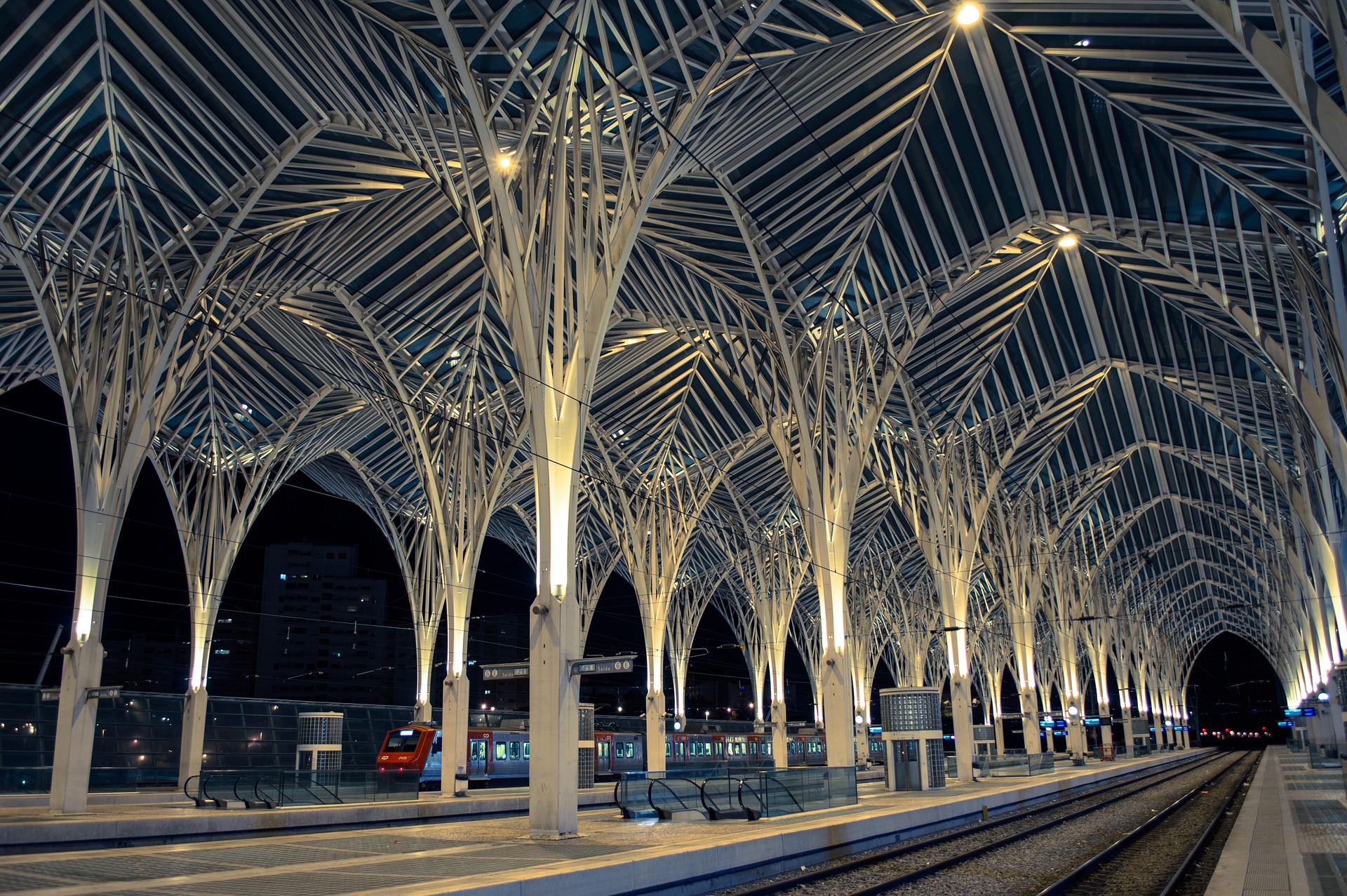
Main hub for long-distance trains. Oriente Station, in Lisbon’s Parque das Nações, is not only architecturally impressive but also strategically located for:
Quick access to Lisbon Airport (~20 minutes by train).
High-speed trains to the Alentejo, Algarve, and other Portuguese regions.
Connections to long-distance trains heading to Spain.
Pro Tip: Oriente’s proximity to the Oceanário de Lisboa and Vasco da Gama Shopping Center makes it a convenient stop if you want to explore modern Lisbon before departure.
👉 Consider staying at a hotel near Oriente Station for a smooth arrival or departure.
5. Sete Rios Train Station: Gateway to the Algarve
This one feels busiest during peak hours. Sete Rios Station serves travelers heading south to the Algarve, a region famous for its sunny beaches, cliffs, and charming towns.
Travel time: ~3 hours to Faro
Destinations: Faro, Albufeira, Lagos, Tavira
Top Algarve experiences:
Praia da Marinha and Praia Dona Ana, postcard-perfect beaches.
Historic towns: Lagos, Tavira, Silves.
Water sports: Kayaking, boat tours, and dolphin-watching trips.
Pro Tip: If you’re traveling during summer, book your train tickets in advance. Algarve trains fill up quickly.
👉 For convenience, you can book a multi-day Algarve guided tour or pre-select Algarve hotels.

Other Train Adventures from Lisbon
Lisbon’s rail network also opens doors to lesser-known but rewarding destinations:
Évora: A UNESCO World Heritage city with Roman ruins. Accessible via Sete Rios or Oriente.
Tomar: Home to the Convent of Christ, tied to the Knights Templar.
Fátima: World-famous pilgrimage site (accessible by train + bus).
Coimbra: Known for its historic university and riverfront charm.
Tips for Traveling Lisbon by Train
Buy tickets online in advance for intercity trains.
Travel off-peak to enjoy quieter carriages.
Pack light if planning multiple train journeys.
Bring a snack or drink, especially for longer trips like Porto or the Algarve.
Check connections for regional trains to smaller towns—sometimes a bus is required for final destinations.
Why Train Travel in Portugal is the Best
Traveling by train from Lisbon is:
Affordable: Cheaper than taxis or car rentals.
Eco-friendly: Lower carbon footprint than driving.
Scenic: From lush mountains to the Atlantic coast, the journey is as beautiful as the destination.
Stress-free: No parking worries, no traffic jams, and plenty of room to relax.
👉 Combine train travel with guided tours and pre-booked hotels for the ultimate Portugal experience
Final Thoughts
Once you understand which station goes where, getting around Lisbon by train becomes much simpler. These stations are the key starting points for exploring both the city and beyond.
About the author
I’m Duncan, a Lisbon-based guide and writer who’s lived here for 11 years and taken hundreds of visitors around the city. I created Lisbon Listicles to share everything you need to know about Lisbon in clear, practical lists — from iconic sights to hidden gems — so you can plan your trip easily and make the most of your time here.
All recommendations are based on personal experience and the questions I hear most often from visitors.
Leave a Reply