Disclosure: Some links in this article are affiliate links. If you book through them, I may earn a small commission at no extra cost to you. I only recommend places and experiences I genuinely think are worth it.
Lisbon Through the Centuries: A Journey Through the City’s Past
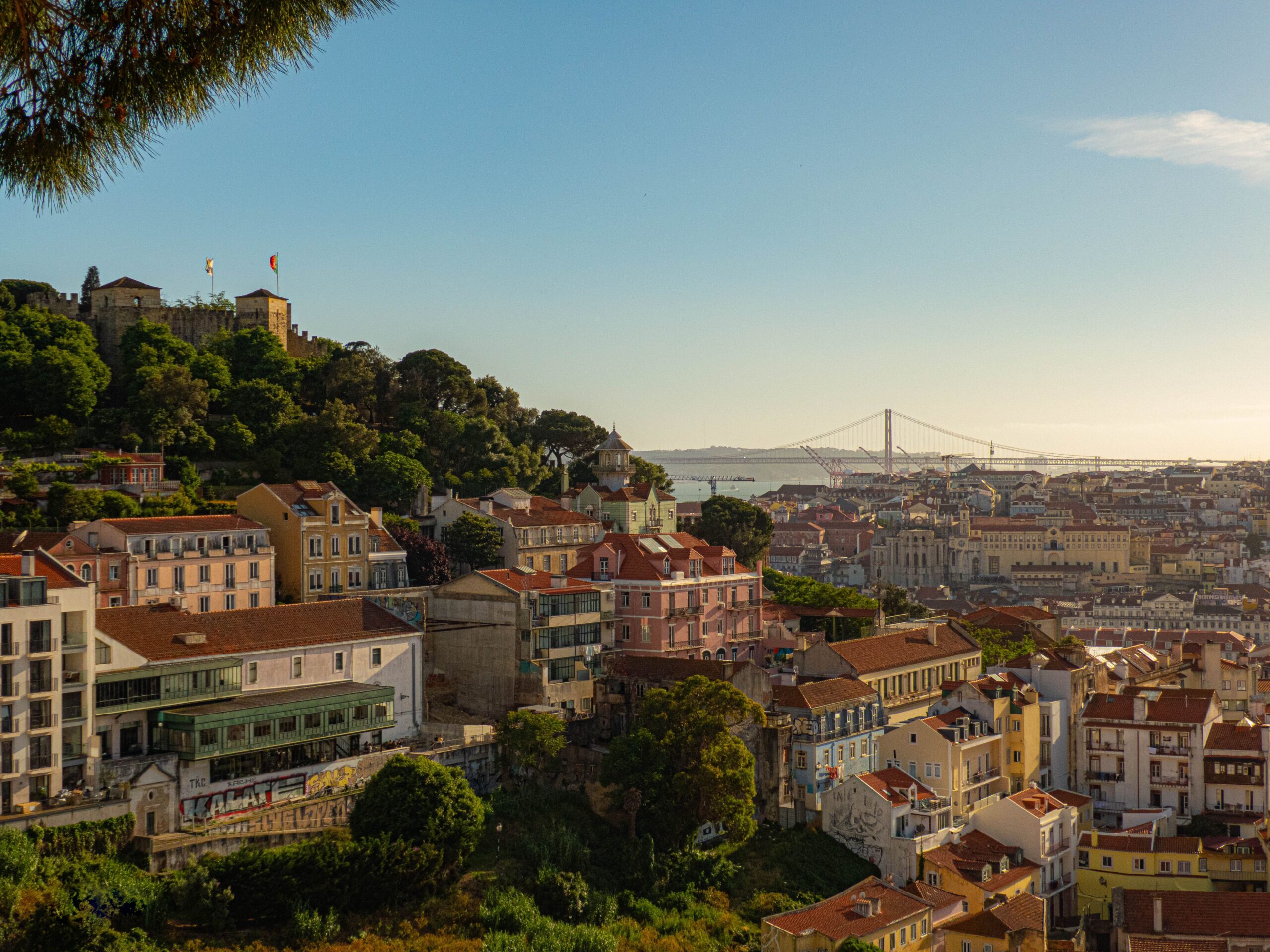
Lisbon is one of those cities where history isn’t confined to museums. It is everywhere. You can walk along a Roman road, pass through a neighbourhood shaped by centuries of Moorish influence, stand beneath a church rebuilt after one of Europe’s most devastating earthquakes, and finish your afternoon looking at a skyline that has changed remarkably little in some places over the past hundred years.
Yet Lisbon’s history is not always immediately obvious. Unlike some European capitals, where grand medieval buildings and ancient monuments dominate the city centre, Lisbon has been repeatedly transformed by conquest, trade, religious change, natural disasters and ambitious rebuilding projects. Entire neighbourhoods have disappeared, architectural styles have come and gone, and the city has expanded far beyond the boundaries of its original settlement.
Having lived in Lisbon for several years and worked as a tour guide, I’ve always found that understanding the city’s past makes exploring it considerably more rewarding. Places that might otherwise seem like ordinary streets, squares or viewpoints suddenly become part of a much bigger story.
And that’s exactly what I want to explore in this guide.
Rather than simply listing historical dates and Portuguese monarchs, we’re going to look at Lisbon at different moments in time. What would you have seen if you had visited during Roman rule? What did the city look like when it was an important Moorish settlement? What would have greeted a visitor arriving in 1500, 1750 or 1900?
We’ll also explore how a relatively small settlement on the edge of the Atlantic eventually became the capital of Portugal, one of Europe’s most important maritime powers and the fascinating city we know today.
Whether you’re planning a visit, researching Portuguese history or simply curious about how Lisbon became Lisbon, this is your journey through the centuries.

Lisbon Through the Centuries: Roman, Moorish and Beyond
1. What Did Lisbon Look Like in Roman Times?
Long before Portugal existed as a kingdom, Lisbon was already an important settlement. Its strategic position beside the enormous natural harbour of the Tagus Estuary made it attractive to traders, sailors and successive civilisations.
The Phoenicians, Greeks and Carthaginians all had commercial interests along the Iberian coastline, although the precise extent of their presence in the early settlement is still debated. The Romans, however, would leave a much more visible mark.
By the second century BC, Rome was expanding its influence across the Iberian Peninsula, and the settlement that would eventually become Lisbon was drawn into the Roman world.
The Romans knew the city as Olisipo, later giving it the official name Felicitas Julia Olisipo (often written Felicitas Iulia Olisipo).
So, what would Lisbon have looked like if you had visited during the height of Roman rule?
A prosperous Roman port
Imagine arriving by ship along the Tagus around the first century AD.
Instead of the familiar tiled rooftops and pastel-coloured apartment buildings, you would have seen a busy Roman settlement climbing the hills overlooking the river.
The waterfront would have been particularly important. Ships carried goods between Olisipo and other parts of the Roman Empire, connecting the settlement with commercial centres in Hispania, North Africa and the wider Mediterranean.
Olisipo benefited from its position at the mouth of the Tagus, where river traffic could meet Atlantic shipping. It was also connected to the Roman road network, allowing goods and people to travel inland.
One of the city’s most valuable exports was garum, a fermented fish sauce widely consumed throughout the Roman world. Fish-processing facilities and salted-fish production were important industries along this part of the Portuguese coast.
The surrounding region also produced agricultural goods, including wine and olive oil.
In other words, Roman Lisbon wasn’t some insignificant outpost at the edge of civilisation. It was a commercially active settlement with connections stretching across an enormous empire.
Streets, public buildings and Roman entertainment
Like other Roman towns, Olisipo developed the infrastructure associated with urban life.
There were public buildings, residential areas, commercial premises, religious spaces and facilities for entertainment. The city had a Roman theatre, constructed during the reign of Emperor Augustus in the first century AD and later remodelled under Nero.
This was an impressive structure, with an estimated capacity of around 4,000 spectators.
Think about that for a moment. Almost 2,000 years ago, thousands of people could gather on the hillside beneath what is now Alfama to watch theatrical performances.
The theatre wasn’t simply entertainment. It was also a statement of Roman authority, culture and civic prestige.
The remains include parts of the stage structure, orchestra and seating area. Archaeological discoveries have also revealed decorative architectural elements and sculptures that give us an idea of how impressive the original building must have been.
Roman Lisbon also had a network of roads, some of which followed routes that continued to influence the city’s layout long after Roman administration disappeared.
Where can you see Roman Lisbon today?
This is the obvious starting point if you want to discover Roman Lisbon. Located on the southern slope of the Castelo hill, the museum incorporates the remains of the ancient theatre and displays archaeological finds from the site.
You can identify parts of the original stage and seating while learning how the building fitted into Roman Olisipo.
Rua de São Mamede, 3A · Check current opening arrangements before visiting.
This unusual 16th-century building near the waterfront is worth visiting for its archaeological remains. Excavations beneath it have revealed evidence of different periods of Lisbon’s history, including the Roman occupation.
It’s a particularly interesting stop if you’re already exploring the Baixa and Alfama areas.
My recommendation is to visit the Roman Theatre rather than simply looking for Roman stones scattered around the city. It gives you a much clearer understanding of what Olisipo actually was and how the Roman settlement occupied the hillside.
👉 If you want to understand how Lisbon developed from its earliest settlements into the medieval and modern city, consider joining a historical walking tour. You can compare Lisbon history tours on Viator and GetYourGuide.
The end of Roman Lisbon
Roman influence didn’t disappear overnight.
As the Western Roman Empire weakened during the fourth and fifth centuries, the city experienced political and economic changes. The theatre eventually fell into disuse, and buildings from the Roman period were gradually abandoned, adapted or buried beneath later construction.
The site of the theatre itself was eventually covered by centuries of development. Interestingly, it was rediscovered following the 1755 earthquake, when reconstruction work exposed ancient remains beneath the damaged city.
Today, those ruins provide one of the clearest windows into Lisbon’s Roman past.
2. What Did Lisbon Look Like During the Moorish Period?
If Roman Lisbon was a prosperous imperial trading settlement, medieval Lisbon was a city increasingly shaped by the Islamic world.
In 711 AD, Muslim forces crossed the Strait of Gibraltar and began the conquest of much of the Iberian Peninsula. Over the following decades, Muslim political and cultural influence spread across large parts of what is now Spain and Portugal.
Lisbon came under Muslim rule during the eighth century.
The city became known as al-Ushbuna, also rendered as al-Ushbūna, and remained under Muslim rule for more than four centuries, although political control changed during that period.
This was one of the most important chapters in Lisbon’s development. The influence of Islamic civilisation can still be felt in the historic centre, particularly around Alfama and the Castelo de São Jorge.
A city of walls, narrow streets and courtyards
Imagine arriving in Lisbon around the tenth or eleventh century.
You wouldn’t recognise the modern Praça do Comércio, Avenida da Liberdade or the wide streets of Baixa. Instead, you would encounter a compact, fortified settlement built around the hill that now supports São Jorge Castle.
The city was characterised by defensive walls, winding streets, tightly packed houses and small courtyards.
The streets were generally much narrower than those found in the later planned districts. Buildings were arranged around the natural contours of the hills, creating a dense urban landscape that offered shade and protection from the elements.
The waterfront was also an important part of the settlement, with commercial activity connecting Lisbon to other Islamic territories and the wider Mediterranean.
The Muslim population was diverse, including people of Arab and Berber origins alongside local Iberian communities who had adopted Islam or lived under Muslim rule.
Christians and Jews also formed part of the wider social landscape, although their circumstances varied according to period and political authority.
What was life like in Moorish Lisbon?
Lisbon was not simply a military outpost. It was a functioning urban centre with markets, workshops, religious buildings and agricultural activity in the surrounding countryside.
Trade was particularly important.
Merchants dealt in agricultural products, textiles, ceramics and other goods, while the Tagus provided access to coastal and overseas commercial networks.
Islamic urban culture also influenced architecture, domestic life, craftsmanship and the organisation of neighbourhoods.
One feature of medieval Islamic cities was the importance of local markets and communal spaces. Although we cannot reconstruct every street or building with certainty, archaeological evidence and historical descriptions help us understand the general character of the settlement.
Water was another important consideration. Wells, cisterns and systems for storing and distributing water were essential to urban life, particularly during periods of heat and limited rainfall.
The city’s elevated position also made it naturally defensible.
The Moorish walls and the development of Alfama
One of the most important surviving reminders of Islamic Lisbon is the Cerca Moura, the medieval defensive wall that surrounded the old settlement.
Parts of the wall can still be identified around the historic centre, particularly near Alfama and the castle.
The name Alfama is also generally traced to the Arabic al-hamma, meaning a bath or hot spring, reflecting the area’s association with water.
Walking through Alfama today, you can appreciate why this part of Lisbon feels so different from the rest of the city.
The irregular street plan, narrow passages, small squares and steep stairways are a reminder that this neighbourhood developed long before modern urban planning.
However, it’s worth being careful about one common misconception: not every narrow street or traditional building in Alfama is Moorish. The neighbourhood has been continuously modified over many centuries, and much of what you see today reflects later medieval, early modern and post-earthquake construction.
Nevertheless, the underlying urban fabric preserves something of the older settlement.
The conquest of Lisbon in 1147
The Moorish period came to an end in 1147, during the reign of Portugal’s first king, Afonso Henriques.
By this stage, the Christian kingdoms of northern Iberia were expanding southwards as part of the wider process known as the Reconquista.
Lisbon was an important strategic target.
Its location beside the Tagus made it valuable not only as a defensive stronghold but also as a commercial and maritime centre.
In the summer of 1147, Afonso Henriques’ forces besieged the city with assistance from an international contingent of crusaders, including English, Flemish and other northern European forces travelling towards the Holy Land.
After a prolonged siege, Lisbon surrendered in October 1147.
The conquest was a turning point in Portuguese history. It brought a major urban centre under the control of the expanding Portuguese kingdom and provided a strategic base for further territorial expansion southwards.
Where can you experience Moorish Lisbon today?
The castle is the natural starting point for exploring medieval Lisbon. Its strategic hilltop position and surviving defensive structures help visitors understand the importance of the settlement’s fortifications.
The archaeological area also contains evidence of earlier occupation, including Islamic-period remains.
Wander through the streets below the castle. Alfama is particularly rewarding when explored on foot, without rushing between viewpoints.
Look for the irregular street layout, small courtyards and remnants of the medieval defensive system.
Construction began shortly after the Christian conquest, traditionally dated to 1147. The cathedral occupies a historically significant position within the old city, close to the castle and the former medieval settlement.
Its Romanesque origins make it an interesting contrast with the Islamic heritage of the surrounding neighbourhood.
If you’re particularly interested in this period, I would recommend a walking tour focusing on Alfama, the castle and medieval Lisbon. A general sightseeing tour might mention the Moorish occupation briefly, whereas a specialist guide can help you understand the city’s earlier street plan, defensive walls and changing religious landscape.
👉 Take a look at the historical and cultural walking tours available through GetYourGuide.
3. What Did Lisbon Look Like in 1500?
If there is one period that transformed Lisbon from an important regional city into an internationally recognised capital, it was the Age of Discovery.
By 1500, Portugal was at the centre of an extraordinary period of maritime expansion. Portuguese navigators had established routes along the African coast, reached India by sea and were opening new commercial connections across the Atlantic and Indian Oceans.
Lisbon was the headquarters of this expanding maritime world.
Imagine standing on the waterfront around 1500. Instead of today’s Praça do Comércio, you would have found a busy area of docks, warehouses, workshops, merchants and royal buildings. Ships arrived carrying spices, textiles, precious metals and other goods from increasingly distant parts of the world.
The city was becoming wealthier, busier and more cosmopolitan, but this prosperity came with a darker side that is important to acknowledge.
A capital looking out towards the world
The reign of King Manuel I (1495–1521) was particularly significant.
Manuel inherited a kingdom already engaged in overseas expansion, but during his reign the Portuguese maritime empire reached new heights.
Vasco da Gama’s voyage to India in 1497–1499 had established a direct sea route between Europe and the Indian Ocean. Pedro Álvares Cabral reached Brazil in 1500, while Portuguese trading posts and military bases were being established across Africa and Asia.
Lisbon became the administrative and commercial centre of this expanding network.
The city was filled with merchants, sailors, shipbuilders, diplomats, religious figures and visitors from different parts of Europe, Africa and Asia.
Goods arriving in Lisbon included pepper, cinnamon, cloves, nutmeg, silks and other valuable products. These commodities were transported through a complex trading network that depended on ships, overseas settlements, military force and commercial agreements.
For European merchants, Lisbon offered access to goods that had previously travelled through numerous intermediaries.
It was an exciting time for the Portuguese Crown, but it was also a period of imperial competition, exploitation and forced labour.
The Ribeira Palace and Terreiro do Paço
One of the most important developments around 1500 was the construction of the Paço da Ribeira, or Ribeira Palace.
King Manuel I ordered its construction at the waterfront, facing what became known as Terreiro do Paço.
This was a major change in the organisation of Lisbon’s political and commercial centre.
Previously, the royal court had been associated more closely with the upper city around the castle. The new palace placed royal power directly beside the river and the maritime activities that were generating so much wealth.
The palace complex included royal residences and administrative spaces, while the surrounding waterfront was closely connected to shipbuilding and overseas commerce.
The Ribeira das Naus, the royal shipbuilding area, became particularly important in the construction and maintenance of vessels used in Portugal’s maritime expansion.
If you stood in this area in 1500, you would have been looking at the working heart of the Portuguese overseas empire.
The modern Praça do Comércio occupies broadly the same historic waterfront area, although the buildings you see today belong to the reconstruction following the earthquake of 1755.
A wealthy city with an international population
Lisbon was becoming one of Europe’s most internationally connected cities.
Its population included Portuguese merchants and artisans, foreign traders, sailors, religious communities and people brought to the city through the expanding imperial network.
There were also significant African communities.
One particularly disturbing aspect of this period was the growth of the transatlantic and intercontinental slave trade.
Enslaved Africans had been brought to Lisbon since the fifteenth century, and the practice expanded as Portuguese overseas expansion developed. Enslaved people were forced to work in domestic service, agriculture, crafts and other areas of the economy.
Lisbon’s wealth cannot be understood without acknowledging this history.
The city’s commercial success was connected not only to the spice trade and maritime exploration but also to colonial exploitation and human trafficking.
The waterfront was therefore a place of extraordinary contrasts: royal ambition, commercial opportunity, international exchange and profound human suffering.
What would the buildings have looked like?
Unlike the uniform architecture of modern Baixa, sixteenth-century Lisbon was visually varied.
You would have seen medieval streets and houses, religious buildings, noble residences and newer structures associated with the Manueline architectural style.
Manueline architecture is one of Portugal’s most distinctive historical styles. It developed during the reign of Manuel I and is characterised by elaborate stone decoration, maritime references, twisted columns, botanical motifs and intricate sculptural details.
Its most famous examples are found in Belém.
Two particularly impressive examples are:
Mosteiro dos Jerónimos: Construction began in 1501, and the monastery became one of the great monuments celebrating Portugal’s maritime expansion. Its elaborate cloisters and church are among the finest examples of Manueline architecture.
Torre de Belém: Construction began in the early sixteenth century, and the tower was completed around 1514–1520. It formed part of the defensive system protecting the entrance to the Tagus.
Both monuments are UNESCO World Heritage Sites, together with the nearby Jerónimos complex.
One important distinction: Belém was not yet the same urban district it is today. It was outside the main built-up city, and its position beside the river made it particularly suitable for royal and maritime developments.
Where can you experience sixteenth-century Lisbon?
Essential if you want to understand the ambition, wealth and artistic achievements of Manueline Portugal. Allow time to explore the cloisters rather than just visiting the church.
Particularly interesting for understanding the defensive and maritime importance of the Tagus. Its location makes it easy to combine with the monastery and the riverside monuments.
A useful stop for exploring Portuguese art and the visual culture of the country’s imperial period. It helps put the architecture and maritime expansion into a wider cultural context.
If you have limited time, I would prioritise Jerónimos Monastery. It is one of the strongest surviving expressions of the period and helps explain why Lisbon became such an important city in the sixteenth century.
👉 Belém is also one of the best areas to explore with a knowledgeable guide. Browse Belém sightseeing and historical tours on Viator or GetYourGuide’s Lisbon experiences.
4. What Did Lisbon Look Like in 1750?
If you could travel back to Lisbon in 1750, you would find a city that was considerably wealthier and more architecturally impressive than it had been during the medieval period.
Portugal was still a major colonial power, and Lisbon remained an important centre of international commerce.
However, this was a very different Lisbon from the carefully planned city we know today.
The great earthquake of 1755 had not yet happened. The medieval street network was still largely intact in the centre, the royal palace stood beside the Tagus, and the city’s most important commercial and political buildings occupied the waterfront.
In many ways, this was the Lisbon that disappeared.
A city of churches, palaces and crowded streets
Eighteenth-century Lisbon was a city of contrasts.
The wealthy lived in impressive residences, while merchants operated from commercial buildings and ordinary families occupied densely packed houses throughout the historic neighbourhoods.
The centre contained numerous churches, convents, monasteries and religious institutions. Religious life was deeply embedded in the city’s identity, and the skyline was dominated by church towers, convent buildings and the castle.
The waterfront was still the centre of political and economic activity.
The Paço da Ribeira remained the royal residence, while the Terreiro do Paço was an important public and commercial space.
The surrounding streets were narrow and irregular, reflecting centuries of gradual development rather than a single urban plan.
The wealth of the Portuguese empire
Portugal’s overseas possessions continued to influence Lisbon’s economy.
Brazil had become particularly important, especially following the discovery of gold and diamonds in the late seventeenth and early eighteenth centuries.
Precious metals and colonial products flowed into the Portuguese economy, supporting royal expenditure, religious construction and the lifestyles of wealthy families.
However, this wealth was unevenly distributed and depended heavily on colonial extraction and enslaved labour.
Lisbon was still a major port within the Atlantic slave-trading system. The city’s prosperity cannot be separated from the exploitation of people in Brazil, Africa and other Portuguese-controlled territories.
The reign of King João V
The first half of the eighteenth century was also marked by the reign of King João V (1706–1750).
His government was associated with extravagant royal spending and an ambitious programme of architectural and artistic patronage.
The king commissioned and supported major religious and royal projects, including the enormous Mafra National Palace.
Although Mafra is outside Lisbon, it provides an excellent example of the scale of royal ambition during this period.
Within Lisbon itself, churches and palaces were decorated with elaborate gilding, painted ceilings, sculpture and imported materials.
The city was also influenced by the Baroque style, which favoured theatrical interiors, dramatic decoration and impressive architectural compositions.
What would you have seen around the waterfront?
The most important difference between 1750 and modern Lisbon would have been the appearance of the waterfront.
Instead of the monumental yellow buildings and open square of today’s Praça do Comércio, you would have encountered the royal palace and a much more enclosed urban environment.
The Paço da Ribeira was a sprawling complex, and the area around it was filled with commercial and administrative activity.
The Tagus was crowded with vessels arriving from different parts of the Portuguese empire and beyond.
The streets leading away from the river were also busier and more irregular than the present-day Baixa grid.
In short, the city was beautiful, prosperous and densely built, but it was also vulnerable.
Lisbon had experienced earthquakes before, and the buildings and streets were not prepared for the catastrophe that would arrive on the morning of 1 November 1755.
5. What Happened to Lisbon in 1755?
There are certain dates that permanently change the history of a city. For Lisbon, 1 November 1755 is undoubtedly one of them.
On that morning, a devastating earthquake struck the Portuguese capital, destroying much of the city centre and killing thousands of people.
It was one of the most destructive earthquakes in European history and an event that would influence architecture, urban planning, philosophy and politics far beyond Portugal.
To understand modern Lisbon, you really need to understand what happened that day.
The Great Lisbon Earthquake
The earthquake struck at approximately 9:40 in the morning, on All Saints’ Day, when many people were attending church services.
The shaking was followed by fires that spread through the densely built city. Many buildings collapsed, including churches, palaces, homes and commercial premises.
Then came another catastrophe.
The earthquake triggered a tsunami that travelled up the Tagus and flooded parts of the waterfront. People who had fled towards the river in search of safety found themselves facing another danger.
The destruction was immense.
The exact death toll remains uncertain, but estimates commonly range from around 10,000 to 30,000 people in Lisbon and its surrounding areas. The wider disaster affected other parts of Portugal, Spain and North Africa.
Among the buildings destroyed or severely damaged were:
The royal Ribeira Palace.
The Royal Hospital of All Saints.
Numerous churches and convents.
Aristocratic residences and commercial buildings.
The Royal Opera House, which had opened only months earlier.
Important collections of books, paintings, religious objects and royal treasures.
Much of the medieval and early modern city centre was effectively wiped out.
The Marquis of Pombal and the rebuilding of Lisbon
The response to the disaster was led by Sebastião José de Carvalho e Melo, better known as the Marquis of Pombal.
At the time, he was the powerful chief minister of King José I.
Pombal became the central figure in the emergency response and subsequent reconstruction. His approach was practical and determined: secure the population, restore order, clear the ruins and rebuild the capital.
One of the most famous stories associated with him concerns his supposed response when asked what should be done immediately after the earthquake.
His answer is often paraphrased as: “Bury the dead and feed the living.”
Whether the wording is entirely accurate or not, it captures the priorities of the emergency response.
Pombal also commissioned a major reconstruction project, working with military engineers and architects including Eugénio dos Santos and Carlos Mardel.
Rather than simply rebuilding the streets as they had existed before, the authorities created an entirely new urban layout for the destroyed centre.
This was the beginning of what we now call Baixa Pombalina.
The birth of modern Baixa
If you walk through Baixa today, you’re walking through the results of this extraordinary reconstruction project.
The narrow, irregular streets of the old medieval centre were replaced by a carefully organised grid of straight roads and perpendicular streets.
Buildings were constructed according to standardised designs, creating a more consistent architectural appearance.
The reconstruction also incorporated important innovations in building design.
One particularly interesting feature was the gaiola pombalina, or Pombaline cage. This was a timber structural framework incorporated into the buildings to help them withstand future earthquakes.
The idea was that the wooden structure would provide additional flexibility and help distribute the forces generated by seismic movement.
The buildings were also designed with more consistent heights, street widths and construction methods.
It was a remarkably ambitious project for the eighteenth century and an important moment in the development of earthquake-resistant architecture.
The Praça do Comércio we know today
Perhaps the most visible result of the reconstruction is the magnificent Praça do Comércio.
Previously known as Terreiro do Paço, the square was rebuilt as a grand, open waterfront space surrounded by uniform buildings with arcades.
It was intended to represent a new Lisbon: organised, confident and commercially oriented.
The square’s name, Praça do Comércio, meaning Commerce Square, reflected the importance of trade and business in the rebuilt capital.
At its centre stands the equestrian statue of King José I, completed by sculptor Joaquim Machado de Castro and inaugurated in 1775.
The square is now one of Lisbon’s most recognisable landmarks, but standing there, it’s worth remembering that this was once the location of the royal palace destroyed in 1755.
What should you visit to understand the earthquake?
Lisboa Story Centre
Probably the most straightforward place to start. This interactive museum takes visitors through the history of Lisbon, including a particularly useful presentation of the 1755 earthquake and the city’s reconstruction.
Convento do Carmo
The ruined Gothic church is one of the most powerful physical reminders of the earthquake. Its roof collapsed during the disaster and was never fully rebuilt.
Today, the roofless nave and surviving arches create an extraordinary atmosphere, while the archaeological museum contains objects from different periods of Portuguese history.
Arco da Rua Augusta
This monumental arch marks the entrance to Praça do Comércio from Rua Augusta. Its construction was part of the wider rebuilding programme, although its completion took many decades.
You can also climb to the top for excellent views over Baixa and the Tagus.
My advice is to combine these three places on foot. Start at Praça do Comércio, explore the Lisboa Story Centre, walk up Rua Augusta and finish at the Carmo ruins.
It’s one of the best ways to understand how dramatically Lisbon changed in 1755.
6. What Did Lisbon Look Like in 1800?
By 1800, Lisbon had been transformed by the reconstruction following the earthquake.
The new Baixa was taking shape, the streets were more organised, and the city was beginning to look considerably more like the Portuguese capital we recognise today.
However, the rebuilding process had taken place during a period of considerable political and economic change.
The eighteenth century had been marked by royal authority, colonial wealth and the influence of the Marquis of Pombal. By the beginning of the nineteenth century, Portugal was increasingly caught up in the conflicts reshaping Europe.
A city of two different characters
One of the interesting things about Lisbon around 1800 was the contrast between the rebuilt centre and the older neighbourhoods.
In Baixa, you would have found straight streets, organised blocks and relatively uniform buildings.
However, if you walked towards Alfama, Mouraria or the castle, you would still have encountered the older medieval street pattern.
The city was therefore a mixture of two very different urban environments.
The newer centre represented the rational planning and engineering ambitions of the eighteenth century, while the older districts retained the irregular layout that had developed over hundreds of years.
The city’s churches, convents and religious institutions remained prominent, while the waterfront continued to be an important centre of trade.
The royal family leaves Lisbon
One of the most dramatic events of this period occurred in November 1807.
Napoleon Bonaparte was attempting to bring Portugal into his Continental System, which aimed to prevent European countries from trading with Britain.
Portugal had longstanding ties with the British, and its government faced an extremely difficult decision.
As French troops advanced towards Lisbon, Prince Regent João and the royal family decided to leave Portugal for Brazil.
The royal fleet departed from the Tagus on 29 November 1807, carrying the royal family, members of the court and thousands of other passengers.
The following day, French troops entered Lisbon.
The departure of the royal court was an extraordinary moment. For the first time in European history, a reigning European monarchy transferred its entire seat of government to one of its overseas territories.
Rio de Janeiro became the centre of the Portuguese monarchy, and Brazil’s political status would eventually be transformed.
In 1822, Brazil declared independence.
French occupation and the Peninsular War
Lisbon experienced a difficult period during the French occupation.
The city was occupied by French forces under General Junot, while Portugal became a major theatre of the wider Peninsular War.
British military intervention helped Portuguese forces resist the French invasions, and the conflict eventually ended with the French withdrawal.
One of the most important defensive developments was the construction of the Lines of Torres Vedras, a massive network of fortifications north of Lisbon designed to prevent French forces from reaching the capital.
Although these defensive lines are outside the city, they are an important part of Lisbon’s early nineteenth-century story.
The period left Portugal politically weakened and economically strained.
What would Lisbon have looked like?
If you visited around 1800, you would see a city still recovering from the earthquake but increasingly confident in its new architectural identity.
The streets of Baixa would have been among the most modern in Europe, while the older districts remained densely packed and traditional.
The riverfront would still be full of commercial activity, and the city’s population would have been growing.
You would also notice the beginnings of a different kind of Lisbon: one that was increasingly influenced by liberal political ideas, changing social structures and the urban fashions spreading across Europe.
This was the foundation for the nineteenth-century expansion that would eventually take the city northwards.
7. What Did Lisbon Look Like in 1900?
By 1900, Lisbon was becoming a much more recognisably modern European capital.
The nineteenth century had brought industrialisation, new transport connections, urban expansion and significant political changes.
The city was no longer simply expanding along the waterfront and around its historic hills. It was growing northwards, with new avenues and residential neighbourhoods reflecting changing ideas about urban life.
This was the beginning of the Lisbon of elegant boulevards, grand cafés and the early twentieth-century architecture that still gives parts of the city their distinctive character.
Avenida da Liberdade: Lisbon looks north
One of the most important developments was the creation of Avenida da Liberdade.
The avenue was inspired by the great boulevards of other European capitals, particularly Paris.
It developed from the former Passeio Público, an eighteenth-century public garden that was transformed during the nineteenth century.
The new avenue provided a grand northward extension from the older centre, eventually connecting the Restauradores area with Praça Marquês de Pombal.
Its development formed part of a wider urban expansion programme associated with engineer Frederico Ressano Garcia.
The avenue was designed to accommodate the changing needs of a growing capital, with broad pavements, landscaped central areas and impressive buildings.
The result was a very different atmosphere from the narrow streets of Alfama and Baixa.
By 1900, Avenida da Liberdade was becoming one of Lisbon’s most fashionable addresses, and it remains one of the city’s most impressive urban spaces.
The rise of the Avenidas Novas
The expansion didn’t stop at Avenida da Liberdade.
New avenues and residential areas developed further north, creating what became known as the Avenidas Novas.
These districts attracted wealthier residents and reflected changing tastes in architecture and urban planning.
The buildings were generally larger and more spacious than those in the older centre, with improved access to light and ventilation.
The new neighbourhoods also reflected the growth of a modern urban middle class.
The Avenida da República, inaugurated in 1904, became one of the principal axes of this expansion. It was originally named Avenida Ressano Garcia, after the engineer responsible for much of the city’s urban development.
Cafés, theatres and a changing society
Lisbon around 1900 was also a city of cafés, theatres, newspapers and political debate.
The Chiado district remained one of the most fashionable cultural areas, with bookshops, theatres, cafés and elegant commercial establishments.
The famous Café A Brasileira, opened in 1905, would become an important meeting place for writers, artists and intellectuals.
The city was also experiencing considerable social change.
Industrialisation and population growth brought new workers into Lisbon, while political tensions were increasing.
Republican ideas were gaining support, and criticism of the monarchy was becoming more widespread.
The assassination of King Carlos I and his son Luís Filipe in 1908 shocked the country and further destabilised the monarchy.
On 5 October 1910, the Portuguese Republic was proclaimed from the balcony of Lisbon’s City Hall.
Where can you see this version of Lisbon today?
Café A Brasileira
Opened in 1905, this historic café is an excellent place to experience the atmosphere of early twentieth-century Chiado. It’s touristy today, but still worth seeing for its history and setting.
Rossio Square
Rossio had already been an important public space for centuries, but its nineteenth-century appearance and surrounding architecture reflect the city’s changing identity.
Avenida da Liberdade
Walk the full length of the avenue if you want to appreciate how Lisbon expanded beyond its historic centre. Pay attention to the older façades and decorative details of the buildings.
For me, this is one of the most interesting parts of Lisbon to explore if you want to get beyond the usual tourist circuit. It shows a city adapting to modern European life while still retaining its older identity.
8. What Does Lisbon Look Like Today?
Modern Lisbon is a fascinating mixture of everything that came before it.
The city has medieval streets, Roman archaeological remains, Moorish influences, Manueline monuments, Baroque churches, Pombaline architecture and elegant nineteenth-century boulevards. It also has contemporary architecture, modern transport infrastructure and rapidly developing residential and commercial districts.
Few European capitals offer such a visible combination of different historical periods.
But Lisbon has changed considerably since the beginning of the twentieth century.
The twentieth century: dictatorship, revolution and democracy
After the establishment of the Portuguese Republic in 1910, Lisbon became the centre of a turbulent period in Portuguese politics.
The First Republic lasted until 1926, when a military coup brought the parliamentary system to an end.
In 1933, António de Oliveira Salazar established the Estado Novo, an authoritarian regime that would govern Portugal for more than four decades.
During this period, Lisbon underwent significant urban development. New roads, public buildings, housing projects and infrastructure were constructed, changing the appearance of several parts of the capital.
However, the country remained politically repressive, with censorship, political imprisonment and restrictions on civil liberties.
Everything changed on 25 April 1974.
The Carnation Revolution, led by members of the Portuguese Armed Forces, overthrew the dictatorship and opened the way for democracy.
Lisbon was at the centre of the revolution. The events of that day remain an important part of the city’s modern identity.
If you’re interested in this period, look out for the many monuments, museums and historical locations connected to the revolution, including the memorials around Largo do Carmo.
Lisbon opens up to the world again
The decades following the revolution brought considerable changes.
Portugal joined the European Economic Community in 1986, and investment in infrastructure and urban development increased.
One of the most visible transformations came in 1998, when Lisbon hosted Expo ’98, an international exhibition celebrating the oceans.
The event led to the redevelopment of a large former industrial area in the eastern part of the city.
Today, this area is known as Parque das Nações.
It’s almost the complete opposite of Alfama.
Instead of narrow medieval streets and centuries-old buildings, you’ll find contemporary architecture, wide promenades, modern apartment blocks and attractions such as the Oceanário de Lisboa.
The Vasco da Gama Bridge, completed in 1998, also became one of the defining features of modern Lisbon’s skyline.
Lisbon today: an international capital
In recent years, Lisbon has become an increasingly popular international destination.
Tourism has grown considerably, international businesses have established themselves in the city, and new residents have arrived from across Europe and beyond.
The historic centre has experienced substantial regeneration, although rising property prices, housing pressures and the impact of tourism have also created challenges for local residents.
Nevertheless, the character of Lisbon remains remarkably distinctive.
You can have breakfast in a traditional pastelaria, walk through a medieval neighbourhood, visit a contemporary art museum and finish the day watching the sunset beside the Tagus.
The city is both historic and modern, traditional and international.
And perhaps that is what makes Lisbon so interesting: it hasn’t simply preserved its past. It has continued to evolve around it.

How Did Lisbon Become the Capital of Portugal?
Something that often surprises visitors is that Lisbon wasn’t always the capital of Portugal.
When Portugal first emerged as an independent kingdom in the twelfth century, the royal court didn’t have a permanently fixed capital in the modern sense. The king and his administration travelled between royal residences and important towns.
However, Lisbon’s importance increased rapidly following its conquest in 1147.
Its strategic position, commercial opportunities and access to the Atlantic made it an increasingly valuable centre of royal power.
The conquest of Lisbon in 1147
When Afonso Henriques captured Lisbon from Muslim rule, he secured one of the most strategically important cities on the western Iberian Peninsula.
Lisbon offered access to the Tagus, an important route into the interior, and an excellent location for trade and military operations.
As the Portuguese kingdom expanded southwards, Lisbon became increasingly important politically and economically.
1256: Lisbon becomes the capital
The decisive moment came in 1256, during the reign of King Afonso III.
Lisbon became the principal seat of the royal court and the capital of the Portuguese kingdom.
Its growing population, commercial importance and geographical position made it a natural choice.
The decision also reflected the changing balance of the kingdom, as political and economic influence increasingly shifted towards the south.
Lisbon would continue to grow in importance under subsequent monarchs, particularly during the reigns of King Dinis and King João I.
The Age of Discovery makes Lisbon a global capital
The city’s importance increased dramatically during the fifteenth and sixteenth centuries.
Under the Portuguese kings, maritime expansion transformed Lisbon into the centre of an international trading network.
The city became a destination for merchants, diplomats, sailors and goods from across Europe, Africa, Asia and the Americas.
By the sixteenth century, Lisbon was one of the most important commercial centres in the world.
Even after the earthquake of 1755, the French invasions and the political upheavals of the nineteenth century, Lisbon retained its position as Portugal’s political and administrative capital.
Today, it remains the seat of the Portuguese government, the presidency, parliament and the country’s principal national institutions.
❓Frequently Asked Questions About Lisbon’s History
❓1. How old is Lisbon?
Lisbon has more than 2,000 years of documented urban history, although human occupation of the surrounding area goes back much further. Its Roman history is particularly well documented, but earlier Phoenician and Iron Age connections are also part of its story.
❓2. What was Lisbon originally called?
The Romans knew the city as Olisipo, later using the official name Felicitas Julia Olisipo. During the Islamic period, it became known as al-Ushbuna. The name Lisbon developed over the following centuries.
❓3. Was Lisbon founded by the Romans?
No. The area was inhabited before the Roman occupation. There were earlier settlements and trading connections involving Phoenician and other Mediterranean peoples. The Romans developed Olisipo into an important urban centre.
❓4. How long were the Moors in Lisbon?
Muslim rule began in the eighth century and ended with the Christian conquest in 1147. This means Lisbon experienced more than four centuries of Islamic political and cultural influence, although the exact political circumstances changed over time.
❓5. When did Lisbon become the capital of Portugal?
Lisbon became the capital in 1256, during the reign of King Afonso III. Its strategic position and growing economic importance made it an increasingly important centre of royal power.
❓6. Why was Lisbon so important during the Age of Discovery?
Lisbon was the headquarters of Portugal’s maritime expansion. Its harbour, shipbuilding facilities and commercial connections made it a major centre for voyages to Africa, Asia and the Americas. It became an important international trading city during the fifteenth and sixteenth centuries.
❓7. What happened to Lisbon in 1755?
A devastating earthquake struck on 1 November 1755, followed by fires and a tsunami. Much of the city centre was destroyed. The Marquis of Pombal subsequently oversaw an ambitious reconstruction programme that created the grid-pattern streets and buildings of modern Baixa.
❓8. What is the oldest neighbourhood in Lisbon?
Alfama is generally considered one of Lisbon’s oldest surviving neighbourhoods. Its origins extend back to the medieval city, although the area has experienced considerable rebuilding and modification over the centuries. The neighbourhood also contains evidence of earlier Roman occupation.
❓9. Can you still see Roman ruins in Lisbon?
Yes. The Roman Theatre Museum, located near the cathedral and Castelo de São Jorge, is one of the best places to see archaeological remains from Roman Olisipo. Casa dos Bicos also contains archaeological evidence from different periods of the city’s history.
❓10. What is the best museum to learn about Lisbon’s history?
The Museu de Lisboa is an excellent starting point, particularly its Roman Theatre location and Palácio Pimenta exhibitions. The Lisboa Story Centre is another good option if you want an accessible overview of the city’s development, including the 1755 earthquake.
❓11. Is Lisbon older than Porto?
Both cities have ancient origins, and their histories are complex. Lisbon’s Roman settlement is well documented, while Porto also has a long history dating back to pre-Roman and Roman times. It is difficult to establish a meaningful winner simply by comparing their foundation dates.
❓12. What is the best way to explore Lisbon’s history?
Walking is probably the most rewarding way to experience Lisbon’s historical layers. Start with Alfama and the castle, explore the Roman Theatre and cathedral, continue through Baixa and Praça do Comércio, and finish in Chiado. A knowledgeable local guide can make a substantial difference, particularly when explaining what existed before the earthquake.
Final Thoughts: Why Lisbon’s History Makes the City So Special
One of the things I love most about Lisbon is that you don’t have to visit a museum to experience its history.
You can simply walk around.
Stand in Alfama and imagine the medieval settlement that once occupied these hills. Visit the Roman Theatre and consider that people were watching performances here almost 2,000 years ago. Walk through Baixa and remember that the streets beneath your feet were once part of a completely different city, destroyed in 1755 and rebuilt according to an extraordinary new plan.
Then head towards Belém, where the monuments tell the story of Portugal’s maritime expansion, its wealth, its ambitions and its complicated imperial history.
What makes Lisbon particularly interesting is that every period has left something behind, even when the original buildings have disappeared.
Of course, not everything is immediately visible. Sometimes you need to know what you’re looking at, which is why I always think a good historical walking tour is worthwhile, especially if it’s your first visit.
If you’re planning a longer stay, I’d also recommend choosing accommodation that makes exploring the historic centre easy. You can compare hotels and apartments in Lisbon through Booking.com and find somewhere that suits your budget and preferred neighbourhood.
And if you want to discover more of the city’s fascinating past, have a look at the historical experiences available through Viator and GetYourGuide.
Lisbon has been Roman, Islamic, medieval, imperial, Baroque, revolutionary and modern. It has survived conquest, earthquakes, fires, political upheaval and enormous social change.
Yet somehow, it has managed to retain a character that is entirely its own.
And I think that’s the real secret to understanding Lisbon. It isn’t just a beautiful city with some interesting historical monuments. It is a city whose history is still written into its streets, buildings, neighbourhoods and everyday life.
The more you understand that history, the more you’ll appreciate everything you see when you visit.
About the author
I’m Duncan, a Lisbon-based guide and writer who’s lived here for 11 years and taken hundreds of visitors around the city. I created Lisbon Listicles to share everything you need to know about Lisbon in clear, practical lists — from iconic sights to hidden gems — so you can plan your trip easily and make the most of your time here.
All recommendations are based on personal experience and the questions I hear most often from visitors.
Leave a Reply