Disclosure: Some links in this article are affiliate links. If you book through them, I may earn a small commission at no extra cost to you. I only recommend places and experiences I genuinely think are worth it.
Did the ancient Greeks really visit Lisbon? Did Odysseus found the city? And why does one of Portugal’s oldest settlements have a name that has been linked to the legendary hero of Homer’s Odyssey?
Lisbon is famous for its Roman ruins, Moorish castle, medieval streets and maritime discoveries. Yet its ancient history reaches further back than many visitors realise, into a world of Phoenician merchants, Atlantic trade routes, local Iberian communities and the stories told by ancient Greek writers.
One of the most intriguing connections concerns Olisipo, the name by which Lisbon was known in antiquity. According to a legend preserved by classical authors, the city was founded by Odysseus, the Greek hero whose ten-year journey home from the Trojan War became one of the most celebrated adventures in Western literature.
It is a wonderful story. Unfortunately, it is not something archaeologists have been able to prove.
The real history is every bit as interesting. Archaeological discoveries on the hill of Castelo de São Jorge and near the Tagus waterfront reveal a settlement with strong connections to the wider Mediterranean world centuries before Roman rule. Phoenician cultural and trading influences are particularly important, while Greek geography and mythology help us understand how the ancient Mediterranean imagined the far western edge of Europe.
If you enjoy history, mythology, archaeology or exploring Lisbon beyond its usual tourist attractions, this guide will help you uncover the city’s Greek connections, separate historical evidence from legend, and discover the places where ancient Lisbon still survives beneath the modern streets.
Whether you’re planning your first visit or have walked through Alfama dozens of times, there’s a fascinating story waiting to be discovered.
👉 For more amazing Lisbon history, check out my complete guide.

The Ancient Greeks in Lisbon: Myths & History
1. Did the Ancient Greeks Visit Lisbon?
The short answer is that Greek knowledge of Lisbon is documented, but direct Greek settlement in ancient Lisbon is not firmly established by the available evidence.
That distinction matters.
The ancient Mediterranean was a connected world of sailors, merchants, soldiers, explorers and storytellers. Greek communities established settlements throughout the Mediterranean, particularly around southern Italy, Sicily, the Black Sea and parts of the western Mediterranean. Greek pottery and other goods travelled much farther through trade.
The Iberian Peninsula, meanwhile, was connected to Mediterranean networks through its own coastal communities and through Phoenician trading settlements.
The Phoenicians were accomplished maritime traders whose cities included Tyre and Sidon in the eastern Mediterranean. They established commercial networks extending across North Africa, Sicily, Sardinia and the Iberian Peninsula. Archaeological discoveries in Lisbon demonstrate the importance of these eastern Mediterranean connections during the first millennium BC.
Excavations around Castelo de São Jorge have revealed evidence of an early Iron Age settlement, including material associated with Phoenician cultural influences. Research places the relevant occupation phases broadly between the seventh and fifth centuries BC, with other discoveries around the waterfront indicating earlier activity.
This tells us that ancient Lisbon was connected to a much wider world.
It does not, however, prove that Greek colonists founded the settlement or that a Greek community controlled it.
Greek sailors could have known about the Tagus estuary through trade, reports from other sailors, geographical accounts or stories circulating around Mediterranean ports. Establishing exactly who travelled here, how frequently they came and whether any settled permanently is much more difficult.
The evidence therefore invites an intriguing possibility without allowing us to turn it into an established fact.
To understand the Greek connection properly, we need to look at the legend of Odysseus, the origins of Olisipo and the remarkable maritime world in which ancient Lisbon developed.
2. The Legend of Odysseus: Did a Greek Hero Found Lisbon?
Few stories associated with Lisbon are more intriguing than the claim that Odysseus founded the city.
Odysseus, known as Ulysses in Latin, is the central hero of Homer’s Odyssey. Following the Trojan War, he struggles for ten years to return to his home on Ithaca, encountering monsters, hostile gods, strange islands and dangerous temptations along the way.
His adventures made him an enduring symbol of intelligence, endurance and exploration.
According to a later tradition, his travels extended beyond the familiar Greek world and brought him to the western edge of the Iberian Peninsula.
There, he supposedly established a settlement that eventually became Lisbon.
<em>It is an evocative origin story: a legendary Greek navigator arriving at the mouth of the Tagus, recognising its magnificent natural harbour and founding a city that would one day become one of Europe’s great maritime capitals.</em>
But what do the historical sources actually say?
What ancient writers recorded
The Greek geographer Strabo, writing around the turn of the first century BC and AD, discussed the Iberian Peninsula in his work Geography. In his account of the region, he mentioned a city associated with Odysseus and also referred to Olisipo in his geographical description of the western peninsula.
The connection between the two became part of the ancient tradition linking Lisbon to the Greek hero.
Later writers helped perpetuate the story. The third-century AD author Gaius Julius Solinus explicitly repeated the claim that Olisipo had been founded by Ulysses.
These accounts are important evidence for the history of the legend, but they are not contemporary eyewitness accounts of Lisbon’s founding.
Strabo wrote many centuries after the traditional date of the Trojan War, which itself belongs to the realm of debated chronology and legend. Solinus wrote later still.
Neither provides archaeological proof that Odysseus visited the Tagus.
Why would the Greeks associate Lisbon with Odysseus?
Ancient writers often explained unfamiliar places by connecting them with famous heroes, gods and events from Greek mythology.
For Greek and Roman readers, associating a distant settlement with Odysseus made it part of a familiar cultural landscape. It gave a faraway place a memorable origin and linked it to the most famous voyage in Greek literature.
Lisbon’s geographical position made the association particularly appealing. Situated at the mouth of the Tagus, close to the Atlantic Ocean, it occupied a natural gateway between the Mediterranean-connected world and the waters beyond the Strait of Gibraltar.
To an ancient writer imagining the western limits of the known world, it was an ideal setting for an Odyssean story.
Was Lisbon actually named after Ulysses?
The traditional explanation connects the name Olisipo, or related ancient forms, with Ulysses. It is attractive, but the etymology is disputed.
The name’s exact linguistic origins remain uncertain, and many scholars regard the name as potentially reflecting pre-Roman Iberian linguistic traditions rather than a straightforward Greek naming event.
The resemblance between the ancient place-name and forms associated with Ulysses may have encouraged the legend rather than resulted from it.
The verdict: Odysseus did not found Lisbon according to any evidence we can presently verify. However, the story is an important part of how ancient writers and later generations imagined the city’s origins.
For visitors, that distinction makes the story more interesting, not less. It allows us to explore both the real history of Lisbon and the extraordinary power of mythology to shape the identity of a place.
3. Olisipo Before Rome: The Mediterranean World Arrives
Long before Roman officials, Latin inscriptions and monumental buildings transformed Lisbon, the settlement occupied a strategic position overlooking the Tagus estuary.
The river offered access to the interior, while the Atlantic coast connected the region to other communities along the western Iberian Peninsula.
The surrounding landscape provided opportunities for fishing, agriculture, maritime exchange and access to valuable natural resources.
These advantages help explain why people settled here and why the area attracted outside commercial interests.
The Phoenicians and their Atlantic networks
The Phoenicians played a particularly important role in the development of Lisbon’s early Mediterranean connections.
Their maritime networks linked the eastern Mediterranean with North Africa and the Iberian Peninsula. They traded in metals, ceramics, textiles and other goods, while exchanging technologies, artistic styles and cultural practices.
Archaeological research at Castelo de São Jorge has identified a significant early Iron Age occupation with strong Phoenician cultural influences. Excavations near Cais de Santarém have also produced evidence relating to early Phoenician presence in Lisbon, including phases dating to the second half of the eighth century BC.
These finds place Lisbon within the broader world of Mediterranean exchange centuries before the Roman conquest.
It is important to understand what archaeologists mean when they describe material as Phoenician or Phoenician-influenced. Pottery styles, building techniques and other objects can reveal cultural contacts, commercial relationships and the movement of people. They do not always tell us the precise ethnicity of every person who used them.
The early settlement was not simply a foreign outpost imposed upon an empty landscape. It developed through interactions between incoming traders and the communities already living in western Iberia.
Where do the Greeks fit into this picture?
The Greeks and Phoenicians were both part of the ancient Mediterranean’s maritime world, although their trading networks, political structures and relationships with local populations varied considerably.
Greek merchants and sailors participated in long-distance exchange, and Greek geographical knowledge gradually incorporated more information about the Atlantic-facing parts of Iberia.
However, the presence of Mediterranean trade goods does not automatically demonstrate a Greek colony.
At present, the archaeological evidence for early Lisbon points much more clearly to Phoenician connections than to an established Greek settlement.
That is an important distinction for anyone interested in the city’s genuine history.
Rather than imagining Lisbon as a Greek city waiting to be discovered, it is more accurate to picture an established local community becoming increasingly connected to a network of Mediterranean traders, sailors and cultural influences.
By the time Roman expansion reached the western peninsula, Lisbon already had a long history of settlement and exchange.
4. The Tagus Estuary: Why Ancient Sailors Would Have Been Interested in Lisbon
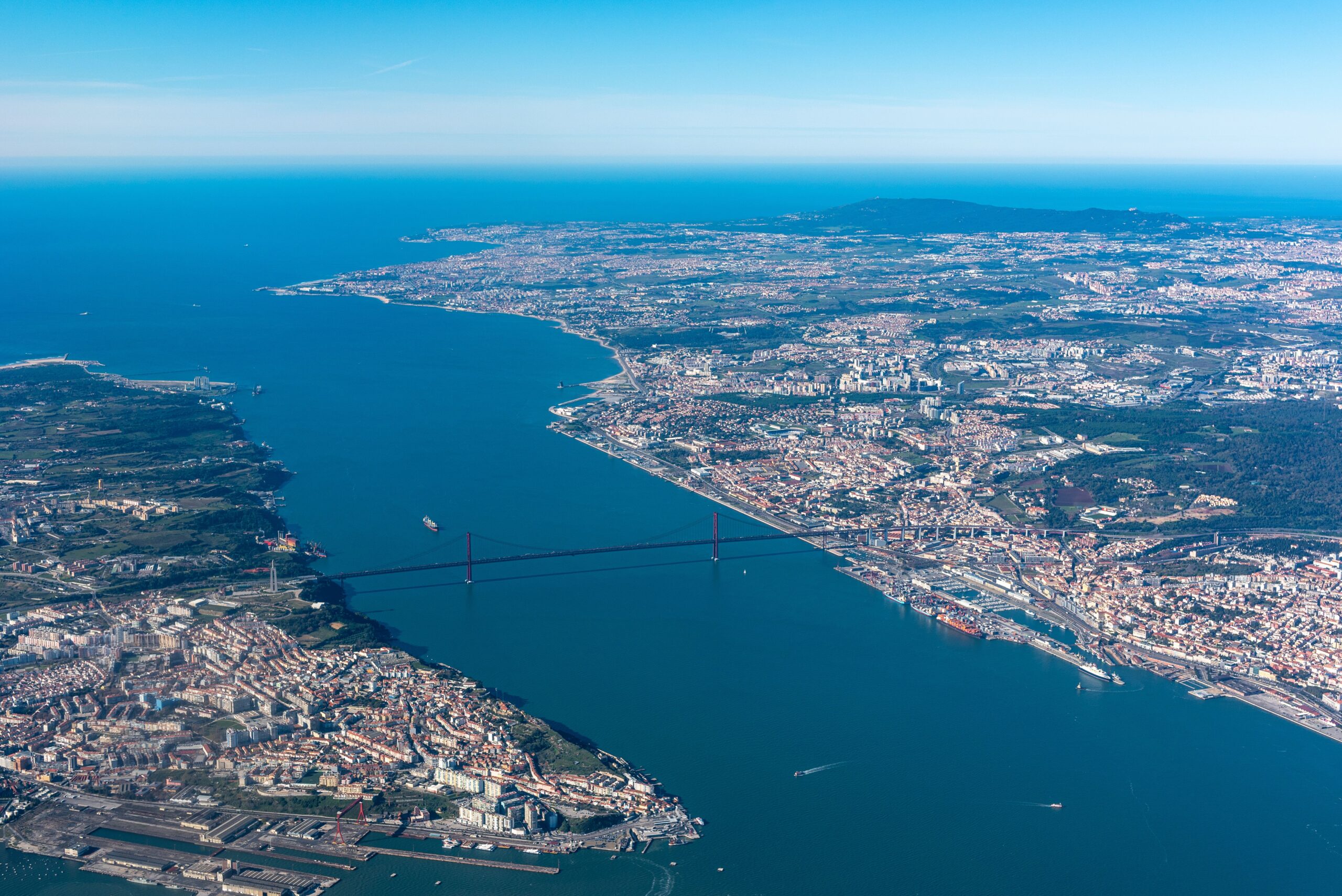
To understand Lisbon’s ancient history, stand beside the Tagus and look towards the broad expanse of water.
The river is one of the defining features of the city, but its importance stretches back thousands of years.
The estuary provided access to the interior of Iberia while offering a sheltered environment for maritime activity. Its surrounding hills provided defensible positions, and the riverbanks connected settlements to fertile land and regional resources.
For ancient sailors, the Tagus was much more than a picturesque body of water.
It was a potential trading corridor.
A natural gateway to western Iberia
The mouth of the Tagus lies close to the Atlantic approaches to the Strait of Gibraltar. Ships travelling between Mediterranean ports and the Atlantic coast could use coastal routes to exchange information, goods and navigational knowledge.
The river also connected the coastal settlement with communities farther inland.
This geographical position made the area valuable regardless of whether a particular ship was Phoenician, Greek, Carthaginian or, later, Roman.
It is tempting to imagine Greek vessels sailing into the estuary, their crews comparing unfamiliar coastlines with descriptions they had heard from other mariners.
Such journeys are plausible within the broader history of ancient Mediterranean navigation, but the details of individual Greek voyages to Lisbon remain uncertain.
What could ancient sailors trade?
Long-distance maritime commerce involved far more than luxury objects.
Metal resources from the Iberian Peninsula were important to Mediterranean trading networks. Ships also carried ceramics, wine, olive oil, foodstuffs and other commodities, while ports offered opportunities to exchange information and establish commercial relationships.
The Tagus provided access to a productive region and a navigable route into the interior.
We should not assume that every commodity known from Mediterranean trade passed through Lisbon in a particular period. Instead, the wider trading system helps explain why a settlement in this location could attract outside interest.
Why this matters today
The modern city still reflects its relationship with the river. Lisbon’s waterfront, from the older districts near Alfama to the more modern areas farther west, developed around centuries of maritime activity.
The ancient story is one chapter in that much longer relationship.
For visitors, the Tagus is a useful place to begin thinking about Lisbon’s past. Its geography helps explain why the city mattered to successive communities, from early Iberian inhabitants and Mediterranean traders to the Romans and the Portuguese explorers of the fifteenth and sixteenth centuries.
👉 Explore Lisbon from the river: Browse Lisbon boat trips and sightseeing experiences on Viator. A river cruise offers a different perspective on the estuary that helped make Lisbon an important settlement.
👉 Discover more of the city’s history: Explore Lisbon tours on GetYourGuide. Look for walking tours that cover the historic centre, Alfama and the city’s ancient and medieval past.
5. The Greeks and the Far West: How Ancient People Imagined the Edge of the World
Ancient Greek geographical knowledge developed over centuries. Sailors, merchants, historians, philosophers and geographers gradually assembled information about lands beyond the Aegean and eastern Mediterranean.
The western Mediterranean and Atlantic coast presented particular challenges.
Long before modern maps, geographical knowledge depended on journeys, reports from other travellers, observations of coastlines and the interpretation of stories passed between communities.
The result was a mixture of practical information, uncertain speculation and mythology.
The Pillars of Heracles
The Strait of Gibraltar was traditionally associated with the Pillars of Heracles, the Greek hero known to the Romans as Hercules.
These legendary markers came to symbolise the western limits of the familiar Mediterranean world.
Beyond the strait lay the Atlantic Ocean, with coastlines that ancient Mediterranean writers understood less completely than those around the central and eastern Mediterranean.
This did not mean that the Atlantic was unknown or that nobody sailed its waters. Phoenician and other seafarers had extensive maritime experience beyond the Mediterranean, and coastal communities had their own knowledge of regional navigation.
The point is that ancient geographical understanding was uneven.
A location could be known to merchants and sailors without being well described in surviving literary sources.
Lisbon’s place in the ancient imagination
Lisbon’s position beyond the Strait of Gibraltar made it an intriguing subject for writers attempting to describe the far west.
The Odysseus legend placed the city within the world of Greek heroic travel. It also helped bridge the gap between practical geographical knowledge and the stories through which ancient authors explained distant places.
For modern visitors, this raises an interesting question: how much of what the Greeks believed about the western edge of the world came from direct observation, and how much came from inherited stories?
The surviving sources do not always allow us to distinguish the two.
That uncertainty is part of the fascination of ancient history. It reminds us that the past was experienced by real people but reconstructed by later generations from incomplete evidence.
6. The Romans Arrive: From Olisipo to Felicitas Julia
The Romans provide the clearest documentary and archaeological evidence for Lisbon’s ancient urban history.
Roman military expansion into the western Iberian Peninsula brought the region into a new political and economic system. In the second century BC, Roman forces under Decimus Junius Brutus operated in the area, with the conventional date for the Roman occupation or establishment of a fortified presence at Olisipo often given as 138 BC.
The details of the transition from earlier settlement to Roman control are complex, and the Roman period did not begin with a completely new city appearing on empty ground.
Instead, Roman rule developed within a region that already had established communities and a long history of Mediterranean connections.
The city of Olisipo
Under Roman rule, Olisipo became an important urban centre in the province of Lusitania.
It is also associated with the name Felicitas Julia Olisipo, reflecting its place within the Roman political order.
The city developed public buildings, commercial facilities, religious institutions and connections to the wider empire.
Its river position supported trade, while its surrounding territory provided agricultural resources and access to regional transport routes.
The Romans transformed the urban landscape, but they did not erase the centuries of history that preceded them.
Did the Romans preserve the Greek legend?
The Odysseus story survived in the Greco-Roman literary tradition, and later Latin writers continued to associate Ulysses with the foundation of Olisipo.
This is a reminder that Roman culture inherited and adapted much of the Greek mythological tradition.
Roman authors frequently used Greek stories to interpret places, peoples and events across the empire. A settlement in western Iberia could therefore acquire a Greek heroic origin even while functioning as a Roman city.
The story of Ulysses became part of Lisbon’s cultural heritage through this long process of transmission.
It was not necessarily a memory preserved unchanged from the settlement’s earliest inhabitants.
What remains from Roman Lisbon?
Roman Lisbon left a substantial archaeological legacy, including the remains of a theatre, underground structures, industrial installations and numerous artefacts.
The Roman Theatre Museum is one of the best places to begin exploring this period. Its archaeological remains offer tangible evidence of a city that was deeply connected to the Roman world.
Other remains, including Roman fish-processing installations near Casa dos Bicos, reveal the commercial and industrial activities that sustained urban life.
These sites help place the earlier Greek legend in perspective. The city associated with Ulysses became, in documented historical terms, a thriving Roman centre.
The myth and the archaeology belong to different kinds of evidence, but together they show how Lisbon’s identity developed over time.
7. What Did the Ancient Greeks Know About the Atlantic?
The ancient Greeks were not unfamiliar with the Atlantic Ocean, but their knowledge of it varied according to period, region and source.
Greek geographical writing gradually incorporated information about the western Mediterranean, the Strait of Gibraltar and the Atlantic-facing coasts of Europe and North Africa.
Yet it is misleading to imagine that ancient Greeks possessed a single, comprehensive map of the world.
Different writers had access to different reports. Some relied on earlier geographical works; others drew upon sailors’ accounts, political information or mathematical observations.
The result was a changing body of knowledge.
Exploration and the limits of evidence
Ancient sailors were capable of long-distance voyages, and Mediterranean maritime cultures had extensive knowledge of coastlines, winds, currents and seasonal conditions.
But proving that a particular Greek expedition reached Lisbon requires more than showing that such a journey was technically possible.
We need evidence connecting a named voyage, a particular period and a specific location.
For early Lisbon, the archaeological record provides strong evidence of Phoenician connections, while Greek literary traditions preserve the city’s association with Odysseus.
Those are two different forms of evidence, and they should not be treated as interchangeable.
Did the Greeks know about the lands beyond Lisbon?
Ancient writers knew that the western Atlantic coast extended far beyond the Mediterranean. Their knowledge of distant regions, however, was uneven, and reports could be exaggerated or confused with mythology.
There is no sound basis for claiming that the Greeks possessed detailed knowledge of the Americas simply because they knew about Lisbon or associated it with Odysseus.
The history of Atlantic exploration is fascinating enough without inventing voyages for which evidence is lacking.
The most interesting question is how people gradually built their knowledge of the world through navigation, trade, observation and the exchange of information.
Lisbon’s position at the Atlantic gateway makes it an excellent place to explore that process.
8. Greek Mythology and Lisbon’s Identity
The legend of Odysseus raises a broader question: why do cities develop stories about their own origins?
For much of history, people understood the past through a combination of written records, oral traditions, religious beliefs and stories about exceptional individuals.
A founding hero could explain why a settlement existed in a particular place, establish a connection with a prestigious civilisation or give the city a memorable identity.
The Greeks had a rich tradition of linking places with gods and heroes. Roman writers inherited many of these traditions and adapted them to their own geographical and historical accounts.
Lisbon’s connection with Ulysses fits within this wider pattern.
A hero at the edge of the known world
Odysseus was a particularly suitable figure for a western coastal settlement because his identity was inseparable from travel.
He was a navigator, an adventurer and a survivor who encountered unfamiliar peoples and landscapes.
Associating him with Lisbon connected the city to a story that was already famous throughout the Greek-speaking world and later the Roman Empire.
It also gave Lisbon an ancient pedigree.
Rather than being merely a remote settlement on the Atlantic coast, the city could be imagined as a place visited by one of the greatest heroes of classical literature.
How the legend survived
The association between Ulysses and Lisbon continued to circulate through classical and later traditions.
Over time, the distinction between mythological foundation stories and historical accounts could become blurred, particularly when writers repeated earlier claims without examining their origins.
Today, the legend remains a memorable part of Lisbon’s identity.
It can be enjoyed as mythology while recognising that archaeology has not confirmed the hero’s presence.
For travellers, this is a useful reminder that historical cities are shaped not only by events but also by the stories generations tell about them.

How to Explore Ancient Greek Lisbon in One Day
If you’re particularly interested in the Greek connection, you can build a rewarding day around the places that illuminate ancient Lisbon.
Rather than trying to follow a supposed Greek route through the city, focus on the relationship between the early settlement, Mediterranean trade and the Roman city that followed.
Begin at Castelo de São Jorge, where the archaeological evidence for early Iron Age occupation provides the historical foundation for the story.
From there, explore the surrounding historic centre and Alfama, keeping an eye on the relationship between the hill and the river.
Continue towards Casa dos Bicos to investigate the remains of Roman industry near the waterfront. If the archaeological section is open, it adds valuable context to the commercial life of ancient Olisipo.
Next, visit the Roman Theatre Museum to see the remains of one of the city’s most important ancient public buildings.
If you have additional time, consider visiting the Museu de Lisboa at Palácio Pimenta for a broader view of the city’s development.
Finish with a walk along the Tagus. The river provides the geographical context that links the entire experience, from early settlement and Mediterranean commerce to the later Roman city.
Remember that these are places connected to Lisbon’s ancient history, not confirmed locations associated with Odysseus himself.
Should you take a guided tour?
If your main interest is ancient history, a guide can help explain the difference between archaeological evidence, classical literature and later legend.
Look for tours that cover Roman Lisbon, the early history of the historic centre or the archaeological development of the city. If the tour description focuses exclusively on medieval streets or modern culture, it may not provide the depth you’re looking for.
👉 Compare guided experiences on Viator: Explore Lisbon tours.
👉 Look for history-focused experiences on GetYourGuide: Browse Lisbon guided tours.
Where should you stay?
For an archaeology-focused visit, staying in or near Baixa, Alfama or the historic centre makes it easier to reach several sites on foot. The city is hilly, so allow time for walking between locations.
If you’re planning a longer stay, a central base also makes it easier to explore Lisbon’s museums, waterfront and historic neighbourhoods without spending too much time travelling.
👉 Find accommodation in Lisbon: Compare hotels and guesthouses on Booking.com.
The Best Places in Lisbon to Explore Its Ancient Past
If you’re interested in the ancient Greeks, the best approach is to explore the places that reveal Lisbon’s earliest settlement, its Mediterranean connections and its later Roman development.
There is no single monument dedicated to a Greek colony in Lisbon, because no such colony has been securely established. Instead, the most rewarding places are those that help explain the world in which the Odysseus legend emerged.
1. Castelo de São Jorge: Where Ancient Lisbon Began to Take Shape
Castelo de São Jorge is one of Lisbon’s most recognisable landmarks, offering sweeping views across the historic centre and the Tagus.
The castle itself is associated with later periods of the city’s history, but the hill beneath it has a much longer story.
Archaeological research has identified early Iron Age occupation here, with evidence of Phoenician cultural influences dating from the first millennium BC.
The elevated position offered strategic advantages, while the nearby river provided access to maritime trade and the surrounding region.
As you explore the hill, remember that its significance predates the medieval fortifications and the familiar skyline of modern Lisbon.
This is one of the best places to imagine the settlement before it became a Roman city.
It is also a useful starting point for understanding why ancient writers might have connected Lisbon with a famous wandering hero.
Why visit: For the historical setting, the views and the opportunity to appreciate the strategic geography of ancient Olisipo.
Practical tip: The castle is a popular attraction, so consider visiting early in the day. Wear comfortable shoes, as the surrounding streets are steep and uneven.
👉 Discover the historic centre with a local guide: Find Lisbon walking tours on Viator.
2. Museu de Lisboa – Teatro Romano: The Archaeological Heart of Olisipo
The Roman Theatre Museum is one of the most relevant stops for anyone investigating ancient Lisbon.
The remains of the theatre were discovered in 1798, during the rebuilding of Lisbon following the devastating earthquake of 1755. The site has subsequently been investigated through archaeological excavations, revealing architectural elements, ceramics, sculpture and other evidence of Roman urban life.
The theatre dates to the first century AD and demonstrates that Olisipo possessed public buildings associated with Roman civic culture.
Although this is not a Greek theatre in the archaeological sense, it offers a useful comparison with the much older theatrical traditions that developed in the Greek world.
Roman theatre drew heavily on Greek dramatic and architectural traditions, adapting them to Roman audiences and civic life.
The site therefore provides a tangible way to think about the cultural inheritance that connected Greek and Roman societies.
Why visit: To see archaeological remains in their original urban setting and understand the scale of Roman Lisbon.
Practical tip: Check the museum’s current opening arrangements before visiting, as hours and access can change.
👉 Make a day of Lisbon’s ancient history: Browse cultural and historical experiences on GetYourGuide.
3. Museu de Lisboa – Palácio Pimenta: The Wider Story of the City
For a broader understanding of Lisbon’s development, the Museu de Lisboa at Palácio Pimenta is an excellent place to investigate.
Its collections cover the city’s evolution through different periods, including archaeological material, ceramics, maps, paintings and objects connected with urban life.
This wider perspective is valuable because the story of Lisbon cannot be understood through one civilisation alone.
The early settlement, Phoenician contacts, Roman urbanisation, Islamic-period city and later Portuguese capital all form part of the same long historical development.
A museum that places archaeological finds within the city’s wider story can help visitors understand how much of Lisbon’s history is reconstructed from objects rather than surviving written accounts.
Why visit: To understand the development of Lisbon from its earliest known settlement through its later transformation.
Practical tip: Check current opening hours and any temporary exhibition arrangements before setting out.
4. Casa dos Bicos: Ancient Industry Beside the Tagus
Casa dos Bicos is a striking building on Lisbon’s waterfront, famous for its distinctive pointed stone façade.
It is also an important archaeological site.
Excavations in the area have uncovered remains of a Roman fish-processing installation, including tanks used for preparing salted fish and fish sauces.
Such installations were part of a wider Mediterranean industry that supplied food products to urban populations and commercial networks.
Fish sauces, including products similar to the Roman condiment garum, were important in Roman cuisine. Their production depended on coastal resources, labour, storage facilities and transport links.
This evidence offers another way to understand ancient Lisbon’s place within the Mediterranean economy.
The connection with Greek history is indirect, but the wider world of Mediterranean trade was shared by Phoenician, Greek, Carthaginian and Roman merchants over different periods.
Why visit: To discover archaeological evidence of ancient industry in a building many visitors admire only for its architecture.
Practical tip: Look for the archaeological section associated with the Museu de Lisboa at Casa dos Bicos, and check current access arrangements.
5. The Roman Galleries: Beneath the Streets of Modern Lisbon
Beneath central Lisbon lies another remarkable reminder of Olisipo: the Roman Galleries, often described as underground Roman galleries or cryptoporticus.
These structures are generally understood as part of the engineering infrastructure supporting large public buildings on Lisbon’s uneven terrain.
They are associated with the Roman city of the first century AD and illustrate the technical skill required to build substantial urban structures on sloping ground.
The galleries are especially interesting because they reveal a part of the ancient city that is invisible during an ordinary walk through the modern streets.
However, access is unusual. The galleries have historically opened to the public only on limited occasions, so visitors should not assume that they can enter whenever they wish.
Why visit: If access is available during your stay, this is a memorable opportunity to experience Lisbon’s ancient urban infrastructure at close quarters.
Practical tip: Check official municipal information for the next opening or guided-visit opportunity before planning your day around the site.
6. The Tagus Waterfront: Follow the Geography That Shaped Lisbon
A walk along the Tagus is one of the simplest ways to understand why the settlement mattered.
The modern waterfront has changed dramatically over the centuries, and much of what you see today belongs to later periods. Nevertheless, the broad river, the estuary and the relationship between the water and the hills remain central to Lisbon’s geography.
Imagine approaching the river from the sea in a small ancient vessel. The hills would provide landmarks, the estuary would offer access to inland routes, and the surrounding settlements would represent potential sources of supplies and trade.
This is not a reconstruction of a specific Greek voyage. It is a way of understanding the geographical conditions that made the area important to successive maritime cultures.
Why visit: To connect the archaeological evidence with the landscape that shaped the city’s development.
Practical tip: Combine a waterfront walk with the archaeological sites around Alfama and the historic centre rather than treating each as a separate excursion.
👉 See Lisbon from the water: Explore Tagus cruises and boat trips on Viator.
7. Alfama: Walk Through a Landscape Shaped by Successive Civilisations
Alfama is often associated with medieval Lisbon and the city’s Islamic heritage, but its setting belongs to a much older history.
The district’s relationship with the hill, the river and the wider historic centre makes it an ideal place to think about how settlements evolve over centuries.
It is important not to imagine that the modern street layout directly preserves the original Greek or Phoenician settlement. Much of Lisbon’s ancient urban fabric has been altered, buried, destroyed or rebuilt.
Nevertheless, the wider landscape helps visitors understand the continuity of occupation in the historic centre.
A guided walk can also explain how the Roman city, the Islamic-period settlement and later Portuguese Lisbon developed around the same strategic terrain.
Why visit: For the layers of history, the narrow streets and the opportunity to understand Lisbon as a continuously changing city rather than a collection of isolated monuments.
Practical tip: Choose a tour that genuinely discusses history and archaeology if those subjects interest you most. Many general walking tours focus primarily on medieval and modern Lisbon.
👉 Explore Alfama with a knowledgeable local guide: Browse historical walking tours on GetYourGuide.
The Ancient Greeks in Lisbon: Myth Versus Historical Evidence
One of the most useful things you can do when exploring ancient Lisbon is to distinguish between what we know, what ancient writers claimed and what remains uncertain.
That doesn’t make the history less exciting. It makes it more meaningful.
The following distinctions summarise the current picture.
What is supported by evidence?
Lisbon was occupied long before the Roman period.
Archaeological excavations have identified early Iron Age occupation and strong Phoenician cultural influences.
The settlement developed within wider Mediterranean trading networks.
Roman Olisipo became an important urban centre with public buildings, commercial facilities and connections to the Roman Empire.
Ancient Greek and Roman literary traditions associated Lisbon with the legendary Ulysses.
What remains uncertain or unproven?
That Odysseus personally visited Lisbon.
That Odysseus founded the settlement.
That Lisbon was established as a Greek colony.
That every object showing Mediterranean cultural influence indicates the presence of Greek settlers.
That ancient Greek writers possessed detailed, firsthand knowledge of all the Atlantic coastlines beyond Lisbon.
These distinctions are especially important because popular accounts of ancient history sometimes turn an intriguing possibility into a definitive claim.
The available evidence does not justify that leap.
Instead, it presents a more nuanced picture: a long-established western Iberian settlement connected to Mediterranean exchange, later incorporated into the Roman world, and associated in classical literature with one of Greece’s most famous heroes.
Why Lisbon’s Greek Connection Still Matters Today
At first glance, the connection between Lisbon and ancient Greece might seem like a small detail in the city’s long history.
In reality, it opens up several fascinating subjects.
First, it reveals how ancient geographical knowledge developed. The Greek world was not confined to Greece itself; its writers were interested in distant coastlines, unfamiliar peoples and the limits of the known world.
Second, it demonstrates the importance of maritime exchange. The Phoenician evidence from Lisbon shows that western Iberia was connected to wider Mediterranean networks long before Roman rule.
Third, it illustrates the relationship between mythology and historical identity. The legend of Odysseus gave Lisbon a connection to a famous heroic tradition, even though the story cannot be verified archaeologically.
Finally, it reminds us that cities do not have a single beginning.
Lisbon’s history stretches across prehistoric occupation, early Iron Age settlement, Mediterranean exchange, Roman urbanisation, Islamic-period rule, medieval Portugal and the maritime expansion of the early modern era.
Each period inherited a landscape shaped by what came before.
The ancient Greek connection is therefore not a separate chapter detached from the rest of Lisbon’s history. It is part of the broader story of how people understood the western edge of Europe and how the city became connected to the wider world.
❓Frequently Asked Questions About the Ancient Greeks in Lisbon
❓1. Did the ancient Greeks found Lisbon?
There is no conclusive archaeological evidence that the ancient Greeks founded Lisbon. The city was already occupied in the early Iron Age, and excavations have revealed strong Phoenician cultural influences. The Greek connection is primarily associated with the later literary tradition linking Lisbon to Odysseus.
❓2. Was Lisbon founded by Odysseus?
According to a classical legend, Ulysses, the Roman name for the Greek hero Odysseus, founded Lisbon. The claim appears in the ancient literary tradition, including a later account by Solinus. However, there is no archaeological evidence confirming that Odysseus visited or founded the city.
❓3. What was Lisbon called in ancient times?
Lisbon was known as Olisipo or by related ancient forms of that name. Under Roman rule, it was also associated with the name Felicitas Julia Olisipo. The precise linguistic origins of Olisipo remain debated, and the proposed connection with Ulysses is not universally accepted.
❓4. Were there Greek colonies in Portugal?
Greek colonies were established in various parts of the Mediterranean, but a Greek colony at Lisbon has not been securely demonstrated. Archaeological evidence from early Lisbon more clearly indicates Phoenician cultural and commercial connections, alongside the development of local communities.
❓5. Did the Phoenicians reach Lisbon before the Romans?
Yes. Archaeological discoveries in Lisbon demonstrate Phoenician presence and cultural influences during the first millennium BC, centuries before Roman control. Research from sites around Castelo de São Jorge and the waterfront has contributed significantly to our understanding of these early connections.
❓6. What is the difference between Phoenician and Greek influence in Lisbon?
Phoenician influence is supported by archaeological evidence, including material culture and the chronology of early Iron Age occupation. The Greek connection is particularly visible in classical literary traditions, especially the story associating Lisbon with Odysseus. These represent different types of historical evidence and should not be confused.
❓7. Where can I see ancient Greek ruins in Lisbon?
There are no confirmed ancient Greek ruins in Lisbon that can be identified as the remains of a Greek colony. However, you can explore the archaeological remains of early Lisbon at and around Castelo de São Jorge, visit the Roman Theatre Museum and discover Roman remains at Casa dos Bicos.
❓8. Is there a museum dedicated to ancient Greek Lisbon?
There is no dedicated museum focused exclusively on ancient Greek Lisbon. The Museu de Lisboa, including its Roman Theatre Museum and Palácio Pimenta collections, is useful for understanding the city’s early settlement and Roman history. Casa dos Bicos also provides an opportunity to explore archaeological remains from ancient Lisbon.
❓9. When did Lisbon become a Roman city?
Roman military expansion into the region took place during the second century BC. The date 138 BC is commonly associated with the Roman occupation or establishment of a fortified presence at Olisipo. The city’s development under Roman rule continued over subsequent centuries.
❓10. Can I explore ancient Lisbon on foot?
Yes. You can combine Castelo de São Jorge, Alfama, Casa dos Bicos and the Roman Theatre Museum in a walking-focused exploration of the historic centre. The route includes steep streets and uneven surfaces, so comfortable footwear is recommended. Check opening hours and access arrangements before visiting individual archaeological sites.
❓11. Is the Roman Theatre Museum worth visiting?
Yes, particularly if you’re interested in archaeology and the development of ancient Lisbon. The site preserves remains of a first-century AD Roman theatre and displays archaeological material that helps explain the city’s role within the Roman Empire. It is one of the most direct ways to encounter the ancient city of Olisipo.
❓12. What is the best way to learn about Lisbon’s ancient history?
A combination of archaeological sites, museum visits and a history-focused walking tour offers a good introduction. Start with Castelo de São Jorge and the Roman Theatre Museum, then explore Casa dos Bicos and the waterfront. A knowledgeable guide can help distinguish historical evidence from later legends.
❓13. Was Lisbon important to ancient Mediterranean trade?
Lisbon’s location on the Tagus estuary made it strategically valuable for access to the Atlantic coast and the interior of western Iberia. Archaeological evidence demonstrates Mediterranean connections before Roman rule, while the Roman city developed further commercial and urban importance.
❓14. Did the ancient Greeks know about the Americas from Lisbon?
There is no credible historical evidence that the ancient Greeks discovered the Americas through Lisbon or possessed detailed knowledge of the American continents. The city’s connection with Odysseus belongs to classical mythology and geographical tradition, not evidence of pre-Columbian Greek transatlantic discovery.
❓15. What is the most interesting fact about the ancient Greeks in Lisbon?
Perhaps the most interesting fact is that Lisbon’s connection to ancient Greece is better documented as a story than as a settlement history. Classical writers associated the city with Odysseus, yet archaeological discoveries reveal a more complex history involving local communities, Phoenician connections and eventual Roman urbanisation. It is an excellent example of how mythology and archaeology can illuminate different aspects of the past.
Final Thoughts: The Real Story Behind the Greeks in Lisbon
Did Odysseus sail up the Tagus and found Lisbon?
It is a wonderful image, but one that belongs to legend rather than established history.
What we can say with greater confidence is that Lisbon’s ancient settlement was already connected to the Mediterranean world long before Roman rule. Archaeological evidence reveals significant Phoenician influences, while classical writers preserved stories linking the city to Ulysses.
The distinction between these two strands of history is important.
One is grounded in excavated buildings, pottery and other material remains. The other belongs to the literary and mythological traditions through which ancient writers interpreted distant places.
Together, they offer a richer picture of Lisbon than either could provide alone.
If you visit Castelo de São Jorge, explore the Roman Theatre Museum or walk beside the Tagus, you’re encountering a city whose history extends far beyond its familiar medieval streets and maritime monuments.
You may not find proof of Odysseus beneath the cobblestones, but you will discover something just as interesting: evidence of a settlement that developed through local traditions, long-distance connections and the successive civilisations that shaped western Iberia.
And perhaps that is the most rewarding way to approach Lisbon’s ancient Greek connection. Enjoy the legend, investigate the evidence and allow the real history to be as fascinating as the myth.
About the author
I’m Duncan, a Lisbon-based guide and writer who’s lived here for 11 years and taken hundreds of visitors around the city. I created Lisbon Listicles to share everything you need to know about Lisbon in clear, practical lists — from iconic sights to hidden gems — so you can plan your trip easily and make the most of your time here.
All recommendations are based on personal experience and the questions I hear most often from visitors.
Leave a Reply