Disclosure: Some links in this article are affiliate links. If you book through them, I may earn a small commission at no extra cost to you. I only recommend places and experiences I genuinely think are worth it.
Discover six of Lisbon’s quieter miradouros, from secret gardens overlooking Alfama to residential hilltop terraces where you can enjoy a spectacular sunset without fighting through crowds. These are the viewpoints worth finding if you want to see a different side of Lisbon.
Lisbon’s best viewpoints aren’t always the famous ones
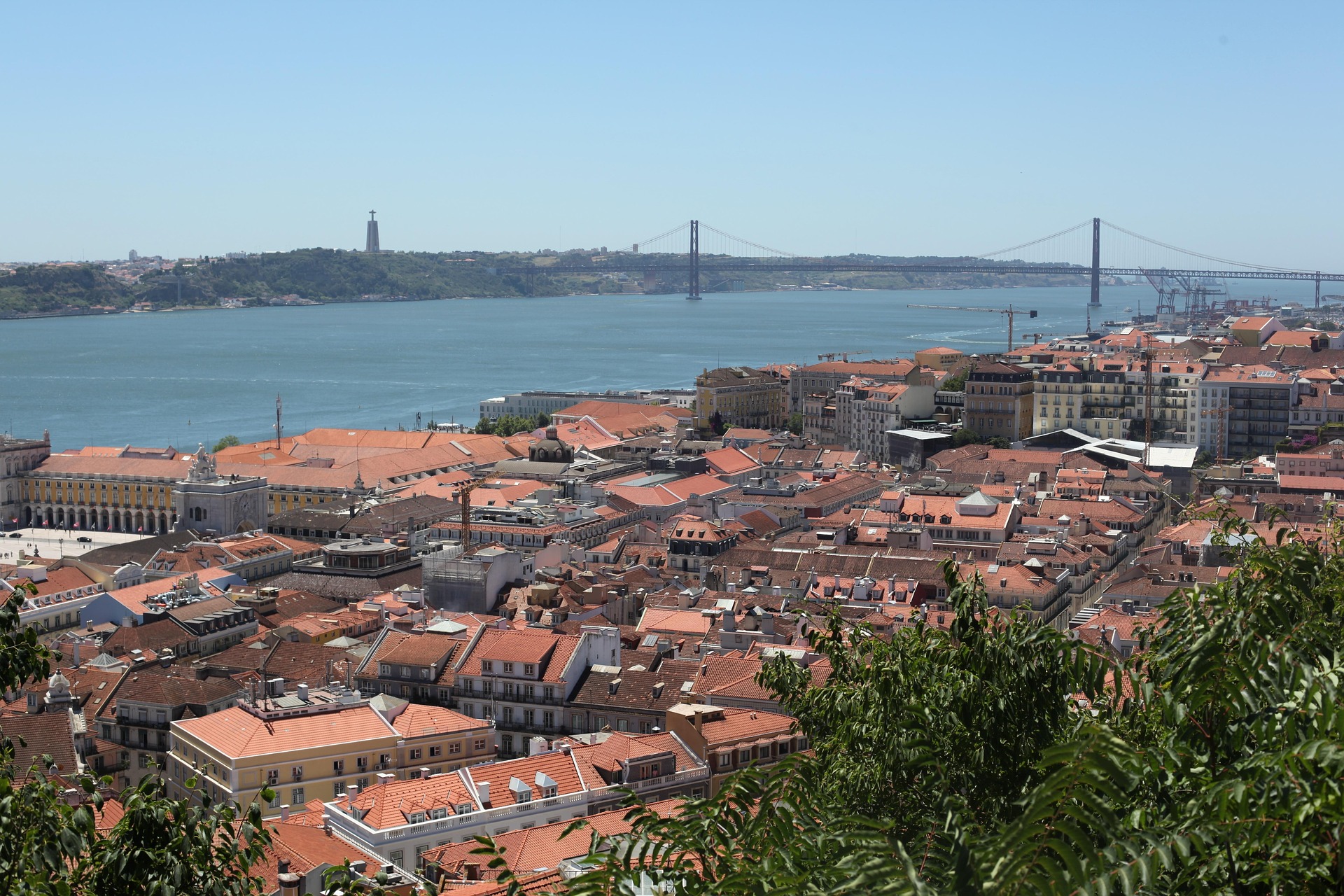
There is something special about looking out across Lisbon from one of its many miradouros. The terracotta rooftops, church towers, winding streets and the shimmering waters of the Tagus River combine to create one of Europe’s most beautiful cityscapes.
It’s hardly surprising that viewpoints are among the first places visitors want to experience when they arrive in the Portuguese capital.
But there is a downside.
Visit Miradouro de Santa Luzia on a sunny afternoon and you’ll probably find yourself squeezing between tour groups, waiting for someone to move out of your photograph and wondering whether there’s actually enough room to enjoy the view. Head to Portas do Sol around sunset and the experience can be much the same.
Even Miradouro da Senhora do Monte, once considered something of a local secret, has become increasingly popular.
Fortunately, Lisbon is a city of hills, and its most famous viewpoints are only a small part of the story.
Scattered across residential neighbourhoods, tucked behind old schools, hidden inside gardens and perched beside historic churches, there are plenty of lesser-known miradouros where you can enjoy the city’s extraordinary scenery without quite so many people around you.
Some offer wonderful views of the Tagus. Others look towards the eastern suburbs, the historic centre or the distant hills of Monsanto. A few are particularly lovely places to watch the sun disappear behind the city with a drink in your hand.
The best part? Most are completely free.
Having spent years exploring Lisbon and working as a tour guide, I’ve always thought that some of the city’s quieter corners are among its most rewarding. You don’t necessarily need to visit another famous attraction to experience something memorable. Sometimes, you just need to know which street to turn down.
In this guide, I’ve picked out six hidden or relatively overlooked viewpoints in Lisbon that deserve more attention. I’ve also ranked them according to the best time to visit, explained how difficult they are to reach and included some practical advice to help you avoid unnecessary climbing.
So, if you’re searching for quiet viewpoints in Lisbon, somewhere to enjoy a peaceful sunset or simply a different perspective on the Portuguese capital, these are six places worth adding to your list.
👉For more viewpoints and scenic spots in Lisbon, check out my complete guide.

6 Hidden Viewpoints in Lisbon That Tourists Haven’t Crowded Yet
1. Miradouro da Penha de França – Best for an early morning escape
BEST TIME: SUNRISE TO 9:00 AM · NEIGHBOURHOOD: PENHA DE FRANÇA
If you’re looking for a viewpoint that feels genuinely removed from Lisbon’s usual tourist circuit, start with the Miradouro da Penha de França.
Located in the residential neighbourhood of the same name, this is one of those places that many visitors simply never discover. It doesn’t sit beside a major attraction, isn’t particularly well advertised and doesn’t feature prominently on the usual sightseeing routes.
That’s precisely what makes it appealing.
The viewpoint is situated beside the Igreja de Nossa Senhora da Penha de França, on one of the higher points overlooking the eastern side of Lisbon. Rather than offering the familiar postcard composition of Alfama and São Jorge Castle, it provides a different perspective on the city.
From here, you can look towards areas such as Alto de São João, Areeiro, Chelas, Marvila and Olivais. On a clear day, the panorama stretches considerably further, revealing just how large Lisbon actually is beyond its historic centre.
It’s a particularly interesting viewpoint if you’ve already visited the traditional miradouros and want to understand the city’s geography a little better.
A little history behind the viewpoint
The church beside the viewpoint has an interesting history of its own.
Construction of the original Igreja de Nossa Senhora da Penha de França began in 1597. Like so many other religious buildings in Lisbon, it was devastated by the catastrophic earthquake of 1755.
According to local religious tradition, an image of Our Lady survived the disaster unharmed. The church was subsequently rebuilt, and it remains an important landmark in this part of the city.
It’s worth taking a few minutes to appreciate the building before settling down to enjoy the view.
Why visit early in the morning?
Penha de França is particularly rewarding in the morning.
The residential streets are relatively quiet, the air is often cooler and the changing light brings out the details of the eastern neighbourhoods. If you’re visiting during the warmer months, an early start also means avoiding the worst of the afternoon heat.
It’s not the most dramatic place in Lisbon for watching the sun set over the Tagus, but that’s not really its purpose.
Come here when the city is waking up, take a few photographs and enjoy the fact that you’re looking at Lisbon from an angle most visitors never bother to find.
How to get there
The viewpoint is located at Largo da Penha de França, beside the church.
You can reach the neighbourhood by bus or taxi, although walking from the Arroios or Anjos areas is also possible.
If you’re coming from central Lisbon, be prepared for an uphill walk. The streets become noticeably steeper as you approach the viewpoint.
Difficulty: Moderate. Expect sustained uphill walking, although the final viewpoint itself is relatively straightforward to access.
Accessibility: Not ideal for wheelchair users or anyone with significant mobility difficulties. The surrounding streets are steep and uneven.
Cost: Free.
My tip: Don’t confuse this viewpoint with the more famous Miradouro da Senhora do Monte. They’re in the broader eastern part of Lisbon, but offer quite different perspectives. Penha de França is the better choice if you want to explore somewhere more residential and less tourist-oriented.
2. Miradouro do Jardim do Recolhimento – Best for a peaceful mid-morning break
BEST TIME: 10:00 AM–12:00 PM · NEIGHBOURHOOD: ALFAMA / CASTELO
Here’s an interesting one.
You’re just a short distance from Castelo de São Jorge, one of Lisbon’s busiest attractions, yet there’s a good chance that many people visiting the castle will never discover the Jardim do Recolhimento.
The Miradouro do Jardim do Recolhimento is one of the most rewarding hidden viewpoints in the historic centre.
Rather than a large open terrace overlooking the city, it’s a small green space with a surprisingly lovely panoramic outlook. Olive trees, landscaped areas and a more relaxed atmosphere make it an excellent place to escape the crowds around the castle and the busy streets of Alfama.
And the view?
It’s rather special.
Looking out from the garden, you’ll see the rooftops of Alfama spreading towards the Tagus, with the unmistakable dome of the National Pantheon and the towers of São Vicente de Fora providing some wonderful architectural landmarks.
It’s a different composition from the one you’ll find at Santa Luzia or Portas do Sol, and that’s part of its appeal.
A little green escape beside the castle
One of the things I like about this viewpoint is how unexpected it feels.
The area immediately surrounding Castelo de São Jorge can become extremely busy, particularly during the summer months. Visitors move between the castle entrance, souvenir shops, restaurants and the narrow streets leading towards Alfama.
Then you step into the Jardim do Recolhimento and the atmosphere changes.
The garden has recreational facilities, including a children’s play area, and there’s also a distinctive diamond-shaped installation that makes for an interesting photographic backdrop.
It’s a useful place to take a break if you’re exploring the historic centre with children, or simply want somewhere to sit for a few minutes.
Why visit in the morning?
Mid-morning is a particularly good time to visit.
You can enjoy the garden before the hottest part of the day, and the light is generally pleasant for photographing Alfama and its rooftops.
It’s also an excellent addition to a morning exploring Castelo, Mouraria and Alfama.
I wouldn’t necessarily make a special journey across Lisbon just for this viewpoint, but if you’re already exploring the historic centre, there’s little reason not to include it.
How to get there
The garden is located on Rua do Recolhimento, close to Castelo de São Jorge.
The easiest approach is to walk towards the castle area and follow the signs or navigation towards the garden.
Be aware that the entrance isn’t particularly obvious if you’re expecting a large public park entrance.
Opening hours are important here. The garden has published seasonal opening times, with a midday closure, and winter closing times can be earlier. Check the current municipal information before setting off rather than assuming you can enter at any hour.
Difficulty: Moderate. Getting to the castle area involves climbing, but the garden itself is relatively manageable.
Accessibility: Some uneven surfaces and changes in level. The approach through the historic neighbourhood can be challenging for wheelchair users.
Cost: Free.
My tip: Combine this viewpoint with a visit to the castle and a walk through Alfama. You can enjoy the historic attractions first and then escape into the garden for a quieter break.
3. Miradouro do Jardim Botto Machado – Best for a relaxed late-morning view of the Tagus
BEST TIME: 11:00 AM–1:00 PM · NEIGHBOURHOOD: SÃO VICENTE / SANTA CLARA
This is one of my favourite recommendations for anyone who wants to discover a quieter corner of Lisbon without venturing too far from the historic centre.
The Jardim Botto Machado, also known as Jardim de Santa Clara, is a pleasant little garden overlooking the eastern part of Lisbon and the Tagus.
It’s not quite as hidden as some of the other places on this list, but it remains considerably less associated with international sightseeing itineraries than the big-name viewpoints.
And that’s a shame, because it’s a lovely place to spend some time.
The garden sits beside Campo de Santa Clara, an area that has an interesting atmosphere of its own. It’s best known for hosting the Feira da Ladra, Lisbon’s famous flea market, which takes place on Tuesdays and Saturdays.
On market days, the surrounding streets become much livelier, with stalls selling everything from vintage clothing and old books to antiques, second-hand furniture and all manner of curious objects.
However, the garden itself offers a welcome escape from the activity outside.
What makes this viewpoint special?
Unlike some of Lisbon’s smaller miradouros, Jardim Botto Machado is a proper neighbourhood garden.
There are trees providing shade, benches where you can sit and enjoy the surroundings, a children’s play area and even a kiosk and restaurant facilities.
The outlook towards the Tagus is particularly attractive.
You won’t get the same sweeping postcard panorama of the city centre that you find at some of the higher viewpoints, but the combination of the river, rooftops and the surrounding urban landscape makes this a pleasant place to stop.
It’s also a good opportunity to see a slightly different side of Lisbon.
The neighbourhood around Campo de Santa Clara feels more lived-in than some of the heavily visited parts of Alfama. You’ll find local residents going about their daily routines, people meeting friends and visitors browsing the flea market.
It’s an authentic little slice of Lisbon life.
Why visit around lunchtime?
Late morning is ideal, particularly if you’re exploring São Vicente and Alfama.
You can browse the Feira da Ladra on a Tuesday or Saturday, take a break in the garden and then continue towards the National Pantheon or the Monastery of São Vicente de Fora.
During the warmer months, the trees provide welcome shade, making this a particularly pleasant place to escape the direct sun.
If you’re looking for somewhere to sit down and enjoy a slower pace of sightseeing, this is an excellent choice.
How to get there
The garden is located at Campo de Santa Clara, in the São Vicente neighbourhood.
You can walk there from the National Pantheon in just a few minutes. It’s also accessible from Alfama, although some of the routes involve steep streets and stairs.
The garden has a straightforward entrance, but remember that it is enclosed and has set opening hours.
Difficulty: Easy once you reach the garden. The surrounding neighbourhood involves some uphill walking.
Accessibility: More manageable than many traditional miradouros, although access routes from Alfama can be difficult. Check the entrance and internal pathways if you require step-free access.
Cost: Free.
My tip: If you’re visiting on a Tuesday or Saturday, don’t rush away after seeing the flea market. Take some time to explore the garden as well. It’s a lovely combination of two very different Lisbon experiences.
4. Miradouro do Torel – Best for an afternoon in the shade
BEST TIME: 2:00 PM–5:00 PM · NEIGHBOURHOOD: SANTO ANTÓNIO / CAMPO DOS MÁRTIRES DA PÁTRIA
The Miradouro do Torel is one of those places that makes you wonder how it manages to remain relatively overlooked.
Situated inside the lovely Jardim do Torel, this viewpoint offers a beautiful perspective over central Lisbon, looking towards Avenida da Liberdade and the hills beyond.
It’s a rather different experience from the exposed terraces found elsewhere in the city.
Instead of standing on a crowded viewing platform, you’re surrounded by greenery, trees, benches and the peaceful atmosphere of a neighbourhood garden.
The garden itself occupies the grounds of an old 18th-century estate, and its surroundings retain something of that historical character. Grand buildings and elegant residential properties give the area a rather different atmosphere from the narrow streets of Alfama.
It’s a particularly good place to visit if you want to experience Lisbon beyond its most obvious tourist attractions.
The view from Torel
The viewpoint looks across the valley of Avenida da Liberdade towards the São Roque hill, where you’ll find the much more famous Miradouro de São Pedro de Alcântara.
From here, you can appreciate how Lisbon’s hills and valleys fit together.
You’ll see buildings descending towards the central avenue, with the rooftops and architectural details of the city creating an attractive urban panorama.
It’s not necessarily the best viewpoint for photographing the Tagus, but it offers something different.
The surrounding garden is arguably just as important as the view itself.
There are shaded areas where you can sit, making it particularly pleasant during the hotter months. The atmosphere is generally much calmer than at the main tourist terraces.
Why visit in the afternoon?
The garden’s trees and shaded areas make Torel an excellent afternoon destination.
Lisbon can become extremely hot during July and August, especially when you’re spending hours walking up and down the city’s hills.
Rather than continuing to explore exposed streets in the middle of the afternoon, this is somewhere you can take a proper break.
Find a bench, enjoy the surroundings and take your time.
It’s also a nice place for couples looking for somewhere a little quieter than the more famous viewpoints.
How to get there
The garden is located on Rua Júlio de Andrade.
One way to reach it is via Rua do Telhal, although this involves an uphill walk from Avenida da Liberdade.
Historically, the Elevador do Lavra provided a convenient alternative, connecting the lower part of the city with the area around the garden.
However, Lisbon’s historic funicular services have experienced significant disruption, so don’t build your route around the assumption that the Lavra lift is operating. Check Carris service information before travelling.
You can also approach from Campo dos Mártires da Pátria, which is relatively close.
Difficulty: Moderate. The climb from Avenida da Liberdade is steep, but the approach from Campo dos Mártires da Pátria is more manageable.
Accessibility: The garden has relatively accessible areas, but the surrounding slopes and internal level changes mean that it’s not a guaranteed step-free visit.
Cost: Free.
My tip: Visit after exploring Avenida da Liberdade. Rather than immediately heading towards Baixa or Rossio, take the opportunity to climb towards Torel and discover a much quieter side of central Lisbon.
5. Miradouro do Monte Agudo – Best for a secret sunset and a glass of wine
BEST TIME: 1–2 HOURS BEFORE SUNSET · NEIGHBOURHOOD: ANJOS / PENHA DE FRANÇA
(My favourite hidden sunset recommendation)
If there’s one viewpoint on this list I’d particularly recommend for a memorable evening in Lisbon, it’s the Miradouro do Monte Agudo.
This is one of the city’s best-kept secrets, and it’s easy to understand why locals appreciate it.
The viewpoint is tucked away between the Graça and Anjos neighbourhoods, hidden behind Escola Secundária Dona Luísa de Gusmão.
You could easily walk along the nearby streets without realising that such a lovely viewpoint is sitting just behind the school.
Created in the 1950s, Monte Agudo has remained relatively unknown to visitors, despite offering an impressive panorama over the city.
And unlike some of Lisbon’s smaller viewpoints, it has something that makes it particularly appealing: a kiosk with an outdoor terrace.
A different perspective on Lisbon
The view from Monte Agudo is quite expansive.
Rather than focusing exclusively on the historic centre, the panorama stretches across the northern and western parts of Lisbon.
You’ll see the rooftops of the city, various residential neighbourhoods and, depending on visibility, distant landmarks and the surrounding hills.
There’s a pleasant pergola providing shade, and the trees give the viewpoint a relaxed atmosphere.
The setting is particularly attractive when the light begins to change towards the end of the day.
This is when Monte Agudo really comes into its own.
The perfect place for a sunset drink
One of the best things about this viewpoint is that you don’t necessarily need to bring your own refreshments.
The kiosk, known as Simo’s, has become part of the attraction, offering drinks and light refreshments in a lovely outdoor setting.
Depending on the current menu, you may find coffee, juices, toast, wine and cocktails.
There’s something rather nice about sitting on a terrace overlooking Lisbon, enjoying a drink and watching the city change colour as the sun goes down.
And because Monte Agudo isn’t on the standard sightseeing circuit, the atmosphere can feel considerably more relaxed than at the famous sunset viewpoints.
I wouldn’t promise that you’ll have the place entirely to yourself, particularly on a beautiful summer evening. Locals know about it, after all.
But that’s part of the charm.
You’re sharing the experience with people who have come to enjoy their neighbourhood rather than simply tick another attraction off a sightseeing list.
How to get there
The viewpoint has two useful approaches.
One entrance is on Rua Heliodoro Salgado, while another connects with Rua Ilha do Príncipe.
If you’re coming from Anjos, you can walk towards Rua Heliodoro Salgado and look for the entrance near the school.
Alternatively, the route from Rua Ilha do Príncipe involves a flight of stairs.
Anjos metro station on the Green Line is a useful starting point, although you’ll still need to walk uphill.
Difficulty: Moderate to challenging. There is a steep approach, and the alternative route includes stairs.
Accessibility: Not suitable for wheelchair users via the stair access. The steep streets and changes in level make the area challenging for visitors with limited mobility.
Cost: Free to enter. Drinks and refreshments are extra.
My tip: Arrive around an hour before sunset rather than turning up at the last minute. You’ll have time to find a seat, order a drink and enjoy the changing light. Also, check that the kiosk is open if refreshments are an important part of your visit.
Is Monte Agudo better than Senhora do Monte?
For the overall panorama, Senhora do Monte is difficult to beat.
However, if you’re looking for somewhere to sit down, enjoy a drink and experience a more local atmosphere, I’d choose Monte Agudo.
The two viewpoints offer different experiences, and there’s no reason not to visit both if you have enough time.
6. Miradouro da Capela de Santo Amaro – Best for a late-afternoon view of the 25 de Abril Bridge
BEST TIME: 4:00 PM–6:30 PM · NEIGHBOURHOOD: ALCÂNTARA
Our final viewpoint takes us away from the historic centre and towards Alcântara.
The Miradouro da Capela de Santo Amaro is a particularly interesting place because it combines two things Lisbon does exceptionally well: historic architecture and beautiful views.
Situated beside the Renaissance-era Capela de Santo Amaro, this viewpoint offers an attractive panorama towards the Tagus, the 25 de Abril Bridge and the southern bank of the river.
It’s one of those places that feels a little removed from the usual tourist routes, despite being relatively close to some of Lisbon’s best-known attractions.
And if you’re interested in photography, it’s well worth the detour.
A historic chapel with a fascinating story
The chapel dates from the 16th century and is dedicated to Santo Amaro, a saint traditionally associated with the protection of travellers and those suffering from physical ailments.
It was historically an important place of pilgrimage.
One of its most distinctive features is the decorative tilework, which includes representations of human limbs. These images are associated with the tradition of people seeking the saint’s intercession for injuries and illnesses.
It’s an unusual detail that makes the chapel particularly interesting.
The building is also recognised as a National Monument, adding a little historical significance to what might otherwise appear to be a simple viewpoint.
Take a few minutes to look at the exterior and appreciate the setting before turning your attention towards the river.
Why visit in the late afternoon?
The viewpoint’s position makes it particularly attractive during the later part of the day.
The Tagus stretches out in front of you, with the enormous 25 de Abril Bridge providing one of Lisbon’s most recognisable backdrops.
Depending on the season and the precise time of your visit, the afternoon light can create beautiful photographic conditions.
It’s also a nice alternative to the more obvious waterfront viewpoints around Belém.
You can enjoy the river without the same concentration of visitors, while getting a different perspective on the bridge and the surrounding port area.
If you’re particularly interested in photographing Lisbon’s bridges, this is one of the places I’d make an effort to visit.
How to get there
The chapel is located in Alcântara, near Calçada de Santo Amaro.
You can reach the neighbourhood using public transport, including buses and the Cascais railway line, although the final approach involves walking uphill.
The route from the lower part of Alcântara includes a climb, so allow a little extra time.
Difficulty: Moderate. The final approach involves an uphill walk, with some steep sections.
Accessibility: Limited. The surrounding streets are steep, and the historic setting is not particularly suitable for visitors with mobility difficulties.
Cost: The exterior viewpoint is free. Access to the chapel interior may depend on opening times and religious services.
My tip: Combine Santo Amaro with a visit to LX Factory or the waterfront around Alcântara. It’s an interesting way to explore a different part of Lisbon, away from the usual Baixa and Alfama sightseeing routes.

How to choose the right hidden viewpoint in Lisbon
With six different viewpoints to choose from, the best one really depends on what you’re hoping to experience.
Some are better for photography, others for relaxing with a drink, and a few are particularly useful if you’re trying to escape the heat during the middle of the day.
Here’s how I’d choose.
For the best peaceful morning: Head to Penha de França. Its residential location and unusual perspective make it a rewarding place to start the day.
For a viewpoint close to the main attractions: Choose Jardim do Recolhimento. You can enjoy a quieter garden without straying far from Castelo de São Jorge and Alfama.
For a relaxed break with the family: Jardim Botto Machado is the obvious choice. It has more facilities than most of the other viewpoints and is close to the Feira da Ladra.
For shade during the afternoon: Visit Jardim do Torel. Its greenery and relaxed atmosphere make it an excellent place to take a break from sightseeing.
For a romantic sunset: Monte Agudo is my recommendation. The combination of the panorama and the kiosk terrace makes it particularly appealing.
For the best view of the 25 de Abril Bridge: Make the journey to Santo Amaro. Its historic chapel and riverside panorama provide a different perspective on Lisbon.
How to visit Lisbon’s hidden viewpoints without exhausting yourself
One thing worth remembering about Lisbon is that its hills can be deceptive.
A viewpoint might appear to be only a kilometre away on Google Maps, but that doesn’t mean it’s an easy kilometre.
Some streets are incredibly steep, others have long staircases, and even relatively short walks can become tiring during the summer.
If you’re planning to visit several miradouros, a little organisation goes a long way.
1. Don’t try to visit all six in one afternoon
Although it’s tempting to collect as many viewpoints as possible, these places are spread across different parts of Lisbon.
Penha de França and Monte Agudo are relatively close to each other, while Recolhimento and Jardim Botto Machado can be combined into a historic-centre exploration.
Torel is more convenient when you’re already around Avenida da Liberdade, and Santo Amaro is best combined with Alcântara.
I’d recommend choosing two or three viewpoints in the same area rather than spending half your day travelling between them.
2. Wear proper walking shoes
This might sound obvious, but it’s worth mentioning.
Lisbon’s traditional pavements, known as calçada portuguesa, are beautiful but can become slippery, especially when wet.
Combine these with steep streets, stairs and uneven surfaces, and you’ll quickly understand why comfortable footwear is important.
Leave the flimsy sandals for the beach.
3. Visit earlier during the summer
July and August can be particularly hot in Lisbon.
If you’re planning to explore several viewpoints, start early in the morning and leave the more exposed locations until later in the day.
The shade at Torel and Monte Agudo is particularly welcome during warmer weather.
4. Check opening hours before visiting gardens
Not every miradouro is open around the clock.
Jardim do Recolhimento, for example, has specific opening hours and a midday closure. Other gardens may have seasonal schedules.
Check the relevant municipal information before making a special journey.
5. Don’t assume the funiculars will save you from the hills
Lisbon’s historic elevators and funiculars are an attraction in their own right, but services can be suspended for maintenance or other reasons.
The Elevador do Lavra is particularly relevant when visiting Torel.
Check the current Carris information before setting off, and have an alternative walking or public transport route in mind.
The best tours to combine with Lisbon’s hidden viewpoints
One of the best ways to discover Lisbon’s lesser-known viewpoints is to explore the neighbourhoods around them rather than simply travelling from one miradouro to another.
This is where a good local guide can make a real difference.
Lisbon has centuries of history, fascinating neighbourhoods and plenty of hidden corners that are easy to miss if you’re exploring independently. A walking tour, food tour or tuk-tuk experience can help you discover places you might otherwise walk straight past.
Here are some experiences I’d recommend considering.
Walking tours of Lisbon
If you’re interested in discovering Lisbon’s hidden viewpoints, a walking tour is probably the most natural place to start.
A good walking tour will take you through the historic neighbourhoods, explain the city’s complicated history and introduce you to streets and corners that aren’t necessarily mentioned in guidebooks.
I’d particularly recommend looking for tours covering Alfama, Mouraria and Graça.
These neighbourhoods contain some of Lisbon’s most interesting viewpoints, but they also have fascinating stories involving the city’s Moorish past, the 1755 earthquake, traditional architecture and the development of Portuguese culture.
A local guide can also explain why Lisbon developed the way it did, why certain streets are so steep and how the city’s different neighbourhoods evolved.
👉 Explore Lisbon walking tours on Viator
👉 Discover guided walking tours on GetYourGuide
Lisbon tuk-tuk tours
Let’s be honest: Lisbon’s hills aren’t for everyone.
If you’re travelling with children, have limited time or simply don’t fancy spending an entire day climbing steep streets, a tuk-tuk tour can be an excellent alternative.
These little electric vehicles have become a familiar sight around Lisbon, and for good reason.
They allow you to cover considerably more ground than you could comfortably manage on foot, while still getting close to many of the city’s most interesting attractions.
Many tours include stops at viewpoints in Graça, Alfama and other elevated parts of the city.
You can enjoy the scenery, take photographs and listen to a local guide explain the history of the places you’re visiting.
The advantage is that you don’t need to worry about navigating the complicated network of streets yourself.
If you’re particularly interested in visiting several miradouros, look for a tour that specifically includes viewpoint stops rather than simply driving past them.
👉 Compare Lisbon tuk-tuk tours on Viator
👉 Find Lisbon tuk-tuk experiences on GetYourGuide
Lisbon sunset tours
If you’re visiting Lisbon as a couple, a sunset experience is worth considering.
Although watching the sun disappear from Monte Agudo is a lovely experience, there are other ways to enjoy Lisbon in the evening.
One of my favourite recommendations is a sunset sailing trip on the Tagus.
You’ll get a completely different perspective of the city, with views of Praça do Comércio, Belém, the 25 de Abril Bridge and the waterfront.
It’s particularly beautiful when the evening light reflects off the river and the city’s monuments begin to illuminate.
Some experiences include drinks, while others offer a more traditional sailing excursion.
You can also find guided sunset tours that take you around some of Lisbon’s best-known viewpoints.
👉 Explore Lisbon sunset cruises and tours on Viator
👉 Discover sunset experiences in Lisbon on GetYourGuide
Lisbon food tours
One of the things I always recommend to visitors is to leave enough time to experience Lisbon’s food culture.
And what better way to do that than with a food tour?
Lisbon’s traditional neighbourhoods are full of small restaurants, bakeries, tascas and neighbourhood cafés serving some wonderful Portuguese dishes.
A food tour allows you to sample a variety of local specialities while learning about the city’s culinary traditions.
Depending on the experience, you might try pastéis de nata, bacalhau, Portuguese cheeses, cured meats, petiscos and local wines.
It’s also a fantastic way to explore areas such as Mouraria and Alfama, where food, history and neighbourhood culture are closely connected.
If you’re already planning to visit some of the hidden viewpoints in this guide, a food tour makes an excellent addition to your sightseeing plans.
Where to stay in Lisbon for easy access to the viewpoints
If you’re planning to explore Lisbon’s miradouros, choosing the right neighbourhood can make a surprisingly big difference.
The city is relatively compact, but its hills and complicated street layout mean that some accommodation locations are considerably more convenient than others.
You don’t necessarily need to stay right beside a famous attraction. In fact, choosing a slightly less touristy neighbourhood can make your experience more enjoyable.
Here are four areas I’d consider.
1. Graça – Best for viewpoints and traditional Lisbon
Graça is an excellent choice if viewpoints are high on your sightseeing list.
The neighbourhood sits on one of Lisbon’s highest hills and has a more residential atmosphere than some of the central tourist districts.
You’re well placed for exploring Monte Agudo, Penha de França and the historic viewpoints around São Vicente.
There are traditional cafés, local restaurants and plenty of interesting streets to explore.
The main disadvantage is the terrain. Graça is hilly, and walking back to your accommodation after a long day of sightseeing can be tiring.
Best for: Couples, independent travellers and visitors looking for a more traditional neighbourhood.
👉 Find hotels and apartments in Graça on Booking.com
2. Alfama – Best for historic atmosphere
Alfama is one of Lisbon’s most atmospheric neighbourhoods.
Its narrow streets, traditional houses, old churches and little squares make it an unforgettable place to stay.
You’ll also be close to Jardim do Recolhimento and Jardim Botto Machado, as well as several of the city’s more famous viewpoints.
The downside is that Alfama can become busy during the day, and some accommodation is difficult to reach with luggage because of the steep streets and stairs.
If you’re looking for character rather than modern convenience, however, it’s a wonderful choice.
Best for: Couples, first-time visitors and travellers who want to experience historic Lisbon.
👉 Browse accommodation in Alfama on Booking.com
3. Avenida da Liberdade – Best for comfort and convenience
If you prefer a more comfortable base, consider staying around Avenida da Liberdade.
This elegant boulevard is lined with hotels, restaurants, shops and beautiful buildings.
It’s also conveniently located for exploring the central districts and visiting Miradouro do Torel.
You’ll have easy access to public transport, and the streets are generally more manageable than those in the older hillside neighbourhoods.
It’s a particularly good option for travellers who want a comfortable hotel without being too far from Lisbon’s attractions.
Best for: Families, couples, luxury travellers and visitors who value convenience.
👉 Compare hotels around Avenida da Liberdade on Booking.com
4. Baixa – Best for first-time visitors
Baixa is probably the most convenient central neighbourhood for anyone visiting Lisbon for the first time.
It’s relatively flat compared with the surrounding hills, has excellent public transport connections and puts you within walking distance of many of the city’s main attractions.
You’ll need to climb to reach several of the viewpoints in this guide, but staying in Baixa means you can return to a more manageable part of the city afterwards.
There’s also a huge selection of restaurants, cafés and accommodation.
Best for: First-time visitors, families and anyone who wants to explore Lisbon on foot.
A simple two-day plan for discovering Lisbon’s quieter viewpoints
If you have two days available, you can comfortably visit all six viewpoints without spending your entire holiday walking uphill.
The trick is to group them geographically.
Day 1: The historic centre and eastern Lisbon
Start your morning at Jardim do Recolhimento.
After enjoying the garden, explore Castelo de São Jorge and the surrounding streets of Alfama.
Continue towards Jardim Botto Machado, perhaps stopping to browse the Feira da Ladra if you’re visiting on a Tuesday or Saturday.
From there, make your way towards Penha de França.
This is the most demanding part of the day, so take your time and stop for refreshments along the way.
You can finish by heading towards Monte Agudo for a sunset drink.
This gives you three very different viewpoints, with plenty of opportunities to experience some of Lisbon’s residential neighbourhoods.
Day 2: Central Lisbon and Alcântara
Start with a relaxed morning around Avenida da Liberdade and explore the surrounding streets.
Make your way towards Jardim do Torel in the afternoon, taking some time to enjoy the garden.
Afterwards, head towards Alcântara.
You can explore LX Factory, enjoy a meal in the neighbourhood and finish your day at the Capela de Santo Amaro.
If you time it correctly, you’ll get some wonderful views of the Tagus and the 25 de Abril Bridge during the later afternoon.
An important note: This is a sightseeing outline rather than a route with guaranteed walking times. Check current transport services, garden opening hours and seasonal sunset times before setting off. If you prefer not to walk the steeper sections, use a taxi or public transport for the longer connections.
❓Frequently asked questions about Lisbon’s hidden viewpoints
❓1. What are the best hidden viewpoints in Lisbon?
Some of the best lesser-known viewpoints include Miradouro do Monte Agudo, Miradouro da Penha de França, Jardim do Recolhimento, Jardim Botto Machado, Miradouro do Torel and Miradouro da Capela de Santo Amaro.
Each offers a different perspective on Lisbon, and all provide an alternative to the city’s more heavily visited viewpoints.
❓2. Where can I watch the sunset in Lisbon without the crowds?
Miradouro do Monte Agudo is one of my favourite recommendations.
It’s tucked away between Anjos and Graça, has a lovely outdoor kiosk and offers a wide panorama across the city.
It’s not completely undiscovered, particularly among locals, but it generally offers a more relaxed experience than Santa Catarina, Portas do Sol or Senhora do Monte.
❓3. Are Lisbon’s hidden viewpoints free?
Yes. All six viewpoints featured in this guide are free to visit.
However, some have cafés or kiosks where you can purchase drinks and refreshments.
Remember that certain gardens have specific opening hours, so check before visiting.
❓4. Which Lisbon viewpoint has the best view of the Tagus River?
It depends on the perspective you’re looking for.
Jardim do Recolhimento offers a lovely view across Alfama towards the Tagus, while Jardim Botto Machado provides a more relaxed garden setting overlooking the river.
For a particularly attractive view of the Tagus and the 25 de Abril Bridge, I’d recommend the Capela de Santo Amaro.
❓5. Which Lisbon viewpoints are best for photography?
For photography, I’d recommend three in particular.
Miradouro do Recolhimento is excellent for capturing Alfama’s rooftops, Jardim Botto Machado offers attractive views of the river and surrounding architecture, and Santo Amaro is particularly good for photographs featuring the 25 de Abril Bridge.
Monte Agudo is another excellent option if you’re interested in sunset photography.
❓6. What is the quietest viewpoint in Lisbon?
Miradouro da Penha de França is a particularly good choice if you’re looking for somewhere away from the usual tourist routes.
Its residential location means that relatively few visitors make the effort to reach it.
Miradouro do Monte Agudo is another excellent alternative, although it attracts a local crowd, especially towards sunset.
❓7. Is Miradouro do Monte Agudo worth visiting?
Absolutely.
Monte Agudo is one of Lisbon’s most underrated viewpoints, offering a wide panorama, shaded seating and a kiosk where you can enjoy refreshments.
Its location behind Escola Secundária Dona Luísa de Gusmão means that it’s easy to overlook if you don’t know where you’re going.
I’d particularly recommend visiting towards sunset.
❓8. Can you visit Lisbon’s viewpoints with children?
Yes, although some are easier to reach than others.
Jardim Botto Machado is particularly family-friendly, with a children’s play area and plenty of space to relax.
Jardim do Recolhimento also has recreational facilities for children.
The main consideration is the walking involved. Lisbon’s steep streets and staircases can be challenging, especially with pushchairs.
❓9. Are Lisbon’s miradouros accessible for wheelchair users?
Accessibility varies considerably.
Some viewpoints have relatively straightforward access once you’re there, but the surrounding streets can be steep, uneven and difficult to navigate.
Jardim Botto Machado and parts of Jardim do Torel may be more manageable than the traditional hillside terraces, but neither should be assumed to offer a fully step-free route.
I’d recommend checking the exact access route before visiting.
❓10. What is the best time of year to visit Lisbon’s viewpoints?
Spring and autumn are particularly pleasant.
Temperatures are generally more comfortable for walking, and the changing light can be wonderful for photography.
Summer offers long evenings and beautiful sunsets, although the heat can make climbing Lisbon’s hills exhausting.
Winter can also be surprisingly rewarding, particularly on clear days when visibility is excellent and the main tourist viewpoints are quieter.
❓11. Can you visit several miradouros in one day?
Definitely.
Jardim do Recolhimento and Jardim Botto Machado can be combined with a visit to Alfama and São Vicente.
Penha de França and Monte Agudo also work well together because they’re relatively close.
Torel and Santo Amaro are better explored on a separate day, as they’re in different parts of the city.
I’d avoid trying to visit all six on foot in a single afternoon.
❓12. Are guided tours a good way to discover Lisbon’s hidden viewpoints?
Yes, particularly if you’re unfamiliar with Lisbon.
A knowledgeable local guide can help you discover lesser-known streets, explain the history of the neighbourhoods and take you to viewpoints you might otherwise miss.
Walking tours are ideal for exploring the historic centre, while tuk-tuk tours are particularly useful if you’d prefer to avoid some of the steep climbs.
You can also consider a sunset sailing trip for a completely different perspective of the city.
Final thoughts: Sometimes the best view of Lisbon is the one you have to find
Lisbon certainly isn’t short of beautiful viewpoints.
From the famous terraces of Santa Luzia and Portas do Sol to the sweeping panorama at Senhora do Monte, there are plenty of places where you can appreciate the city’s extraordinary scenery.
But there’s something particularly rewarding about finding a viewpoint that isn’t packed with visitors.
It’s the difference between standing in a crowd waiting for someone to finish taking a photograph and sitting quietly beneath a tree, watching the rooftops stretch towards the Tagus.
The six viewpoints in this guide each offer something slightly different.
Penha de França gives you a glimpse of a less familiar side of Lisbon. Jardim do Recolhimento provides a peaceful escape beside one of the city’s busiest attractions. Botto Machado combines a lovely green space with views of the river, while Torel offers a welcome break from the afternoon heat.
Monte Agudo is where I’d head for a relaxed sunset drink, and Santo Amaro is a wonderful place to appreciate the 25 de Abril Bridge and Lisbon’s historic relationship with the Tagus.
You don’t need to visit every single one to appreciate what makes them special.
In fact, I’d encourage you to choose two or three, explore the neighbourhoods around them and allow yourself a little time to get lost.
That’s often when Lisbon reveals its most interesting side.
And if you happen to find another quiet miradouro along the way, even better.
After all, some of the best things about Lisbon are still hiding just around the corner.
About the author
I’m Duncan, a Lisbon-based guide and writer who’s lived here for 11 years and taken hundreds of visitors around the city. I created Lisbon Listicles to share everything you need to know about Lisbon in clear, practical lists — from iconic sights to hidden gems — so you can plan your trip easily and make the most of your time here.
All recommendations are based on personal experience and the questions I hear most often from visitors.
Leave a Reply