Disclosure: Some links in this article are affiliate links. If you book through them, I may earn a small commission at no extra cost to you. I only recommend places and experiences I genuinely think are worth it.
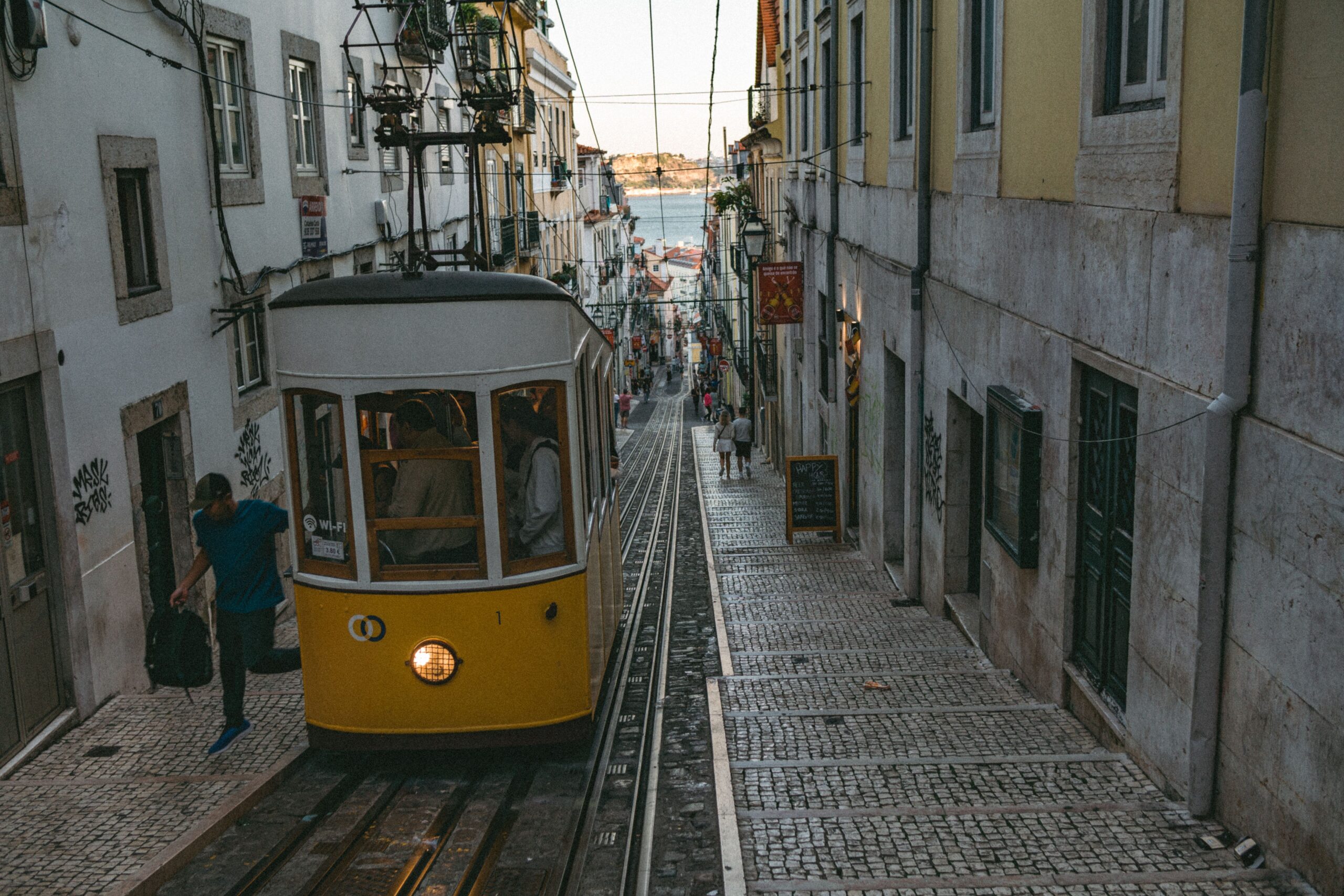
Lisbon’s hills can be tough on the legs — but that’s where its funiculars come in, combining practicality with a bit of historic charm. Over the years, I’ve ridden each of the city’s main funiculars, taking note of their views, engineering quirks, and the character they bring to the neighborhoods they connect. I also want to acknowledge the 2025 accident with the Glória Elevator, which reminded me how seriously safety is taken and why maintenance and care are so important for these iconic lifts.
In this 2026 guide, I’m sharing four funiculars in Lisbon you need to ride — ones I’ve personally experienced, studied, and observed, highlighting their history, views, and why they remain a memorable part of exploring the city.
👉 Ready to explore more? Here’s my complete guide to Lisbon.
Lisbon’s Funiculars
Lisbon is a city shaped—literally—by its hills. From the cobbled lanes of Bairro Alto to the winding alleys of Mouraria, the Portuguese capital rises and dips in dramatic slopes that are as beautiful as they are challenging. Thankfully, Lisbon’s iconic funiculars have been helping locals and travelers navigate these steep inclines for more than a century.
But 2025 was not like previous years.
In September 2025, the beloved Elevador da Glória experienced a tragic accident in which 16 people lost their lives. The entire city mourned. Since then, extensive safety reviews, engineering upgrades, and stricter operational protocols have reshaped how Lisbon approaches its historic funicular system.
Since the accident, all four of Lisbon’s funiculars—including the modern Elevador da Graça—have been closed.
This guide will help you explore each funicular safely and meaningfully, understand their history, enjoy their viewpoints, and make the most of your visit.
👉 Planning your Lisbon itinerary? Check Booking.com for central stays near Baixa, Chiado, or Avenida da Liberdade—ideal locations for accessing all four funiculars without long walks uphill.
Why Lisbon’s Funiculars Matter (Now More Than Ever)
Lisbon’s funiculars are more than just transportation—they’re living history, engineering landmarks, and cultural symbols. Riding them supports:
Heritage preservation
Sustainable urban mobility
Local neighborhoods recovering after tourism drops
A safer, modernized transit system
Once they are operating again, all funiculars will have:
Reinforced braking systems
Updated track monitoring
New digital safety checks
Reduced cabin loads
Daily technical inspections
Travelers can feel reassured that safety is now the top priority.

4 Funiculars in Lisbon You Need to Ride
1. Elevador da Glória
Route: Baixa → Bairro Alto
Original Opening: 1885
Status: Temporarily closed
History
The Elevador da Glória has always been the heartbeat of Lisbon’s hillside transport, connecting the elegant Avenida da Liberdade with the artistic, bohemian Bairro Alto. Designed by Raoul Mesnier du Ponsard, it carried generations of commuters, artists, and travelers.
The 2025 Tragedy
In September 2025, a mechanical failure caused a devastating accident. Lisbon entered a period of national mourning. For many locals, this funicular isn’t just transportation—it’s emotional lineage.
What to Expect (Post-Renovation)
The Glória will be completely modernized while preserving its classic exterior. The ride will be smoother, quieter, and equipped with:
New reinforced brakes
AI-powered track monitoring
Passenger load controls
Safety personnel at both stations
The route still leads to the stunning Miradouro de São Pedro de Alcântara, offering panoramic views of Castelo de São Jorge, Baixa Pombalina, and the Tagus River.
2. Elevador da Bica (Lisbon’s Most Photographed Funicular)
Route: Rua de São Paulo → Bairro Alto
Opening Year: 1892
History
Built in 1892, the Elevador da Bica is known for its dramatic incline and postcard-worthy setting. Originally steam-powered, it became electrified to meet Lisbon’s growing population and eventually transformed into one of the city’s most iconic sites.
What to Expect
You’ll travel up the famous Rua da Bica de Duarte Belo, passing:
Colorful homes
Cobblestone stairways
Laundry-swinging balconies
Slow-moving tuk-tuks
Bars and wine shops opening for the day
At the top, you’re steps from the lively Santa Catarina viewpoint, ideal for sunsets over the Tagus.
👉 If nightlife is your thing, check Booking.com for accommodations around Cais do Sodré or Chiado—you’ll be close to Bica, bars, music venues, and the riverfront.
3. Elevador do Lavra (Lisbon’s Hidden Gem Funicular)
Route: Avenida da Liberdade → Calçada do Lavra
Opening Year: 1884
History
The Elevador do Lavra, Lisbon’s very first funicular, remains the most peaceful. It connects bustling Avenida da Liberdade with the quiet, leafy neighborhood of Lavra—an area many tourists never even reach.
What to Expect
Expect calm, authentic Lisbon scenes:
Residential buildings filled with locals
Tree-shaded streets
Soft views over old rooftops
More privacy and fewer crowds
From the top station, it’s a lovely climb toward the Miradouro da Senhora do Monte, one of the highest points in Lisbon.
4. Elevador da Graça (The Modern Marvel – Opened 2024)
Route: Mouraria → Graça
Opening Year: 2024
History
As Lisbon grew and tourism expanded into new neighborhoods, the city introduced the Elevador da Graça, a sleek, contemporary funicular designed to reduce car traffic in the historic hills of Mouraria and Graça.
What to Expect
This is the most modern of Lisbon’s funiculars, featuring:
Panoramic windows
Smooth, quiet operation
State-of-the-art control systems
Accessible boarding
The ride is short but scenic, leading straight to the amazing Miradouro da Graça, a viewpoint beloved by both photographers and locals.

The Best Neighborhoods to Stay In (For Easy Funicular Access)
If you want to explore all four funiculars without exhausting yourself on Lisbon’s hills, consider staying in:
Perfect for exploring Glória, Lavra, and easy connections to Bica.
Ideal for walking to Bica and catching nightlife tours.
Upscale, calm, and close to both Lavra and Glória.
👉 Use Booking.com to compare hotels in Baixa, Chiado, or Liberdade—these areas give you the best access to all funicular routes and major sightseeing attractions.
Funicular Safety Tips (2026 Traveler Edition)
Since the Glória accident, Lisbon has strengthened its safety guidelines. Keep these in mind:
Always wait behind the yellow line
Follow cabin loading limits
Avoid leaning on doors
Keep hands inside windows
Board and exit calmly
If something feels off, alert staff immediately
Lisbon takes funicular operations very seriously—and so should travelers.
Final Thoughts
Lisbon’s funiculars are not just relics of the past—they’re symbols of resilience, heritage, and urban beauty. As the city continues healing after the Glória tragedy, these funiculars offer a way to honor Lisbon’s history while experiencing its hills the way locals do.
With updated safety measures, stunning viewpoints, and renewed appreciation for their importance, there has never been a better—and more meaningful—time to ride Lisbon’s four funiculars.
For me, riding Lisbon’s funiculars is a mix of nostalgia, convenience, and sightseeing — a way to experience the city’s hills without missing a beat.
I hope this guide helps you enjoy them safely and fully. Despite the past accident, these lifts remain a unique part of Lisbon’s charm, and taking the time to ride them lets you see the city from a perspective most visitors miss.
About the author
I’m Duncan, a Lisbon-based guide and writer who’s lived here for 11 years and taken hundreds of visitors around the city. I created Lisbon Listicles to share everything you need to know about Lisbon in clear, practical lists — from iconic sights to hidden gems — so you can plan your trip easily and make the most of your time here.
All recommendations are based on personal experience and the questions I hear most often from visitors.
Leave a Reply