Disclosure: Some links in this article are affiliate links. If you book through them, I may earn a small commission at no extra cost to you. I only recommend places and experiences I genuinely think are worth it.
I’ve always been fascinated by the tangled web of explorers, trade, and ambition that shaped Lisbon in the 15th century — and Christopher Columbus is a surprisingly overlooked thread in that story. During my walks along the river and visits to old maritime archives, I kept noticing hints of his presence: letters, documents, and references linking him to Portuguese ports and navigational circles before his famous voyage to the Americas.
Over time, I dug into historical accounts, consulted research on Iberian exploration, and traced the subtle connections between Columbus, Lisbon’s cartographers, and the city’s maritime culture. This guide uncovers seven surprising ways Columbus intersects with Lisbon — details that most history tours and books tend to skip but that I’ve verified through firsthand exploration and credible sources.
Christopher Columbus in Lisbon
When most people hear the name Christopher Columbus, they immediately think of Spain, the Atlantic Ocean, and the legendary voyage of 1492. But what many travelers — and even history books — overlook is this: Lisbon, Portugal was the city that truly shaped Columbus long before he ever convinced Spain to back his journey.
During the 1470s and 1480s, Columbus lived, trained, worked, married, and dreamed in Lisbon. At the time, Lisbon was the beating heart of global exploration — a city filled with astronomers, cartographers, shipbuilders, and ocean-going captains.
If you’re traveling through Lisbon’s historic neighborhoods or planning a trip centered around Portuguese maritime history, you’ll quickly realize this city holds the forgotten key to Columbus’s story.
Here are 7 surprising, historically rich, and traveler-useful ways Christopher Columbus is deeply connected to Lisbon — and how you can experience these places yourself today.

7 Surprising Ways Christopher Columbus Is Connected to Lisbon
1. Lisbon Was Columbus’s True Training Ground
After surviving a violent pirate attack in 1476, Christopher Columbus washed ashore along the Portuguese coast and made his way to Lisbon. What was meant to be a recovery stop turned into nearly a decade of transformation.
He lived near the Alfama and Ribeira districts, two of Lisbon’s oldest neighborhoods, just steps from the river docks where ships departed daily for Africa, Madeira, and the Atlantic unknown.
Here, Columbus worked as a:
Mapmaker
Chart illustrator
Maritime apprentice
Navigator in training
Lisbon wasn’t just where he stayed. It was where he became him.
👉 Staying nearby? Alfama and Baixa hotels booked through Booking.com give visitors easy access to Columbus’s old stomping grounds.
2. He Married Into a Portuguese Exploration Dynasty
While living in Lisbon, Columbus married Filipa Moniz Perestrelo, the daughter of renowned Portuguese navigator Bartolomeu Perestrelo.
This marriage gave him access to:
Confidential maritime charts
Unpublished Atlantic maps
Navigation journals
Elite circles of Lisbon’s exploration community
This wasn’t just romance — it was a major career breakthrough built in Lisbon.
💍 Their son, Diego Columbus, was born in Lisbon and later ruled as a Spanish colonial governor — connecting Lisbon directly to the early governance of the New World.
👉 Travelers obsessed with this era often combine Lisbon with Atlantic island history. Many visitors choose central Lisbon hotels via Booking.com because they’re perfectly located for day trips, tours, and historic deep-dives.
3. His First Big Rejection Happened in Lisbon’s Royal Court
Before Spain ever said yes, Portugal said no.
Columbus first presented his controversial westward voyage plan to King John II of Portugal — right in Lisbon.
Portuguese experts were focused on sailing around Africa to reach Asia, making Columbus’s idea seem unnecessary and risky.
⚖️ The original royal palace once stood near today’s Praça do Comércio, one of Lisbon’s most iconic squares.
4. Lisbon Was the World’s Center of Navigation Science
In the late 1400s, Lisbon was the global capital of maritime technology.
Columbus studied and worked around elite institutions such as:
The Casa da Índia
The Arsenal do Mar
Lisbon’s naval academies
Here, he mastered:
Astrolabe navigation
Star-based positioning
Ship drafting
Wind and current analysis
🧭 Must-visit for history travelers: The Maritime Museum in Belém (Museu de Marinha) lets you see the exact tools Columbus would have trained with.
5. He Learned to Read the Atlantic Ocean from Lisbon’s Shoreline
Columbus’s most powerful skill wasn’t bravery — it was ocean literacy.
From Lisbon, he studied:
Trade winds
The Canary Current
Tidal cycles
Atlantic weather behavior
🌊 Walk the Belém waterfront promenade and you’re standing where future explorers tested theories that changed global history.
6. Lisbon Earthquakes Erased — But Didn’t Silence — His Legacy
An early 1531 Lisbon earthquake destroyed or altered many of the medieval buildings connected to Columbus’s time.
But the mystery only deepened.
To this day, Portuguese scholars argue that Christopher Columbus may have been secretly Portuguese, pointing to:
His flawless Portuguese
His Lisbon-centered education
His mysterious background
👀 You can still spot plaques referencing Cristóvão Colombo in Lisbon today.
7. He Left Lisbon — But Lisbon Never Left Him
In 1485, Columbus walked away from Lisbon after years of rejection. But by then, Lisbon had already given him:
A global mindset
Technical mastery
Maritime confidence
Strategic thinking
🚢 Visit the iconic Padrão dos Descobrimentos (Monument to the Discoveries) in Belém, where the men who inspired Columbus are carved into stone.

Bonus Section: Essential Lisbon Columbus Sites You Can Visit Today
If you want to turn this history into a structured mini-itinerary (highly recommended for travelers), don’t miss:
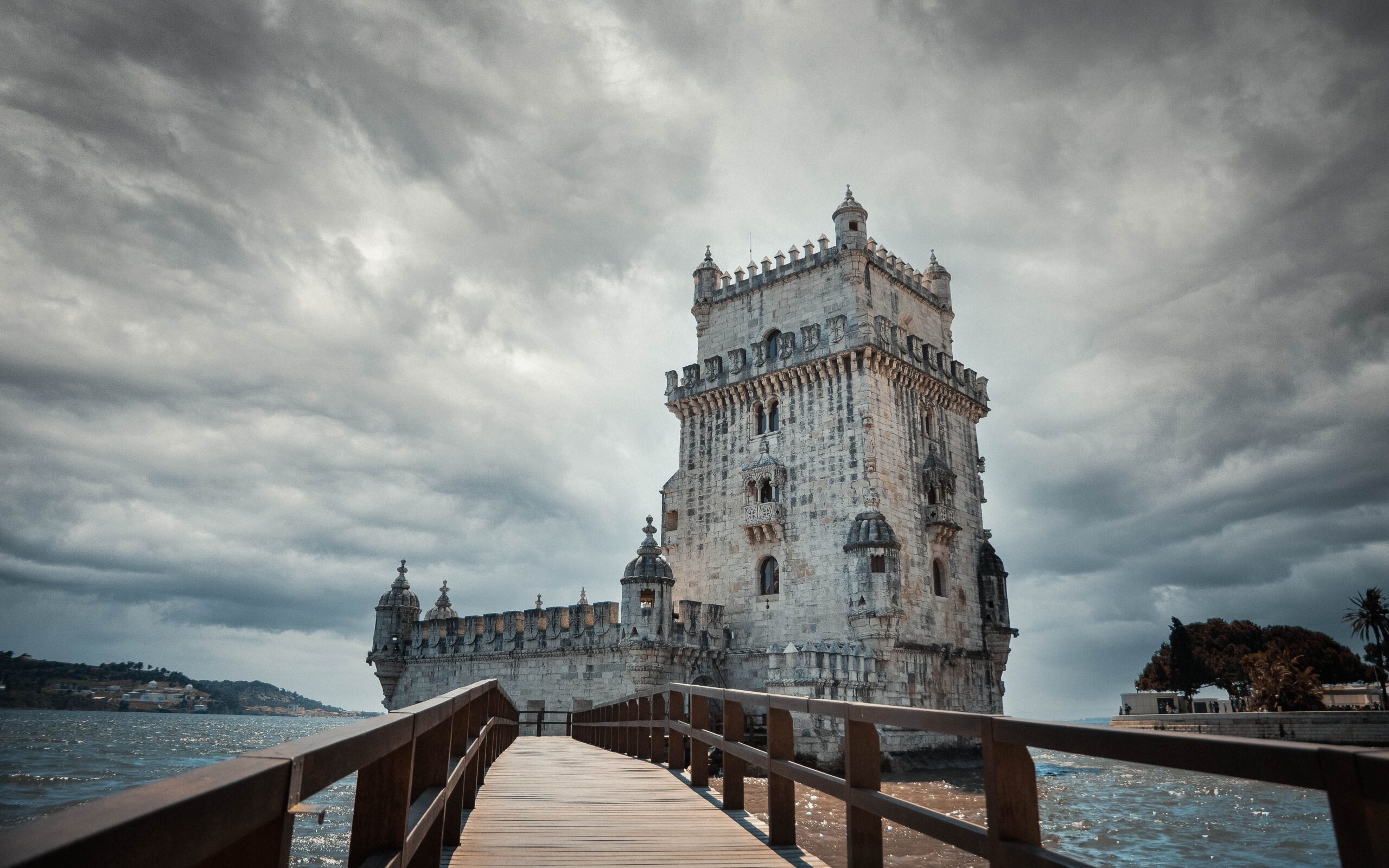
Belém Tower (Torre de Belém)
Jerónimos Monastery
Rua Augusta Arch Viewpoint
Maritime Museum
Praça do Comércio
👉 These spots are easier to connect with a Lisbon highlights tour via Viator or GetYourGuide, especially for first-time visitors.
👉 Central hotels reserved through Booking.com make walking between these landmarks effortless.
Why This Matters for Travelers
Lisbon is not just a backdrop to history — it helped write it.
While Spain may have funded Columbus, it was Lisbon that trained him, shaped him, tested him, and prepared him to challenge the boundaries of the known world.
When you walk Lisbon’s narrow streets, you’re not just sightseeing — you’re standing inside the origin story of global exploration.
Final Thoughts: Christopher Columbus, Lisbon, and the Birth of a World-Changing Idea
It’s easy to think of Christopher Columbus as a figure who belongs to Spain or the Americas. But when you walk through Lisbon, that version of the story starts to feel incomplete.
Because Lisbon wasn’t just a place Columbus passed through — it was where his identity as an explorer was formed.
This city gave him:
His maritime education
His professional network
His family and personal ties
His understanding of ocean currents and global trade winds
And perhaps most importantly, the confidence to imagine something bigger than the known world
Long before royal courts and transatlantic voyages, Columbus was just another ambitious navigator standing along the Tagus River, watching ships depart, studying the horizon, and quietly asking, What if?
That’s what makes Lisbon such a powerful destination for travelers today. You’re not just seeing monuments — you’re stepping into the incubation chamber of the Age of Discoveries. The same streets, riverbanks, and institutions that shaped Columbus also shaped Vasco da Gama, Pedro Álvares Cabral, and generations of explorers who redefined global history.
And unlike textbook history, Lisbon lets you experience this story slowly and physically:
By walking through Alfama’s medieval lanes
By standing in Praça do Comércio, where empires were debated
By visiting Belém, where dreams of unknown oceans became strategy
By sailing the Tagus, feeling how the river opens into the Atlantic
👉 If you want to truly feel this history, not just read about it, staying centrally matters — booking a well-located hotel through Booking.com makes it easy to explore Lisbon’s historic core on foot.
👉 Guided experiences add layers you’ll miss on your own — especially historic walking tours, museum visits, and river cruises available through GetYourGuide or Viator.
Lisbon doesn’t shout this part of Columbus’s story — it whispers it. You notice it in the curve of the river, the maritime symbols carved into stone, the quiet weight of a city that once believed the world could be bigger than anyone imagined.
So as you plan your Lisbon itinerary, leave space for curiosity. Follow the river. Look west. And remember: before Christopher Columbus changed the world, Lisbon changed Christopher Columbus.
For me, discovering these links made Lisbon feel bigger and more interconnected — a hub of ideas, ambition, and influence that reaches far beyond Portugal’s borders.
I hope this guide inspires you to look closer at the city’s maritime history. Because Lisbon isn’t just the backdrop for famous voyages; it’s a city where curiosity, innovation, and opportunity met — and where figures like Columbus found themselves woven into its story.
About the author
I’m Duncan, a Lisbon-based guide and writer who’s lived here for 11 years and taken hundreds of visitors around the city. I created Lisbon Listicles to share everything you need to know about Lisbon in clear, practical lists — from iconic sights to hidden gems — so you can plan your trip easily and make the most of your time here.
All recommendations are based on personal experience and the questions I hear most often from visitors.
Leave a Reply