Disclosure: Some links in this article are affiliate links. If you book through them, I may earn a small commission at no extra cost to you. I only recommend places and experiences I genuinely think are worth it.
Lisbon is beautiful by day — tiled façades, golden light, postcard viewpoints — but at night, the city feels different. Quieter. Heavier. Over the years, I’ve taken to walking certain streets after dark, revisiting places tied to plagues, executions, earthquakes, and political repression. The atmosphere shifts when you know what happened there.
I’ve spent time reading old accounts, digging into archival material, and visiting the exact sites where some of Lisbon’s most unsettling chapters unfolded. Not to sensationalize them — but to understand them. This nighttime historical tour is about seeing beyond the charm and acknowledging the shadows that shaped the city.
👉 Discover the historical events that shaped Portugal’s capital.
Lisbon’s Dark Past
Lisbon may be known for its sunset viewpoints, pastel de nata, and lyrical fado music, but after sundown, the city transforms into something far more mysterious. Beneath the charming tiled facades and golden street lamps lies a centuries-old tapestry of haunted legends, tragic events, and dark historical secrets waiting to be uncovered.
If you’re searching for a nighttime adventure that goes beyond the typical tourist trail, this after-dark historical tour of Lisbon’s dark past will take you deep into the city’s hidden shadows—where ghosts linger, curses echo, and history feels startlingly alive.
👣 Let the haunting begin.

Walking Through Lisbon’s Dark Past: A Nighttime Historical Tour
1. Rossio Square: The Heart of the Portuguese Inquisition
Your nocturnal journey begins in Rossio Square, one of Lisbon’s most iconic landmarks. By daylight it’s lively and vibrant, but centuries ago it was ground zero for the Portuguese Inquisition. Here, the chilling auto-da-fé rituals took place—public acts of penance and executions witnessed by thousands.
Standing here at night, the hum of the city fades into the background as you imagine torchlight flickering off the cobblestones and the cathedral bells echoing grimly overhead. Just steps away stands the D. Maria II National Theatre, built atop the ruins of the Estaus Palace, once the headquarters of the Inquisition.
2. Chiado & the Carmo Convent: Echoes of the 1755 Earthquake
From Rossio, make your way toward elegant Chiado, a district filled with bookshops, cafés, and theaters… but also home to one of Lisbon’s most haunting silhouettes: the Carmo Convent.
The roofless Gothic arches stand as a stark reminder of the catastrophic 1755 earthquake, which killed tens of thousands and reshaped the entire city’s fate. Locals say that at night, shadows move mysteriously inside the ruins, and faint whispers can be heard between the stones.
Inside the Carmo Archaeological Museum, ancient relics—including mummified remains—offer an atmospheric dive into Lisbon’s layered past.
3. Executioner’s Alley (Beco do Chão Salgado): The Street of Shadows
Next, head toward Rua da Madalena and slip into the narrow corridor known as Beco do Chão Salgado—once the home of Lisbon’s official executioner. The role was seen as so cursed and dishonorable that executioners were forced to live in isolation.
This alley is dark, tight, and eerily silent at night. Some visitors have claimed to hear mismatched footsteps or feel a sudden cold draft sweep through—despite the still air.
4. Alfama: Lisbon’s Oldest and Most Haunted Neighborhood
No nighttime historical tour is complete without wandering the labyrinthine alleys of Alfama, where every corner hides a story. With its steep turns, ancient stone walls, and fado music drifting from taverns, Alfama feels frozen in time.
This is where Maria Severa, Portugal’s first fado icon, is said to roam after death, her sorrowful voice echoing down narrow streets. Locals also speak of spectral figures appearing in the windows of unused buildings near Largo de São Miguel, a square associated with curses and unexplained disappearances spanning centuries.
5. Cais do Sodré: Pirates, Brothels & the Devil’s Cross
Once a seedy and dangerous port, Cais do Sodré was infamous for its pirates, smugglers, and risky nightlife. The now-instagram-famous Pink Street was once filled with brothels and dens frequented by sailors who were known to vanish under mysterious circumstances.
One chilling legend recounts the Devil himself wandering the area, leaving behind a mysterious Devil’s Cross carved into an unassuming wall. Finding it is a thrilling scavenger hunt on its own.
6. São Roque Church: A Haunting Behind Baroque Beauty
The stunning São Roque Church hides a chilling tale behind its gilded chapels and precious artifacts. Legend tells of a Jesuit priest who was murdered inside the church and now roams the halls, creating cold spots and whispering faintly to unsuspecting visitors.
By night, the church’s ornate interior becomes even more surreal—beautiful, haunting, and heavy with stories.
7. Belém Tower: A Prison Where Time Stands Still
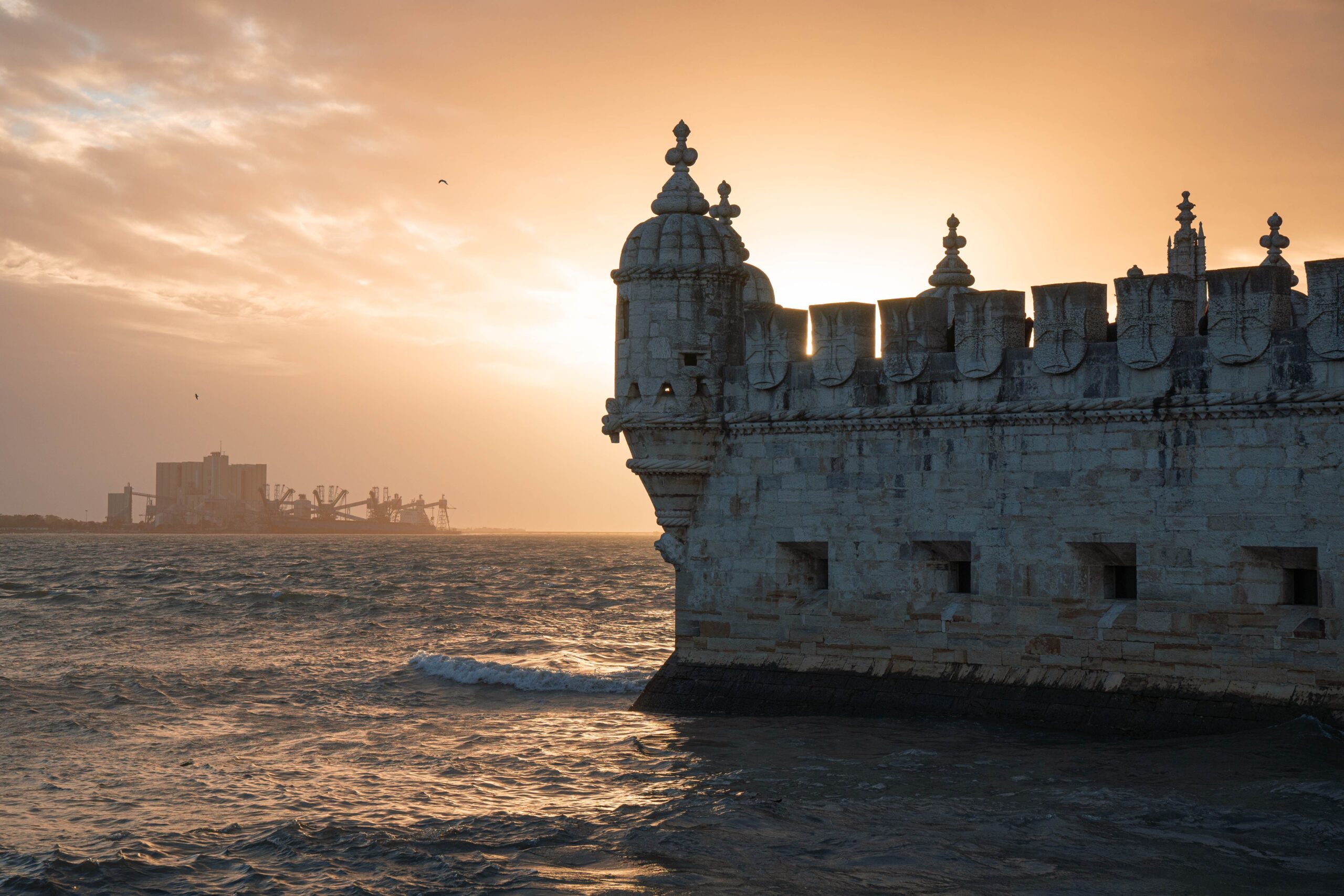
Though a bit further from the city center, the Tower of Belém is an essential stop for any dark-history lover. After its years as a fortress, it served as a prison for political dissidents and foreign captives. Damp, airless chambers once held countless prisoners who were never seen again.
At sunset and after dark, the tower glows eerily beside the river—an unforgettable sight.
8. The Ghostly Voyage of Tram 28
The iconic Tram 28 is famous for sweeping past many of Lisbon’s historic highlights—but at night, its rattling wooden frame and dim lighting turn it into something straight out of a ghost story.
Locals whisper that certain stops have strange histories, and some passengers swear they’ve seen shadowy figures boarding… only to vanish before the next stop.
👉 Several guided tours include a Tram 28 ride as part of a nighttime storytelling route.
9. Mouraria’s Secrets — Rebellion, Plague & Ancient Curses
One of Lisbon’s most multicultural neighborhoods, Mouraria, is also one of its darkest historically. Once the designated quarter for Moors after the Christian reconquest, Mouraria endured plagues, fires, and violent uprisings.
Walk around Rua da Guia at night and you’ll encounter old houses marked with talisman inscriptions and windows rumored to reveal ghostly silhouettes.
10. Praça do Comércio After Dark — Tsunami Ghost Stories
Beautiful and grand during the day, Praça do Comércio hides some of the most devastating stories from the 1755 earthquake and tsunami. After the quake, massive waves swept through this very square, dragging hundreds into the Tagus River.
Nighttime visitors report strange sounds near the river edge—believed by some to be the echoes of those lost in the disaster.
👉 Night riverfront tours sometimes include eerie stories connected to this square.

Tips for a Spooky Yet Safe Nighttime Adventure
Join a Guided Tour: Expert guides bring Lisbon’s dark stories to life and offer insider knowledge.
Wear Comfortable Shoes: Lisbon’s hills and cobblestones can be challenging in the dark.
Stay Hydrated & Pack Light: A small bag and a water bottle are ideal.
Bring a Flashlight: Helpful for Alfama’s dim alleys.
Stay Aware: Lisbon is safe, but awareness is key—especially when stopping for photos in quiet streets.
Final Thoughts
Exploring Lisbon’s haunted history is one of the most unforgettable ways to see the city. By day, it’s charming and sunlit—but by night, Lisbon becomes a living museum of mysteries, ghost stories, and centuries-old legends that whisper from every corner.
For me, walking through Lisbon’s darker history at night creates a strange but meaningful connection to the past. The city feels more layered, more human, more real.
I hope this guide encourages you to look beyond the obvious beauty and explore Lisbon with curiosity and respect. Its story isn’t just one of triumph and discovery — it’s also one of struggle and resilience. And understanding both makes every cobbled street feel more powerful.
So… would you dare explore these haunted streets alone? Or would you prefer following a guide who knows exactly where Lisbon keeps its secrets? Tell me in the comments! 👇
Before you head out, don’t forget:
👉 If you want to upgrade your Lisbon adventure, compare hotels, lock in night tours, or reserve historical experiences through trusted platforms like Booking.com, Viator, or GetYourGuide. Your perfect nighttime tour may be just a click away. ☝️
About the author
I’m Duncan, a Lisbon-based guide and writer who’s lived here for 11 years and taken hundreds of visitors around the city. I created Lisbon Listicles to share everything you need to know about Lisbon in clear, practical lists — from iconic sights to hidden gems — so you can plan your trip easily and make the most of your time here.
All recommendations are based on personal experience and the questions I hear most often from visitors.
Leave a Reply